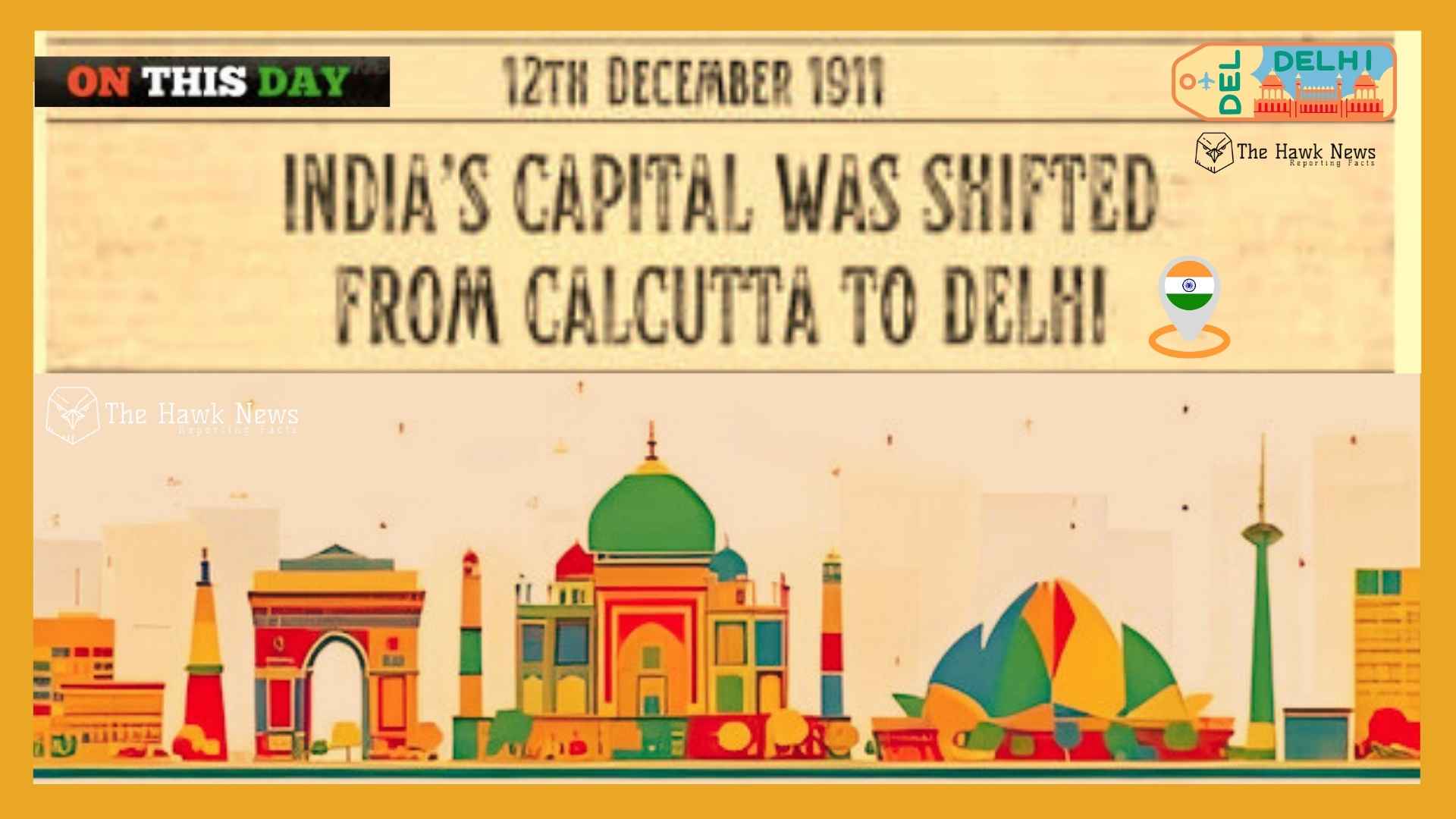

On December 12, 1911, under a grand imperial durbar in Delhi, King George V announced a decision that quietly altered the course of Indian history: the capital of British India would move from Calcutta to Delhi.
At the time, it sounded administrative. In reality, it was deeply political, psychologically strategic, and historically symbolic.
More than a century later—when India debates decentralisation, urban overload, and regional balance—the decision still echoes in how the nation governs itself.
This was not just a change of city. It was a recalibration of power.
The World Before 1911: Why Calcutta Was No Longer “Safe”
Calcutta had been the capital of British India since 1772. It was the empire’s first foothold—a port city where commerce, governance, and colonial authority fused.
But by the early 20th century, Calcutta had become something else: the intellectual and political nerve centre of Indian nationalism.
- The Bengal Renaissance had sharpened political consciousness.
- Newspapers, universities, and protest movements thrived.
- The Partition of Bengal (1905) sparked widespread outrage and mass resistance.
From the British perspective, Calcutta had become too politically awake.
The colonial administration needed distance—from dissent, from organised resistance, from the growing confidence of Indian political voices.
Why Delhi? The Strategic Heart of the Subcontinent
Delhi was not chosen randomly. It carried three powerful advantages:
1. Historical Legitimacy
Delhi had been the seat of power for centuries—under the Delhi Sultanate, the Mughals, and earlier empires. By choosing Delhi, the British were symbolically placing themselves in a long line of rulers, attempting to inherit authority through geography.
2. Geographical Centrality
Unlike coastal Calcutta, Delhi sat closer to the subcontinent’s political and military core. It allowed easier control over northern India and faster response to unrest.
3. Political Reset
Delhi lacked the same concentration of nationalist institutions that Calcutta had. The move allowed the British to rebuild governance away from the epicentre of resistance.
In short, Delhi offered control, symbolism, and breathing space.
The Imperial Theatre: Power Put on Display
The announcement was made during the Delhi Durbar of 1911, a meticulously choreographed imperial event attended by princes, officials, and elites.
This was governance through spectacle.
By declaring Delhi the capital in such a setting, the British were sending a message:
The empire is permanent. Authority is unquestionable. Order has been restored.
Ironically, history would later prove the opposite.
The Pros: What the Shift Achieved
From an administrative perspective, the move did bring tangible benefits:
- A purpose-built capital: New Delhi was planned with wide avenues, administrative zones, and imperial architecture, reducing congestion and chaos.
- Centralised governance: Proximity to princely states and northern provinces improved coordination.
- Long-term infrastructure: The city laid foundations for modern governance that independent India would later inherit.
Post-independence, New Delhi became a functional democratic capital—suggesting that the colonial decision unintentionally benefited the future republic.
The Cons: A Colonial Cost
Yet the move also carried consequences:
- Calcutta’s decline: The city lost political prominence, triggering economic and administrative stagnation that took decades to recover.
- Urban imbalance: Power concentrated heavily in Delhi, creating long-term overcentralisation.
- Colonial intent: The move was not for Indian welfare but for imperial convenience—designed to weaken resistance rather than empower people.
In hindsight, the shift solved British problems more than Indian ones.
The Deeper Cause: Fear of Political Awakening
The most important reason behind the move was not geography—it was fear.
The British administration understood something critical:
India was no longer governable in the old way.
Educated Indians were questioning authority. Political unity was forming. Resistance was intellectual before it became revolutionary.
By moving the capital, the empire attempted to slow history.
It didn’t work.
Within decades, Delhi would become the epicentre of freedom movements, protests, and negotiations that ultimately ended British rule.
A Futuristic Lens: What This Decision Teaches Us Today
In a 21st-century India grappling with megacities, digital governance, and regional equity, the 1911 decision offers lessons:
Power follows people, not buildings.
Moving capitals does not silence movements—it often relocates them.
Centralisation has limits.
Delhi’s dominance today raises questions about whether India needs more distributed centres of governance.
Cities carry memory.
Delhi absorbed empire, republic, protest, and power—because cities are shaped by history, not just planning.
From Empire to Republic: An Unintended Legacy
When India became independent in 1947, it retained New Delhi as its capital—not because of British authority, but because the city had already evolved into a national nerve centre.
What began as a colonial strategy became a democratic inheritance.
This is the paradox of history:
decisions made to control the future often end up serving it instead.
Conclusion: More Than a Change of Address
The shift from Calcutta to Delhi was not merely administrative—it was psychological, symbolic, and strategic.
It reflected an empire responding to resistance, trying to anchor power in stone and space. Yet, history reminds us that true power never stays fixed—it moves with people, ideas, and time.
More than a century later, Delhi still stands—not as a symbol of empire, but as a reminder that even calculated decisions can have unintended, transformative outcomes.
History did not just change its capital in 1911.
It quietly changed direction.