There are biopics.
And then some films walk into a courtroom before they even enter a theatre.
The upcoming is not just another music drama built on nostalgia. It arrives carrying the weight of one of the most celebrated, debated, adored, and questioned legacies in modern pop culture.
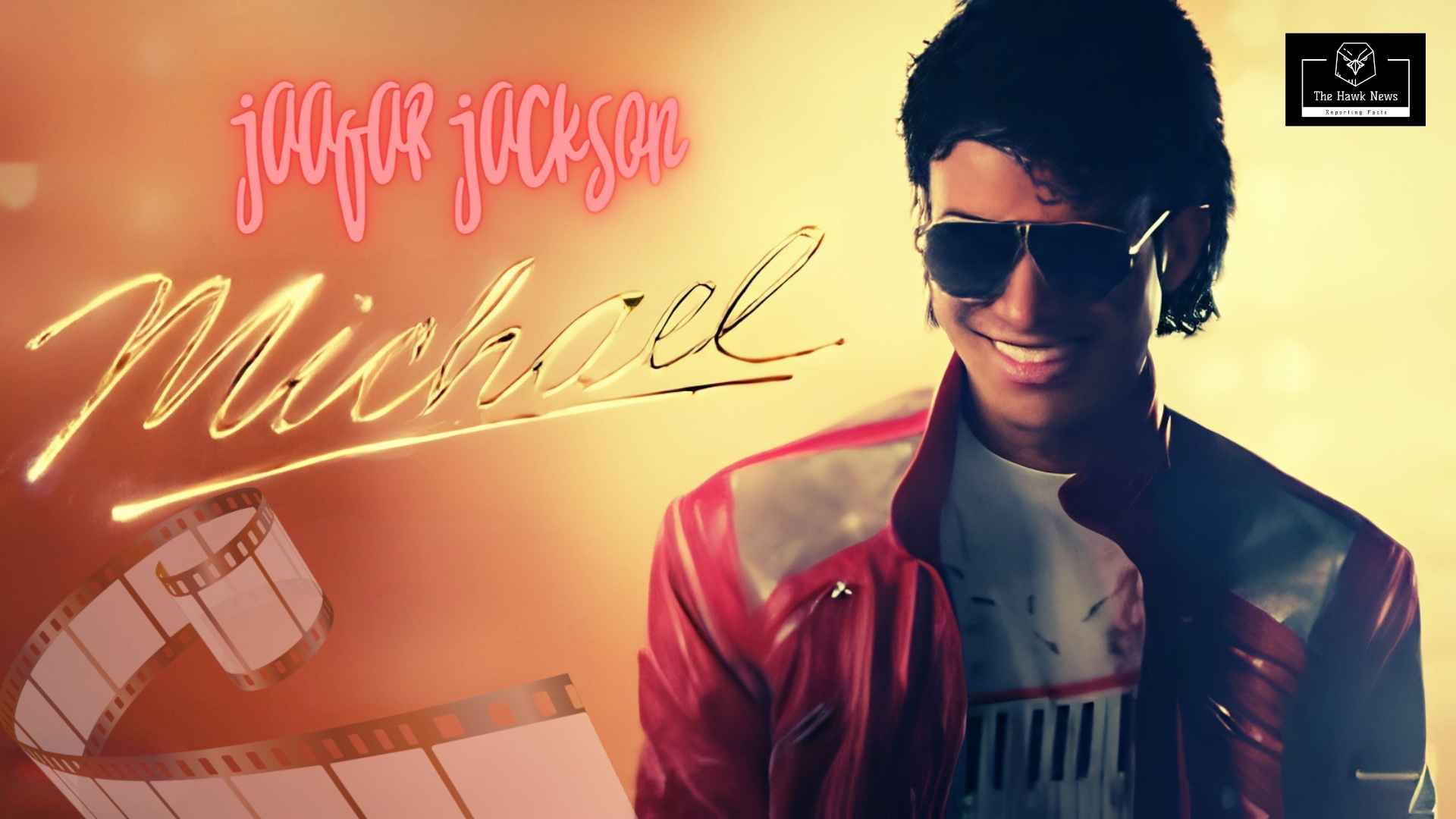
The film’s boldest decision is also its most emotional one: placing Jaafar Jackson, Michael Jackson’s real-life nephew, at the center of the story.
That single casting choice has already shaped the conversation around the film long before audiences fully stepped into the theatre.
For some, it feels poetic.
For others, uncomfortable.
For nearly everyone, impossible to ignore.
Directed by Antoine Fuqua and produced by Graham King, the film attempts to recreate the rise of Michael Jackson from child prodigy to global phenomenon.
Early footage and trailers leaned heavily into spectacle: the moonwalk, the concerts, the rehearsals, the screams of stadium crowds, the loneliness behind fame.
But the deeper question surrounding the project has never really been about choreography.
It is about memory.
And memory, especially in the case of Michael Jackson, has never belonged to one side.
For decades, Jackson existed in two worlds at once. In one, he was the greatest entertainer modern music had ever seen, an artist whose influence crossed race, geography, language, and generation.
In the other, he became the center of allegations, investigations, documentaries, and moral debates that permanently complicated his image.
The film enters that storm knowingly.
Lionsgate initially described the project as an “honest portrayal” of the singer’s life. Reports later revealed the production underwent changes and reshoots surrounding how certain allegations and legal controversies would be handled on screen.
That tension now sits at the heart of the film’s public reception.
Can a biopic truly portray Michael Jackson without confronting every shadow attached to his name?
Or is that expectation impossible for any film tied closely to the Jackson estate itself?
Critics have already begun dividing into familiar camps.
Some early reactions praised Jaafar Jackson’s physical transformation and stage presence, describing moments where the resemblance to his uncle felt almost unsettling.
Director Antoine Fuqua himself called the experience “a spiritual journey,” while others involved with the production spoke about Jaafar “channeling” Michael’s energy during performance sequences.
And to be fair, the footage released so far does show remarkable discipline.
Jaafar does not appear to be impersonating Michael Jackson in the shallow, exaggerated way many feared. Instead, he seems to understand something more delicate:
Michael’s body language was never just dance. It was emotion translated physically. Even stillness became performance.
That understanding matters.
Because audiences are not simply watching an actor play a celebrity. They are watching the family reconstruct itself.
That changes the emotional temperature of the film entirely.
Hollywood has made countless music biopics over the years. turned Freddie Mercury into an arena-sized cinema. transformed Presley into mythic tragedy. carried the anger and urgency of a cultural movement.
But “Michael” faces a more unstable challenge.
Michael Jackson is not merely remembered. He is continuously argued over.
Even now, years after his death, public opinion remains fractured. Some believe his artistry should remain separate from the accusations. Some feel separating the two is morally impossible.
And millions exist somewhere uneasily in between people who grew up dancing to his music while simultaneously wrestling with the discomfort surrounding his legacy.
The film cannot escape that reality.
Nor should it try to.
In many ways, the most fascinating aspect of “Michael” is not whether it succeeds as cinema. It is whether modern audiences are still willing to emotionally engage with Michael Jackson at all.
That is a different question entirely.
The timing of the film also says something about Hollywood itself. Studios today are obsessed with recognizable cultural icons because familiarity sells in an increasingly fragmented entertainment landscape.
Yet Michael Jackson is not safe intellectual property. He is commercially powerful but morally volatile.
That combination makes the film both risky and irresistible.
And perhaps that explains why reactions have been so intense already.
Some viewers see the movie as an attempt to preserve a musical genius from reduction. Others see it as image restoration disguised as storytelling. Early critics have accused the film of avoiding uncomfortable depth, while supporters argue that no single film could ever fully capture the contradictions of Michael Jackson’s life anyway.
Both arguments hold weight.
What remains undeniable, however, is Michael Jackson’s cultural gravity.
Even after death, he still commands headlines, outrage, curiosity, devotion, and scrutiny in a way few artists ever have. Younger generations continue discovering his music through streaming platforms and social media clips. Older generations still remember where they were when “Thriller” changed pop music forever.
That scale of influence cannot simply be erased.
But neither can the questions surrounding him.
And this is where Jaafar Jackson’s casting becomes symbolic beyond performance.
A nephew stepping into the shoes of an uncle, the world still debates, feels almost Shakespearean in its emotional complexity. There is admiration in it. Loyalty too. But there is also a burden.
Because Jaafar is not inheriting only the music.
He is inheriting the argument.
By the time the credits roll on “Michael,” audiences may still disagree about the man himself. In truth, they probably always will.
But perhaps that is the real story here.
Not redemption.
Not condemnation.
But the uncomfortable reality is that some legends never settle into history peacefully.
They remain alive in culture long after death, replayed, defended, questioned, celebrated, and challenged all at once.
Michael Jackson was one of them.
And now, through the face of his nephew, the world is preparing to look at him again.