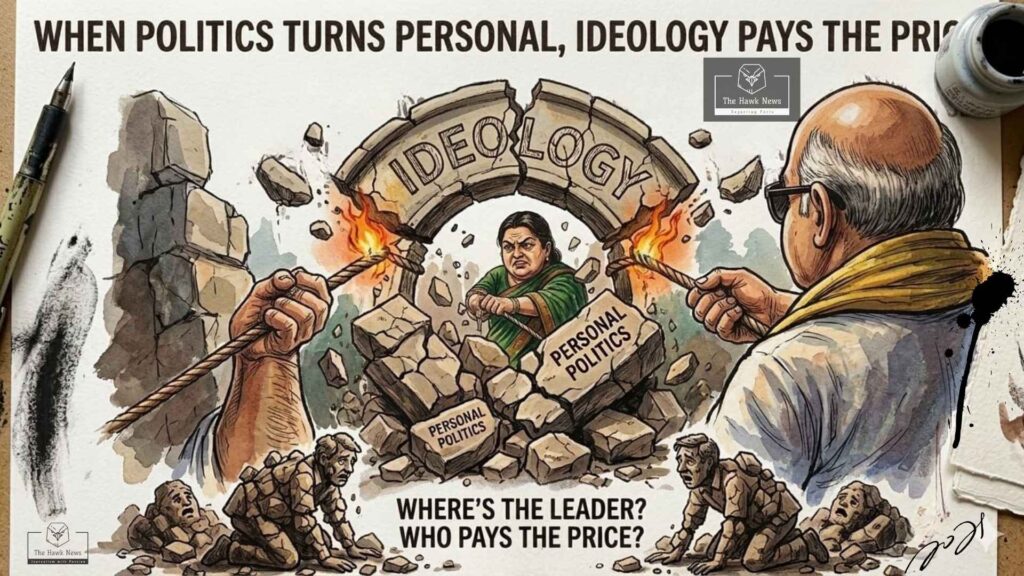
There was a time when politics in Tamil Nadu was not merely about power, it was about purpose.
It was shaped by ideology, driven by social movements, and rooted in questions that mattered: language, identity, caste equity, and welfare. Leaders were not just personalities; they were representatives of ideas larger than themselves.
But somewhere along the way, something shifted.
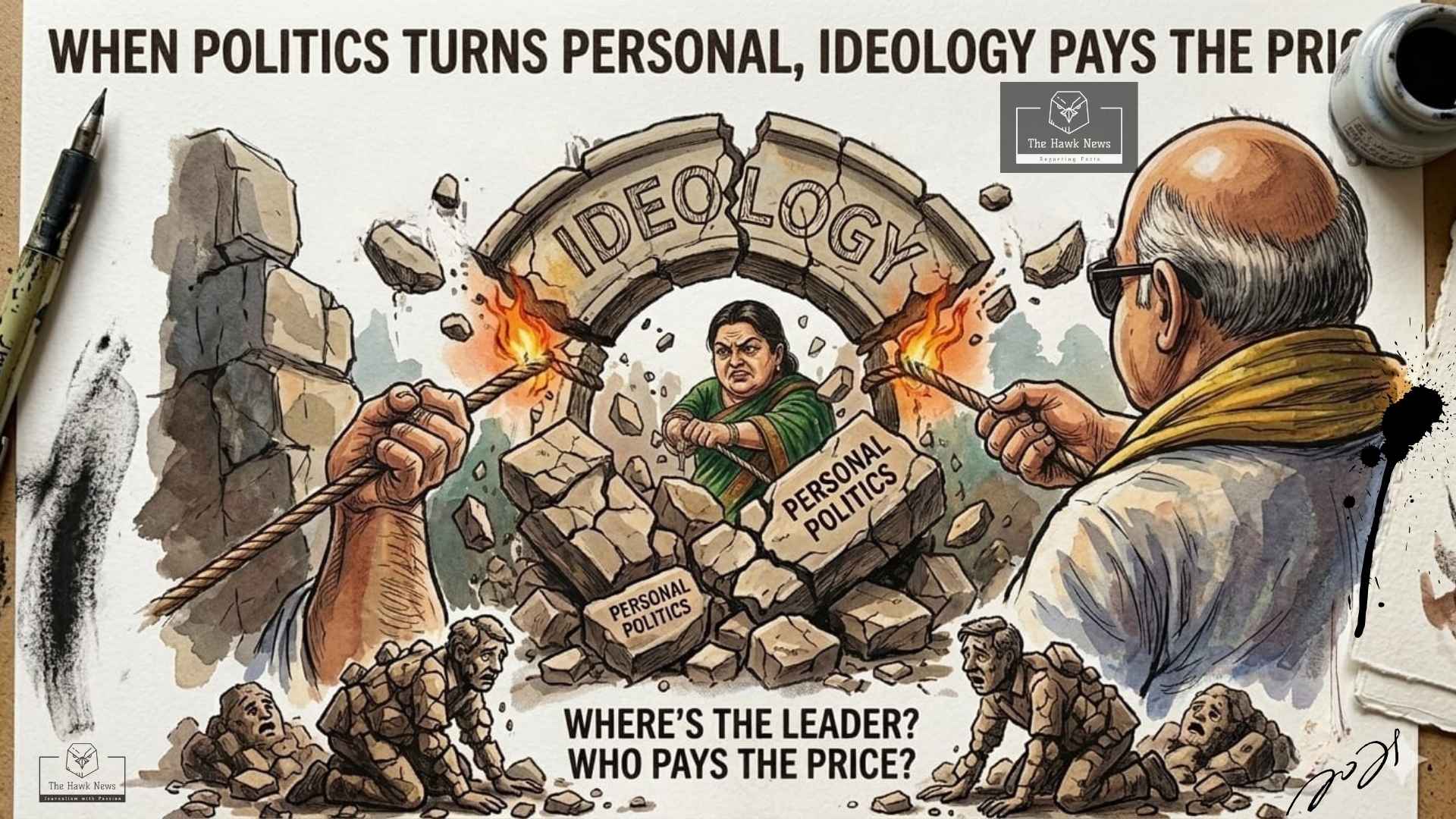
And that shift can be traced back to one of the most defining rivalries in the state’s political history-between M. Karunanidhi and J. Jayalalithaa.
From Ideology to Identity
The Dravidian movement, which laid the foundation of Tamil Nadu’s political landscape, was built on strong ideological pillars; rationalism, social justice, and linguistic pride. Early leaders debated policy, philosophy, and reform.
But as political competition intensified, the discourse began to change.
What was once ideological gradually became personal.
Campaigns were no longer just about policy differences- they became about individuals. Speeches sharpened. Rivalries deepened. The public narrative shifted from what we stand for to who we oppose.
This was not an overnight transformation. It was gradual. Subtle. And therefore, more profound.
When Clashes Replace Principles
Political rivalry is not inherently unhealthy. In fact, it is essential in a democracy. But when rivalry turns into sustained personal conflict, it begins to crowd out substance.
In Tamil Nadu, the Karunanidhi–Jayalalithaa era was marked by intense political competition, administrative shifts, and welfare expansion. But it was also marked by a style of politics where personality often overshadowed policy.
The consequences of this shift are still visible today:
- Electoral campaigns driven by image rather than ideology
- Voter alignment based on loyalty rather than conviction
- Political narratives centered on personalities rather than programs
The question is not whether development happened, it did.
The question is whether ideological clarity weakened in the process.
The Rise of Performance Politics
When ideology fades, something fills the vacuum.
In this case, it was performance.
Not performance in governance - but performance in perception.
Political communication began to resemble storytelling. Leaders were not just administrators; they became symbols, characters, even icons. Public appearances, speeches, and media narratives began to carry theatrical elements.
And in a state deeply connected to cinema, this transition was even more seamless.
The line between on-screen heroism and political leadership blurred.
Actors entering politics was not new. But what changed was how politics itself began to adopt the language of performance-where optics sometimes mattered more than ideology.
The Risk of Believing the Script
When politics becomes performative, it carries a subtle risk: people begin to believe the narrative without questioning the foundation.
A powerful speech can inspire; but it can also distract.
A strong personality can lead; but it can also overshadow institutions.
When voters begin to engage more with how politics looks rather than what it stands for, democracy shifts from participation to perception.
This is not unique to Tamil Nadu. It is a global trend.
But in Tamil Nadu, where political consciousness has historically been high, the contrast is sharper and therefore more instructive.
What Was Lost - and What Remains
To say that ideology has completely disappeared would be inaccurate.
Welfare policies continue. Social justice frameworks still exist. Governance structures remain functional.
But the depth of ideological engagement; the kind that once defined political discourse - has undeniably thinned.
What was lost is not policy, but philosophical grounding.
And when grounding weakens, politics becomes reactive rather than directional.
Rebuilding the Foundation
The solution is not nostalgia. It is reconstruction.
For politics to regain its ideological strength, three shifts are necessary:
1. Issue-Based Engagement
Public discourse must return to issues, education, employment, healthcare, environment-not just personalities.
2. Institutional Strengthening
Strong institutions outlast strong individuals. Governance must prioritize systems over symbols.
3. Informed Electorate
Voters must demand clarity, not charisma. Questions must replace assumptions.
A Closing Reflection
The image you shared ends with a powerful idea:
When people begin to believe performance is real.
That is where democracy must pause and reflect.
Because politics is not cinema.
It cannot rely on scripts, retakes, or illusions.
It is real. It affects real lives. And it demands real accountability.
The rivalry between Karunanidhi and Jayalalithaa defined an era. It brought both progress and polarization. But its deeper legacy lies in what it teaches us today:
When politics becomes personal, ideology becomes optional.
And when ideology fades, the foundation of democracy begins to weaken.
The question now is not what was lost.
The question is: what are we willing to rebuild?