A Lifestyle Deep-Dive into Social Identity, Visibility, and the Quiet Power of Standing Out
In a world that celebrates uniqueness on paper but rewards conformity in practice, standing out has become both an act of courage and a form of communication.
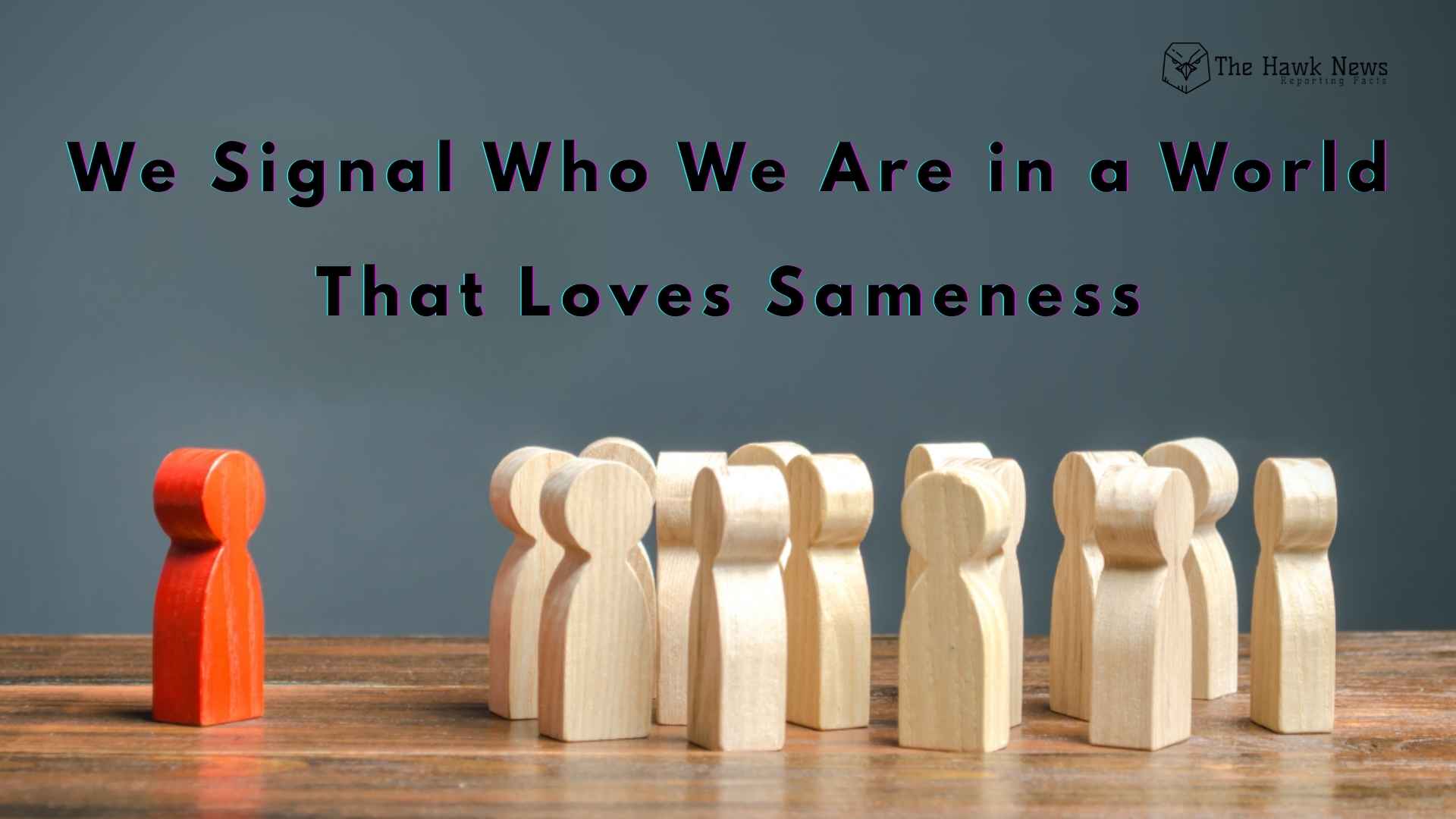
The simple image of one bold red figure standing apart from a crowd of beige silhouettes captures something deeply human: every day, whether consciously or not, we tell the world who we are by the way we show up.
And sometimes, the choice to be different is the loudest statement we ever make.
This is not merely about fashion, image, or aesthetics. It goes deeper. It touches how humans navigate identity, belonging, and self-expression in a culture that often encourages “being yourself” while quietly nudging everyone toward the same norms.
The question is no longer: Who do you want to be?
The real question is: Are you willing to be seen as that person?
The Social Contract of Sameness
Sociologists have long argued that humans are “tribal beings in modern packaging.” We may no longer gather around campfires, but we still read social cues, dress codes, and informal norms with surprising precision.
Being similar to the group has historically ensured survival — and in today’s world, it often ensures acceptance.
This is why blending in feels safe.
It is also why standing out feels risky.
When you choose a different lifestyle, a different belief system, a different career path, or even a different color to wear, you are quietly renegotiating your relationship with the group. And there is always a cost. But there is also a profound reward.
The lone red figure in the image embodies that negotiation: a visible reminder that individuality is not just a personal value — it is a social disruption.
The Rise of “Identity Signaling”
Modern life has transformed how we express who we are. Where identity was once shaped by geography, family, and tradition, today it is shaped by choice.
We signal who we are through countless daily decisions:
- the colors we wear
- the way we speak
- the hobbies we pursue
- the brands we trust
- the spaces we show up in
- the causes we associate with
Psychologists call these “identity signals,” and they operate like subtle language. They tell people “this is what I value,” “this is where I belong,” or “this is what I refuse to hide.”
The red figure is not simply a person who is different; it is a person communicating something different.
Why Some People Choose Visibility
Standing out is not always deliberate. For some, it’s a natural extension of their personality or values. For others, it’s a bold reaction to sameness. Lifestyle researchers point to three growing groups:
1. The Intentional Non-Conformists
These are people who consciously reject norms — minimalists in a maximalist world, introverts in loud spaces, or individuals who embrace unconventional careers.
Their difference is their declaration of freedom.
2. The Accidental Originals
They don’t try to stand out; they simply don’t fit the mold. Their personality, background, or perspective naturally sets them apart.
Their difference is their authenticity.
3. The Purposeful Signalers
They stand out because they are communicating something strong — a cause, an identity, a belief system.
Their difference is their message.
Across all three groups, visibility is not a flaw or an act of rebellion. It is a language.
When Standing Out Becomes Strength
In lifestyle reporting, one recurring pattern emerges: people who embrace their individuality are often the ones shaping culture, not following it.
Designers build new styles.
Entrepreneurs challenge norms.
Artists redefine narratives.
Thinkers question assumptions.
Leaders rewrite directions.
The red figure is not simply outside the crowd; it is ahead of the crowd.
But the transition from “different” to “inspiring” only happens when people choose to own their difference instead of hiding it.
The Psychology of Being the Red Figure
Human behavior experts agree that three emotions shape our relationship with individuality:
Fear
Fear of judgment.
Fear of failure.
Fear of being misunderstood.
Fear of becoming the outsider.
Desire
Desire for expression.
Desire for freedom.
Desire for authenticity.
Desire to live a life that feels real.
Belonging
Even the most unique individuals want community — not a crowd that demands sameness, but a circle that respects difference.
The tension between these three emotions determines whether someone blends in or stands out.
The Social Media Paradox
Social media tells everyone to “be bold,” “stand out,” “be unique.”
Yet, scroll for five minutes and everything starts to look the same.
Same filters.
Same poses.
Same content arcs.
Same aesthetic trends.
In this landscape, genuine individuality feels almost radical.
A lifestyle trend analyst noted: “We are living in the era of mass-produced uniqueness.” Everyone wants to be different, but very few want to look different.
That’s why the red figure feels powerful: it represents genuine difference, not curated difference.
Cultural Pressures and the Myth of Neutrality
Beige isn’t accidental. It represents neutrality — a safe zone where no one judges you, questions you, or isolates you.
But neutrality also comes at a cost:
It hides your story.
It minimizes your voice.
It flattens your identity.
The choice to be the red figure is the choice to stop living in grayscale.
The Lifestyle Shift: From Fitting In to Showing Up
Today, many younger adults are rewriting the rules of self-expression by asking a different question:
Why follow a crowd that doesn’t reflect who I am?
We see this shift across lifestyle domains:
- unique wellness routines
- alternative relationship structures
- gender-fluid fashion
- unconventional careers
- non-traditional success metrics
- minimalist or maximalist living
- spiritual paths outside inherited traditions
People are building identities that feel internally consistent, not externally approved.
Standing Out Without Becoming a Spectacle
Journalistically, one misconception needs challenging: standing out does not mean being loud, dramatic, or attention-seeking.
It simply means being visible as yourself.
You can be the red figure quietly.
You can be the red figure softly.
You can be the red figure intelligently, artistically, or philosophically.
Individuality does not require volume.
It requires honesty.
So, Who Are You in This Picture?
Are you in the beige crowd, following what feels familiar?
Or are you the red figure, choosing visibility over invisibility?
Most people move between the two — and that’s natural. But the direction that shapes a meaningful life is always toward authenticity.
In the end, individuality is less about being different from the group and more about being true to yourself.
The world doesn’t need louder people.
It needs real people.
And sometimes, all it takes to be real is to wear your color — even if you wear it alone.