A Political Entry Without Its First Proof
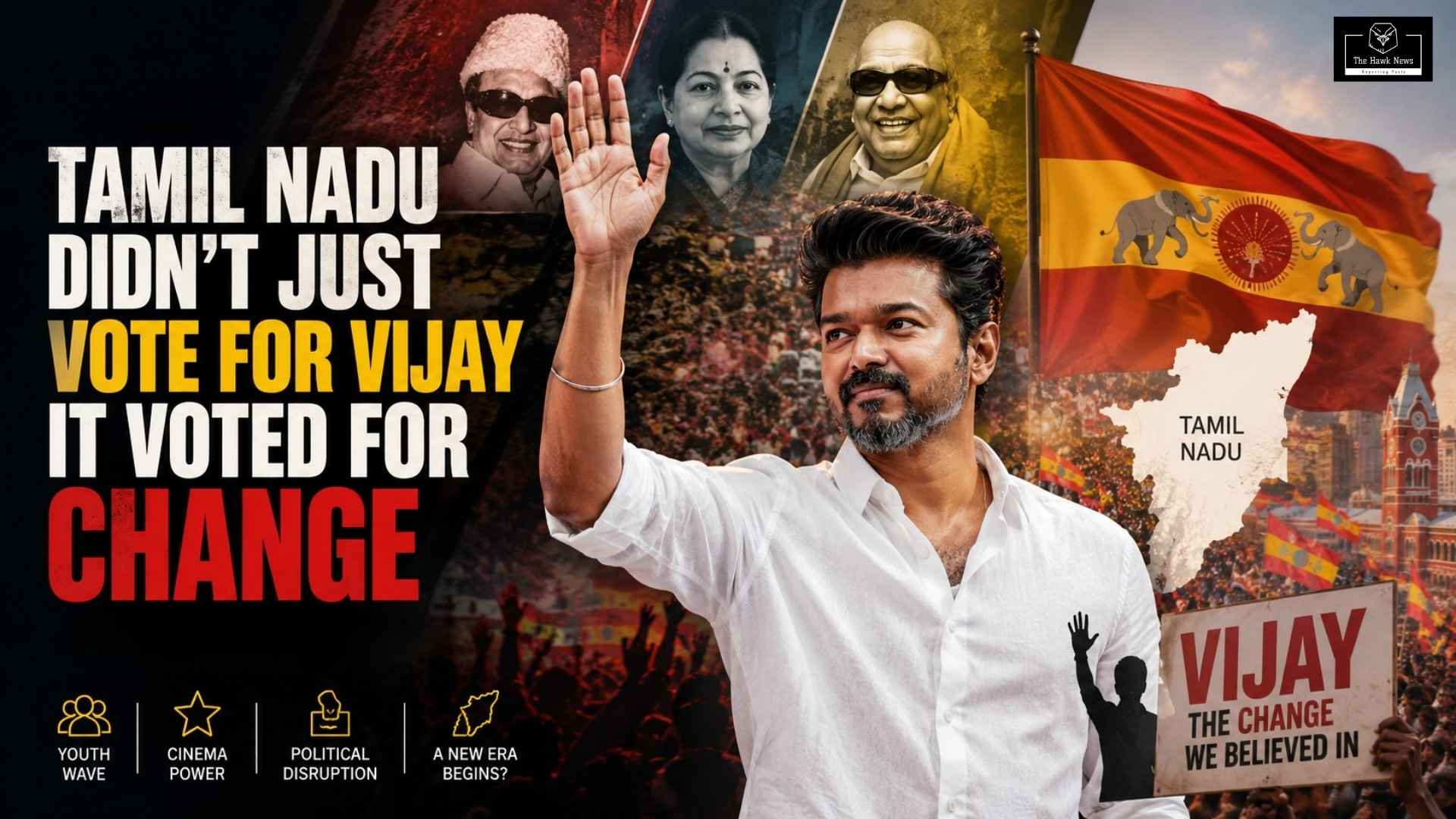
Vijay did not enter politics quietly. He entered with attention, scale, and a ready-made audience across Tamil Nadu. That kind of entry usually creates momentum.
But momentum in politics is not sustained by attention. It is sustained by proof. And the first proof any new political movement needs is simple. Vote percentage.
The Timeline That Cannot Be Ignored
This is not about assumptions or interpretations. The timeline is clear and measurable. There was enough time between entry and opportunity.
| Event | Date |
|---|---|
| TVK Launch | 2 February 2024 |
| Erode By-Election | 5 February 2025 |
That is one full year. Enough time to prepare, organise, and test strength in a controlled electoral environment.
Erode Was a Controlled Political Opportunity
A by-election is not like a general election. It compresses the entire political test into one single constituency. That makes it a perfect testing ground.
One candidate, one constituency, and one measurable outcome. This is where new parties can convert uncertainty into data.
What Vijay Actually Needed From Erode
He did not need to contest personally. He did not need to win the seat. The requirement was far simpler than that.
He needed to field a candidate and deploy his entire Tamil Nadu cadre and fan base into one constituency. That would have created one outcome. A number.
Because Politics Does Not Recognise Crowd Alone
There is a common misunderstanding in early political movements. Large crowds are often mistaken for electoral strength. That assumption is dangerous.
Crowds create noise. Votes create legitimacy. The gap between the two is where most political experiments fail.
The Voter’s Silent Calculation
A voter may like a party, respect a leader, and still not vote for them. Because inside the polling booth, emotion gives way to calculation.
| Voter Thought | Result |
|---|---|
| I like this party | Emotional support |
| It may not win | Doubt |
| I will vote safe | Vote shift |
This is how new parties are blocked. Not by rejection, but by hesitation.
One Number Could Have Changed This
If Vijay had entered Erode with full force and secured even a moderate vote share, the impact would have been immediate. The perception would have shifted.
A 15 percent vote share does not win an election. But it proves existence. It tells voters that this is not just a movement, but a measurable political force.
The Historical Lesson Tamil Nadu Has Already Seen
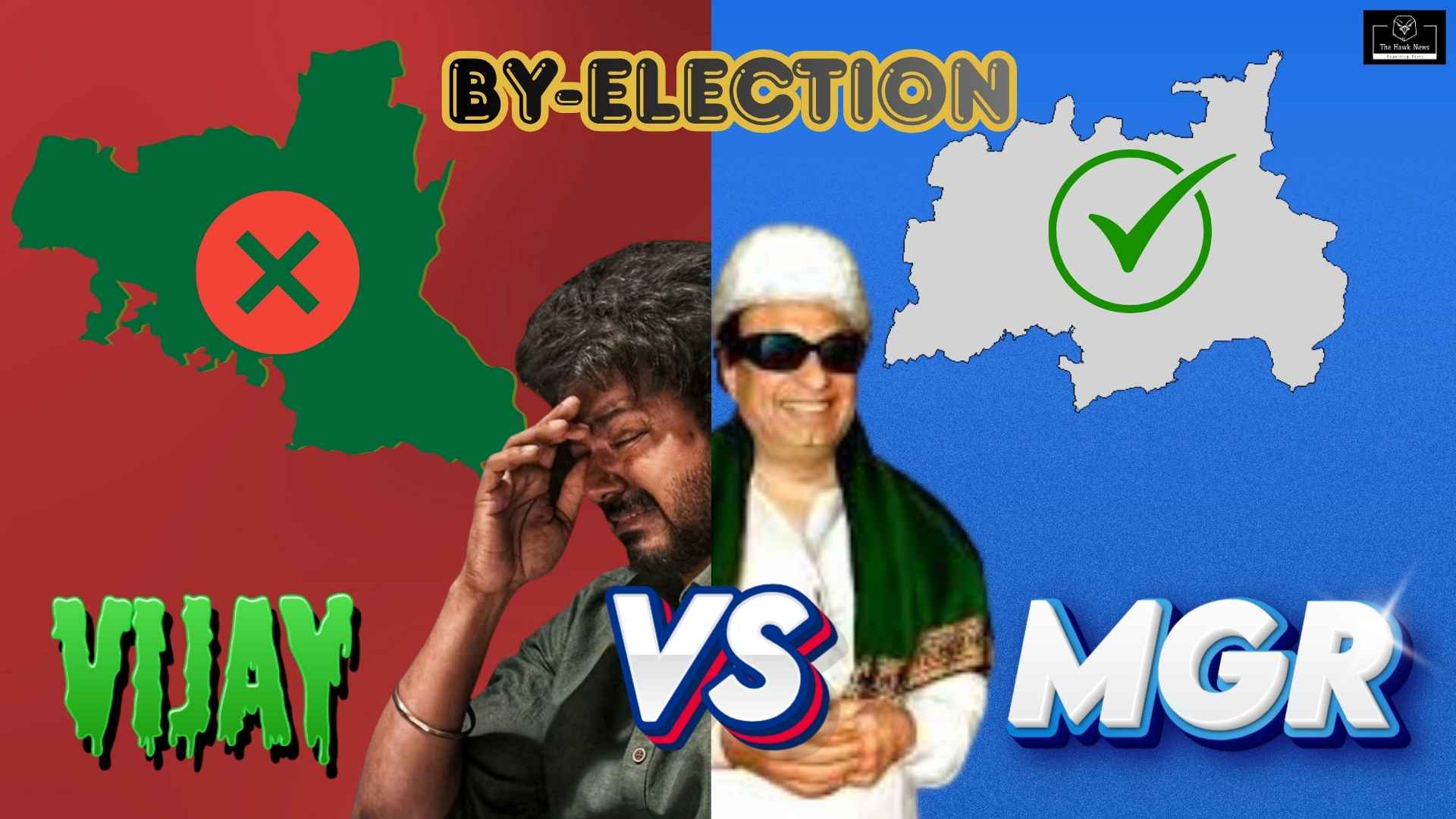
M. G. Ramachandran did not avoid early testing. He used a by-election to establish credibility.
| Election | Outcome |
|---|---|
| Dindigul 1973 | Proof of conversion |
| Candidate | K. Maya Thevar |
| Result | Political legitimacy |
That election answered one question. Can popularity convert into votes? Once answered, the trajectory changed.
The Strategy That Was Available in Erode
Erode offered a similar setup. A single constituency where full concentration was possible. Cadres, resources, and attention could have been directed with precision.
Even if that created a slightly inflated vote share, it would still serve a purpose. It would create perception, and perception builds momentum.
The Risk That Was Avoided
There is one argument for not contesting. The risk of a low vote share. That risk is real, and it can damage early perception.
But avoiding that risk also removes the chance of creating a positive benchmark. And without a benchmark, there is no measurable growth.
The Position Today Remains Incomplete
Today, Vijay’s political position has both strengths and a gap. The strength is visible, but the gap is structural.
| Factor | Status |
|---|---|
| Visibility | Strong |
| Fan Base | Strong |
| Vote Share | Unknown |
In electoral politics, the unknown is often treated as weak.
The Alliance Reality Is Data Driven
Major political parties do not operate on perception alone. They rely on measurable data. They need to know what a new entrant brings to the table.
Without a vote percentage, every negotiation remains speculative. With a vote percentage, negotiation becomes structured and strategic.
The Bigger Risk Now Moves Forward
The next electoral test will not be as controlled as a by-election. It will be broader, more complex, and more demanding.
Without a smaller benchmark like Erode, the first real test becomes a high-pressure situation. That increases uncertainty, not strength.
The Core Issue Is Not Victory or Defeat
This is not about whether Vijay would have won or lost in Erode. That is not the central question.
The real question is whether he chose to measure his strength when a controlled opportunity was available. That measurement is what defines political entry.
Final Conclusion
A political movement needs three things to grow. Perception, momentum, and measurement. Missing one weakens the structure.
Right now, Vijay has perception and potential momentum. But he still lacks measurement. And in politics, measurement defines reality.