Some colors pass through history quietly.
They appear, serve their purpose, and fade into the background of changing fashions and tastes. Purple, however, has never been content with such a modest existence. Across centuries and civilizations, it has remained a color of fascination, mystery, and transformation.
It has adorned emperors and inspired artists. It has appeared in sacred spaces and modern advertisements. It has symbolized power, wisdom, creativity, luxury, and imagination, sometimes all at once.
Few colors have lived as many lives as purple.
And perhaps that is because purple has always existed in a world of its own.
"Purple is not merely seen. It is experienced."
Born Between Fire and Water
At its heart, purple is a meeting place.
Created from the union of energetic red and tranquil blue, it embodies qualities that often seem contradictory. Red speaks of passion, action, courage, and vitality. Blue evokes calmness, trust, reflection, and stability.
Purple inherits something from both parents.
It possesses warmth without becoming overwhelming and serenity without becoming distant. It is bold, yet thoughtful. Dramatic, yet composed.
This unique balance may explain why people find purple so intriguing. It refuses to fit neatly into a single category.
Where many colors announce exactly what they are, purple leaves room for interpretation.
"The world is full of either-or. Purple has always belonged to both."
The Color That Once Cost a Fortune
Today, purple can be found on everything from notebooks to sneakers, from biscuits to toothpaste. Yet there was a time when owning something purple was a privilege reserved for society's elite.
The story begins in the ancient Mediterranean world.
Thousands of years ago, artisans discovered that a particular species of sea snail could produce a vibrant purple dye. The process was incredibly labor-intensive. Countless shells had to be gathered and processed to create even a small amount of color.
The dye became known as Tyrian purple, named after the ancient Phoenician city of Tyre.
Its value was astonishing.
Historians often compare its worth to precious metals because of the effort required to produce it. As a result, purple garments became symbols of wealth and authority. Kings wore it. Emperors claimed it. Nobles coveted it.
In some societies, laws restricted the wearing of purple to members of the ruling class.
The color itself became a form of power.
"When a color becomes difficult to obtain, it becomes more than decoration—it becomes a declaration."
Even now, traces of that royal heritage remain woven into our collective imagination. Purple still carries an aura of elegance and distinction that centuries have not erased.
Purple and the Sacred
Yet purple's story does not belong solely to kings and queens.
While rulers embraced its prestige, spiritual traditions discovered something deeper within the color. Across different faiths and cultures, shades of violet and purple became associated with wisdom, contemplation, humility, and devotion.
Religious garments, sacred art, and ceremonial decorations frequently incorporated purple to symbolize reflection and spiritual preparation.
Unlike colors that command attention, purple often encourages introspection.
It creates an atmosphere that feels thoughtful rather than loud.
Walk into an ancient cathedral illuminated by stained-glass windows or view a centuries-old manuscript decorated with violet pigments, and the effect is often the same: a sense of quiet wonder.
Purple seems to remind people that not all journeys are outward.
Some are inward.
"Certain colors speak to the eyes. Purple often speaks to the soul."
A Family of Remarkable Shades
One of purple's greatest strengths is its versatility.
Unlike some colors that remain relatively consistent in mood, purple transforms dramatically depending on its shade.
Each variation tells a different story.
Lavender: The Language of Calm
Lavender is perhaps the gentlest member of the purple family.
Soft and airy, it evokes peace, comfort, and grace. Its association with lavender flowers only strengthens its reputation as a soothing presence.
Interior designers often use lavender to create calming environments. Wellness brands embrace it because it suggests balance and healing. Even a glance at a field of blooming lavender can feel like an invitation to slow down.
"Lavender does not rush the world. It teaches the world to breathe."
Lilac: A Promise of New Beginnings
Lilac carries the freshness of spring.
Its delicate appearance often symbolizes youth, optimism, and possibility. It feels like blossoms emerging after a long winter, reminding us that renewal is always possible.
Where lavender comforts, lilac encourages.
It is the color of unopened doors and unwritten stories.
Violet: The Dreamer's Companion
Deeper and more intense, violet has long been associated with imagination and creativity.
Artists, musicians, writers, and visionaries frequently gravitate toward violet because it seems to inhabit the borderland between reality and fantasy.
It feels thoughtful without becoming serious and mysterious without becoming dark.
"Every great idea begins in a place that looks a little like violet."
Plum and Amethyst: Quiet Confidence
Plum and amethyst introduce richness and maturity into the purple spectrum.
These shades carry sophistication without arrogance. They feel grounded, confident, and enduring.
Unlike brighter colors that compete for attention, plum and amethyst command respect through presence alone.
Their strength lies in subtlety.
Purple in Nature's Gallery
One reason purple continues to captivate us is that nature uses it sparingly.
While green forests, blue skies, and brown earth dominate much of the natural landscape, vibrant purple often appears as a delightful surprise.
Lavender fields stretching toward the horizon.
Clusters of lilacs swaying in spring breezes.
Orchids blooming in tropical forests.
Amethyst crystals hidden within rock formations.
Purple butterflies flutter across wildflower meadows.
Even twilight skies occasionally paint themselves in shades of violet, creating sunsets that seem almost unreal.
Because purple appears less frequently in nature than many other colors, its presence often feels special.
It catches our attention not through volume but through rarity.
"Nature scatters purple like a poet choosing words carefully."
The Psychology Behind Purple
Color psychologists have long studied the emotional responses different colors evoke.
Purple occupies a fascinating position because it combines qualities that are not usually found together. It can communicate luxury and imagination, confidence and sensitivity, wisdom and creativity.
This complexity makes purple particularly appealing to people who resist simple labels.
Many associate it with originality and independent thinking. Others see it as a color of transformation and possibility.
Purple suggests that life does not have to remain fixed.
It can evolve.
It can become something unexpected.
"Purple is the color of becoming."
Perhaps this explains why the color often appears in spaces dedicated to innovation, creativity, and personal growth.
From Palaces to Pop Culture
The modern era has given purple yet another identity.
Today, it thrives in entertainment, fashion, branding, and digital culture. Musicians, designers, filmmakers, and advertisers frequently turn to purple when they want to communicate originality or sophistication.
The legendary musician Prince famously transformed purple into a cultural symbol, forever linking the color with artistic individuality and creative expression.
Fashion houses use purple to signal elegance.
Technology companies use it to suggest innovation.
Beauty brands employ it to evoke luxury and self-expression.
What was once confined to royal courts now belongs to everyone.
And yet, despite its widespread availability, purple has somehow retained its mystique.
Purple in the Age of Social Media
Scroll through today's digital world, and purple seems to be everywhere.
Lavender aesthetics fill lifestyle accounts. Violet gradients appear in app designs. Purple lighting dominates gaming setups and creative workspaces. Brands increasingly choose purple packaging because it stands out without appearing aggressive.
The color photographs beautifully.
It feels modern while still carrying a sense of history. It can be playful, sophisticated, futuristic, or nostalgic depending on how it is used.
In many ways, purple has become the perfect color for an era built on visual storytelling.
It captures attention while leaving room for imagination.
"In a crowded digital world, purple still knows how to be noticed."
Why Purple Endures
Trends come and go.
Colors rise to prominence and then retreat as tastes change. Yet purple has repeatedly found ways to reinvent itself without losing its identity.
Perhaps its enduring appeal lies in its refusal to be one thing.
It can symbolize royalty without becoming arrogant.
Spirituality without becoming distant.
Creativity without becoming chaotic.
Luxury without becoming excessive.
Few colors navigate so many worlds so effortlessly.
Purple stands between certainty and mystery, tradition and innovation, memory and possibility.
It reminds us that life is rarely defined by extremes.
Often, the most beautiful things exist somewhere in the middle.
The Color of Possibility
The story of purple is ultimately the story of transformation.
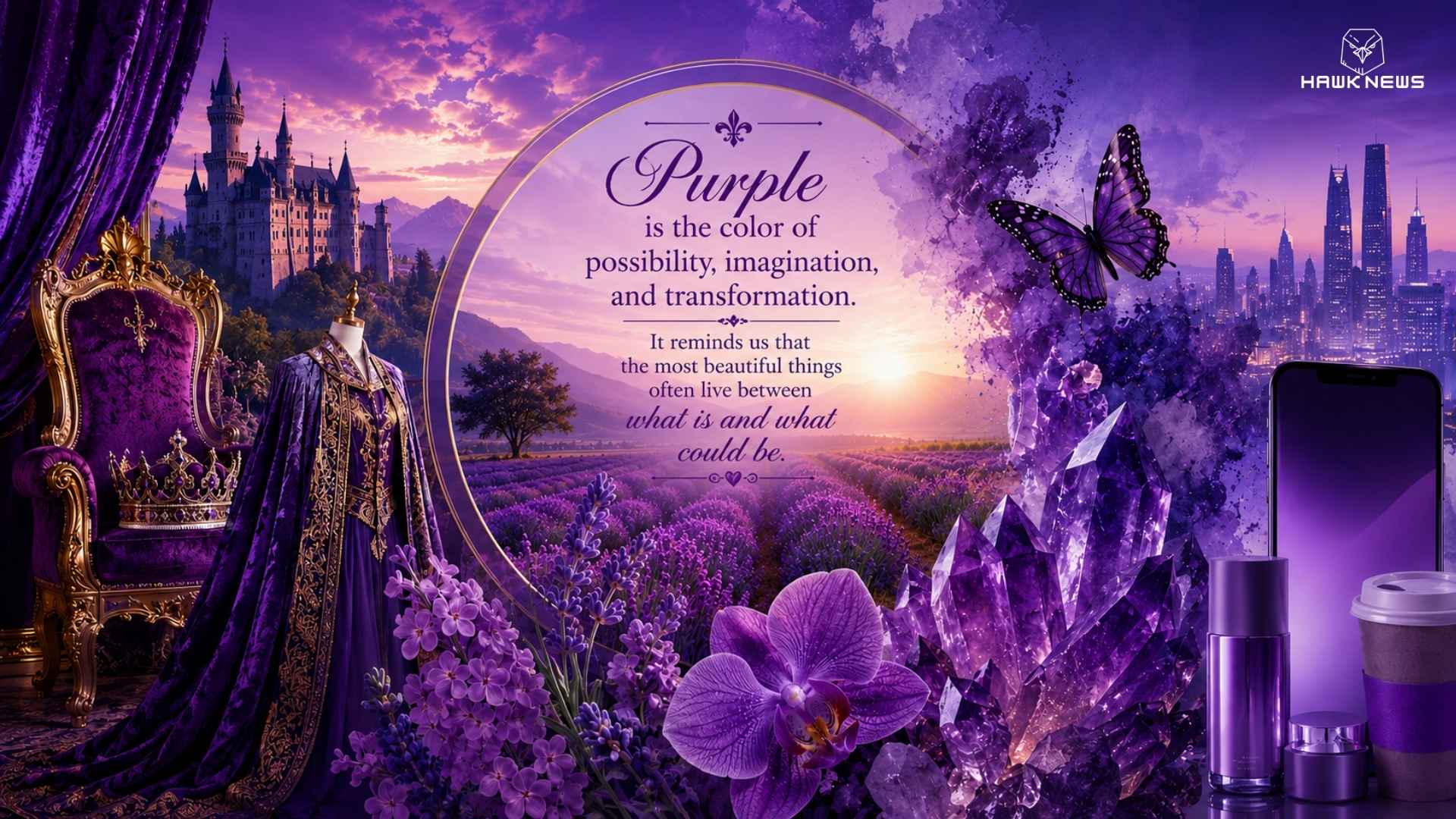
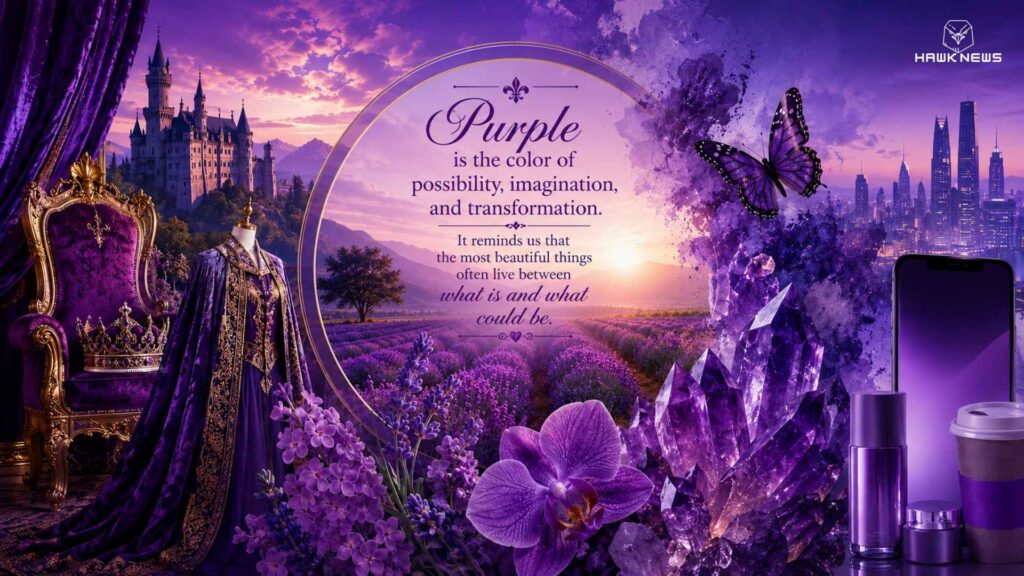
From ancient sea snails to royal robes. From sacred spaces to artist studios. From velvet curtains to smartphone screens. From royal thrones to social media feeds.
Its journey spans centuries, continents, cultures, and generations.
And still, it continues to evolve.
That may be the greatest lesson hidden within this remarkable color. Purple teaches us that we do not have to remain confined to a single role or identity. Like the color itself, we can carry many meanings, embrace many seasons, and still remain true to our essence.
"Perhaps that is why purple continues to fascinate us. It is the color of possibility—the color that reminds us we can become more than one thing and still be beautifully ourselves."