There are cars people drive.
And then there are cars people remember.
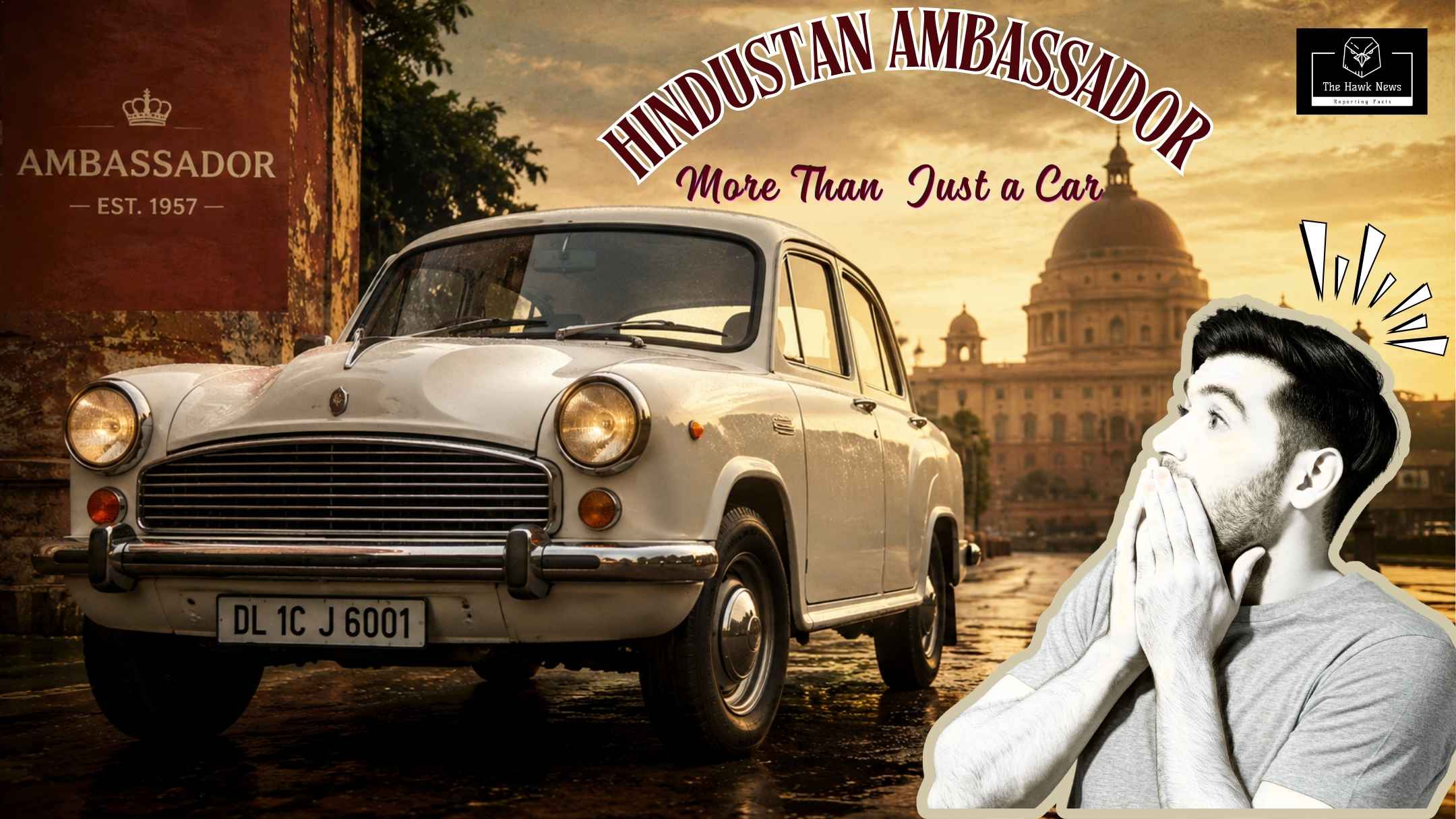
The Hindustan Ambassador belongs to the second category, not because it was the fastest machine on the road, nor the most beautiful by international standards, but because it carried the emotional weight of a nation finding its identity.
To speak of the Ambassador is to speak of old India itself.
An India of government bungalows and monsoon roads.
Of polished leather seats warmed by the afternoon sun.
Of taxi meters clicking in crowded streets.
Of white-clad officials stepping out of broad rear doors while entire corridors stood to attention.
For more than five decades, the Ambassador was not merely an automobile. It was authority, nostalgia, resilience, and memory pressed into steel.
Collectors today do not chase the Ambassador because it is rare.
They chase it because it is familiar.
And familiarity, with time, becomes heritage.
Born From a Young Nation’s Dream
The story of the Ambassador begins shortly after Indian independence, when the country was still learning how to stand on its own industrial feet. India wanted factories, self-reliance, and symbols of progress that belonged to its soil.
That dream found form through Hindustan Motors.
Inspired by the British Morris Oxford Series III, the Ambassador arrived in 1957 with rounded curves, heavy doors, and an unmistakable silhouette that would soon become inseparable from Indian roads.
But unlike Europe, India did not need a delicate sedan.
India needed endurance.
Roads were uneven. Villages were distant. Spare parts were scarce. Mechanics worked with instinct more than manuals. Cars had to survive heat, dust, potholes, overloaded passengers, and endless miles.
The Ambassador answered that call.
It was sturdy. Repairable. Spacious. Built like something meant to outlive its owner.
“There are cars engineered for performance.
The Ambassador was engineered for survival.”
And survival became prestige.
The Shape of Power
Somewhere between the 1960s and 1980s, the Ambassador quietly transformed from a practical vehicle into a national symbol.
Especially when painted white.
A white Ambassador parked outside a building instantly altered the atmosphere around it. It announced the rank before a word was spoken. Politicians rode in them. Judges trusted them. Bureaucrats leaned back in their rear seats while files rested beside them like extensions of the state itself.
In those years, owning an Ambassador meant something profound.
Cars were not common luxuries then. Families waited years for delivery. To possess one was already a statement of economic stability. But the Ambassador carried an additional aura — dignity.
Not flamboyance.
Not excess.
Dignity.
It was the car of serious men making serious decisions.
“An Ambassador did not scream wealth.
It whispered influence.”
And perhaps that is why people respected it.
India’s Most Democratic Luxury
What makes the Ambassador fascinating to collectors today is its contradiction.
It belonged to everyone.
A cabinet minister and a taxi driver could own the same car.
In Kolkata, yellow Ambassador taxis became part of the city’s bloodstream. Their engines coughed through narrow lanes while generations of passengers watched rain blur across fogged-up windows.
At the same time, government convoys rolled through Delhi in identical machines carrying the machinery of power.
The Ambassador moved through every layer of Indian life:
- weddings,
- funerals,
- political rallies,
- school pickups,
- railway stations,
- and long family road trips where children slept against the windows while old film songs played softly on the radio.
Few cars in automotive history have lived so many lives at once.
That is why collectors treasure them today.
Not for Chrome.
Not for horsepower.
But for memory.
Why Collectors Still Fall in Love
Speak to a classic car enthusiast about the Ambassador, and the conversation rarely begins with specifications.
It begins with emotion.
Someone remembers their grandfather driving one in spotless white.
Someone remembers the smell of rexine seats during summer.
Someone remembers seeing ministers arrive in one as a child.
Someone remembers a father teaching them to steer from his lap on an empty road.
The Ambassador carries emotional fingerprints.
Its steering was heavy.
Its body rolled on corners.
Its engine was never refined.
Yet none of those flaws matter to those who love it.
Because classics are not loved for perfection.
They are loved because they preserve time.
“The Ambassador was not ahead of its era.
It became the era.”
Even today, restored Ambassadors at vintage car rallies attract crowds not because they are exotic, but because they feel deeply personal to Indians across generations.
People do not merely photograph them.
They approach them like old relatives.
The Fall of a Giant
By the 1990s, India had changed rapidly.
Economic liberalization opened the gates to modern foreign automobiles. Suddenly the roads filled with sleek Japanese hatchbacks, efficient sedans, and contemporary engineering.
The Ambassador began to look old-fashioned.
Its broad curves belonged to another age. Younger buyers wanted fuel economy, compact styling, and modern technology. Slowly, the once-mighty king of Indian roads became a relic of bureaucracy and nostalgia.
Production officially ended in 2014.
For many, it felt like the quiet end of a chapter in Indian history.
No farewell parade could truly capture what disappeared.
Because what India lost was not just a car.
It lost a moving symbol of continuity.
More Than Metal
Today, restored Ambassadors stand proudly in private collections, heritage garages, film shoots, and vintage rallies across India.
Collectors polish them carefully, not to erase their age, but to honor it.
And perhaps that is the true beauty of the Ambassador.
It reminds us of a slower India.
A heavier India.
An India where journeys mattered more than speed.
Modern cars may be smarter, faster, quieter, and safer. But very few will ever possess what the Ambassador carried so naturally, presence.
The Hindustan Ambassador was never merely manufactured.
It was absorbed into the emotional architecture of a nation.
And some machines, once woven into the soul of a people, never truly disappear.