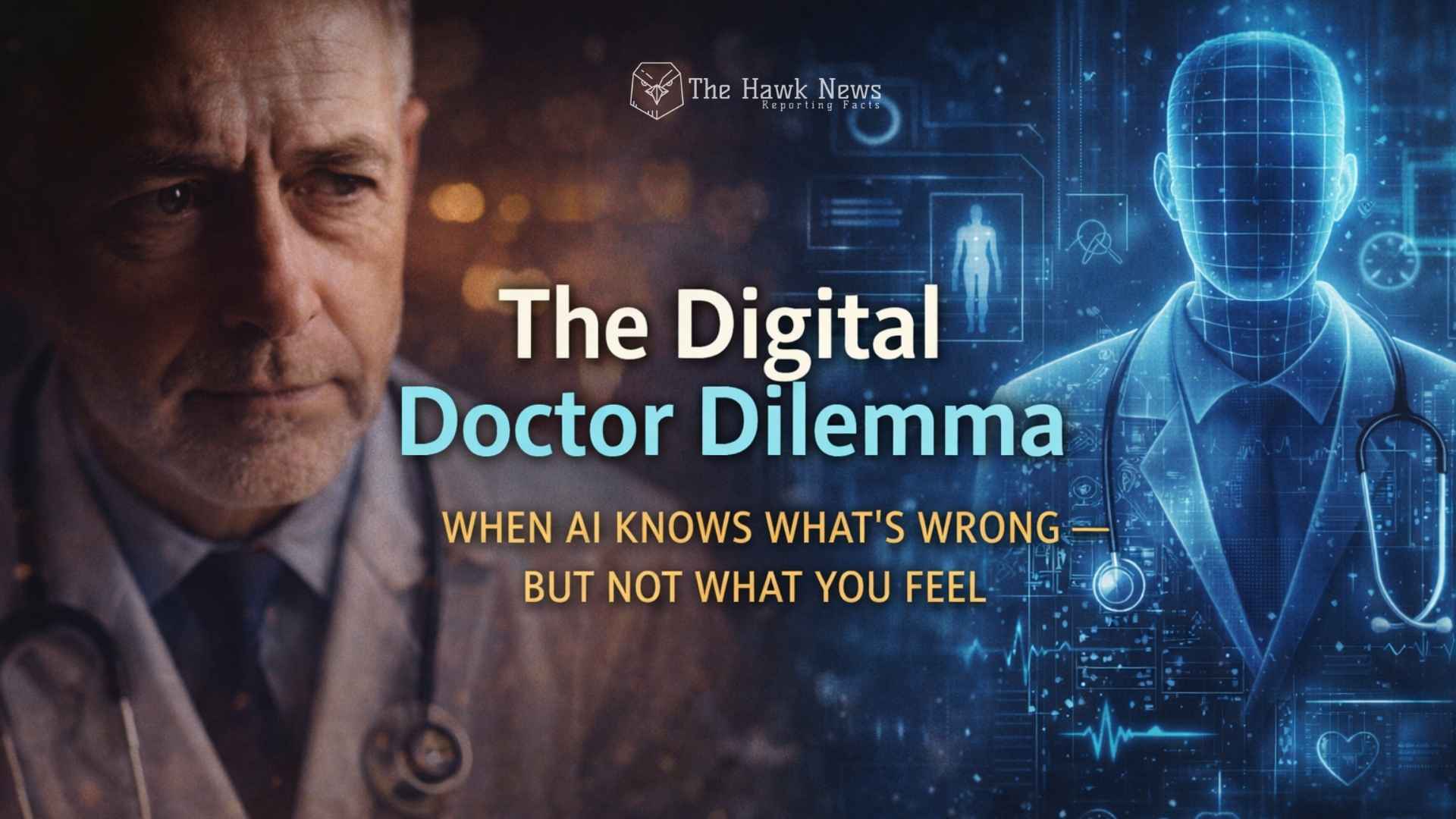
In an age where algorithms predict illness and chatbots offer advice, millions now ask AI before their doctors. But amid accuracy and efficiency, something deeply human risks fading empathy.
The New Waiting Room - Online
It begins quietly.
A mild chest ache, a sleepless night, a new fatigue.
Instead of calling the clinic, we unlock our phones. We type symptoms into a box.
Within seconds, the answer arrives confident, clinical, and terrifyingly precise.
The internet has replaced the old waiting room.
We no longer wait for hours under sterile lights; we wait for the page to load.
And for many, AI has become the new family doctor available 24/7, quick, efficient, and unflinchingly honest.
Recent global studies reveal that nearly 65% of people use online tools or AI-based assistants to self-diagnose before consulting a professional.
In the age of digital immediacy, the question isn’t whether we can ask AI but whether we should.
“We no longer seek comfort in waiting rooms, but in algorithms.”
Editorial reflection, The Hawk News
Why We Trust the Machine
The appeal is undeniable.
AI offers speed when anxiety burns. Privacy when embarrassment stings.
Reassurance when fear grows louder than reason.
You can describe your symptoms freely no judgment, no raised eyebrow, no hurried glance at the clock.
And often, the output is startlingly accurate.
AI doesn’t forget. It doesn’t tire. It doesn’t assume.
It draws from millions of cases, medical journals, and data points, giving the kind of diagnostic reasoning once reserved for experts.
For many, it feels like the perfect listener, the doctor that never interrupts.
But perfect listening isn’t the same as understanding.
The Power and the Peril
AI can recognize the language of illness but not the language of pain.
It can map your biology, but not your biography.
It can tell you that your symptoms resemble anxiety, but it cannot see why your nights are sleepless the grief, the overwork, the silence that sits beside your bed.
That’s the danger: when technology treats the symptom, not the story.
Because while data can save lives, empathy sustains them.
AI can calculate the risk of a disease; only a doctor can sense the fear behind your eyes when you hear its name.
“AI can detect patterns of illness - but not the poetry of being unwell.”
Editorial reflection, The Hawk News
Doctors & AI / Rivals or Partners?
Medicine’s future doesn’t belong to one or the other it belongs to both.
AI is already transforming healthcare:
- It detects early-stage cancers from imaging scans with breathtaking accuracy.
- It analyzes heart rhythms, predicts strokes, and suggests tailored treatments.
- It empowers patients to track blood sugar, sleep, and stress in real time.
But even the most advanced algorithm cannot hold a trembling hand or offer silence as therapy.
It can interpret symptoms, but not suffering.
The real evolution of medicine will come when AI becomes an assistant not a replacement.
When data guides the doctor, and empathy completes the cure.
“The future of healing is not machine versus human but machine with human.”
The New Ethics of Trust
We’ve entered an era where knowledge is instant but wisdom is slow.
AI democratizes information, but it also breeds overconfidence.
Sometimes, the greatest danger isn’t the algorithm’s error it’s our willingness to believe it over experience.
Doctors aren’t perfect but their imperfection is what makes them human.
They don’t only diagnose; they discern.
They don’t only treat; they teach us how to live with uncertainty.
And perhaps that’s the medicine AI will never learn to prescribe the courage to remain human in a world of mechanical certainty.
Reflection: Knowing When to Trust the Machine
AI can guide you toward the truth but not toward peace.
It can save your life but not shape how you live it.
In the hands of a doctor, it’s a gift. In isolation, it’s a gamble.
The wisest patient of tomorrow will do both:
consult the machine for information,
and the doctor for interpretation.
Because medicine without empathy is calculation.
And empathy without knowledge is risk.
But together, they are healing.
“The art of medicine consists of amusing the patient while nature cures the disease.” Voltaire
And now, in our century, that art may depend on keeping one hand on the pulse
and the other on the power button.