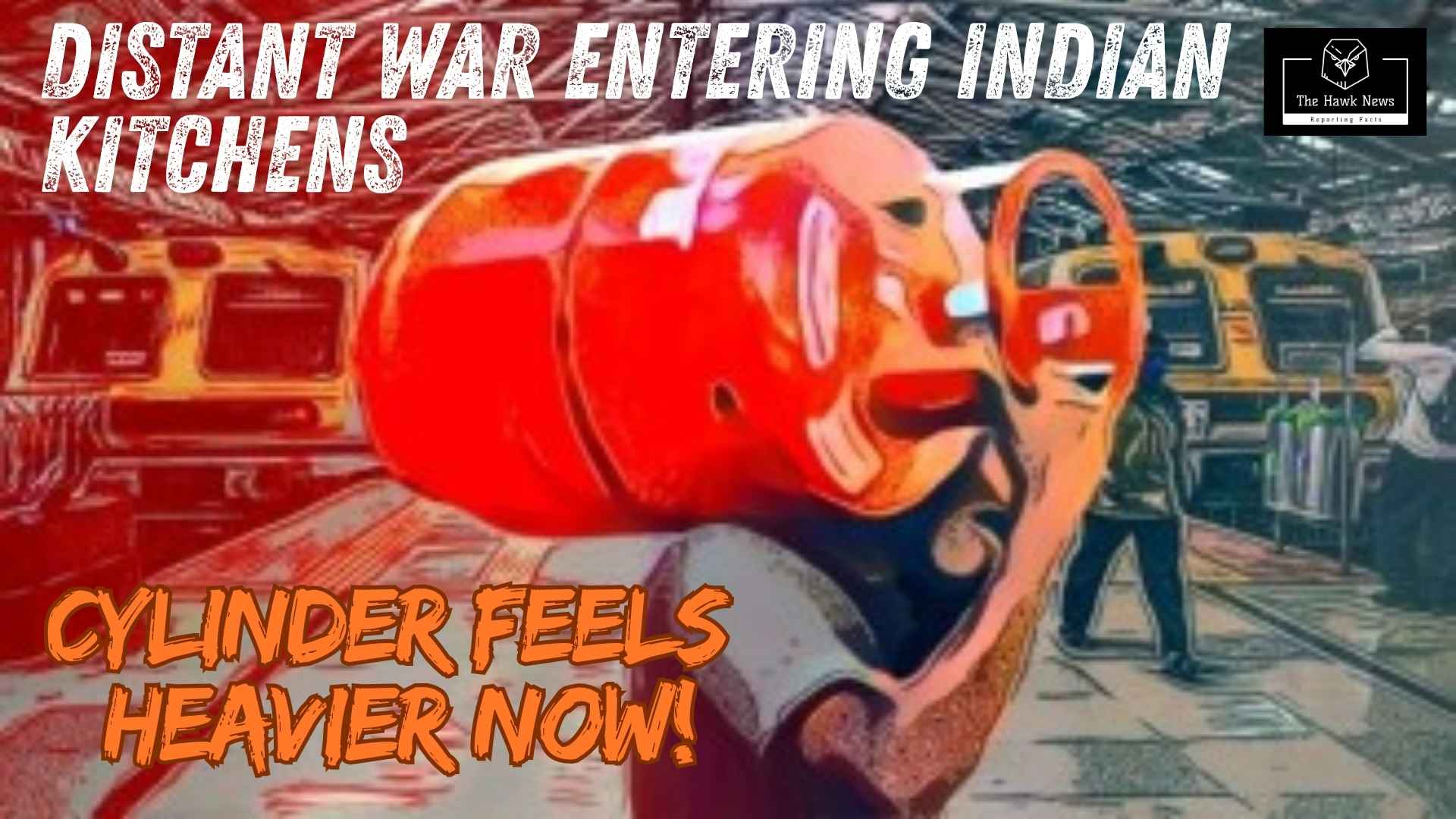
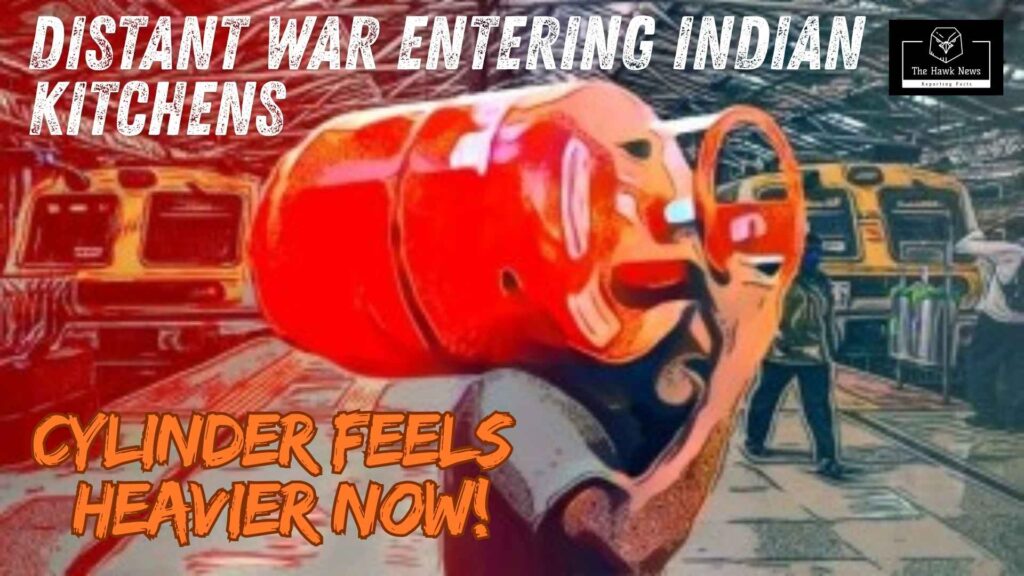
The cylinder looks heavier these days.
Same metal. Same shape. Same routine of lifting, balancing, placing it down in a corner of the kitchen.
But something has changed.
Not here. Not visibly.
Somewhere far away.
A Route Most Never Think About
There is a narrow stretch of water between Persian Gulf and the open sea. It is called the Strait of Hormuz.
It does not look dramatic on a map. Just a thin line.
But through that line passes:
- Nearly one-fifth of the world’s oil supply
- A significant share of global LPG shipments
- And a large portion of what eventually becomes cooking gas in Indian homes
India, despite its size, depends heavily on imports for LPG. A major chunk of that supply moves through this exact route.
Which means, when that line tightens, everything else does too.
When War Doesn’t Stay Where It Starts
Tensions and conflict in parts of the Middle East have once again drawn attention to this choke point.
Shipping routes don’t shut down all at once.
They slow. They hesitate. They get expensive.
Insurance costs rise.
Freight charges spike.
Ships reroute or wait.
And in that waiting, supply thins out.
There have already been indications of disrupted LPG flows in recent weeks, with traders flagging reduced cargo movements and tighter availability. Not a collapse, but enough to create pressure.
Pressure travels.
From Sea Routes to Stove Flames
It doesn’t arrive as breaking news in most homes.
It arrives quietly.
A slightly higher refill cost.
A delay in delivery.
A conversation that sounds like: “Let’s stretch this cylinder a little longer.”
No protests. No headlines screaming urgency.
Just adjustment.
India has tried to cushion this with subsidies and alternative sourcing turning to suppliers beyond the Gulf, including the United States and Russia. But logistics isn’t instant. Supply chains don’t bend without cost.
And cost rarely disappears. It shifts.
Most often, downward.
The Silent Arithmetic of a Household
A cylinder is not just fuel.
It decides:
- How often a kitchen runs fully
- Whether meals are simplified
- How budgets are rearranged without calling it a crisis
Because this isn’t seen as a crisis.
It’s seen as life.
Something to manage. Something to absorb.
And that’s what makes it easy to miss.
The Distance That Doesn’t Protect
There is a tendency to believe distance offers safety.
That a conflict happening thousands of kilometers away remains there.
But energy doesn’t respect geography that way.
A disruption at sea becomes a price on land.
A delay in shipping becomes a compromise in a kitchen.
The line between global and personal is thinner than it appears.
Almost like that narrow stretch of water most people never think about.
No Dramatic End, Just a Shift
The ships will move again.
Routes will stabilize. Markets will adjust.
That’s how these cycles usually go.
But something stays behind.
A quiet awareness:
that the weight of everyday life is not always created at home.
Sometimes, it is carried across oceans, through conflict zones, and into spaces as ordinary as a kitchen.
The Weight, Reconsidered
So the cylinder feels heavier.
Not because it has changed.
But because what it carries is no longer just gas.
It carries distance.
Dependence.
And a reminder;
That the world is closer than it looks.