
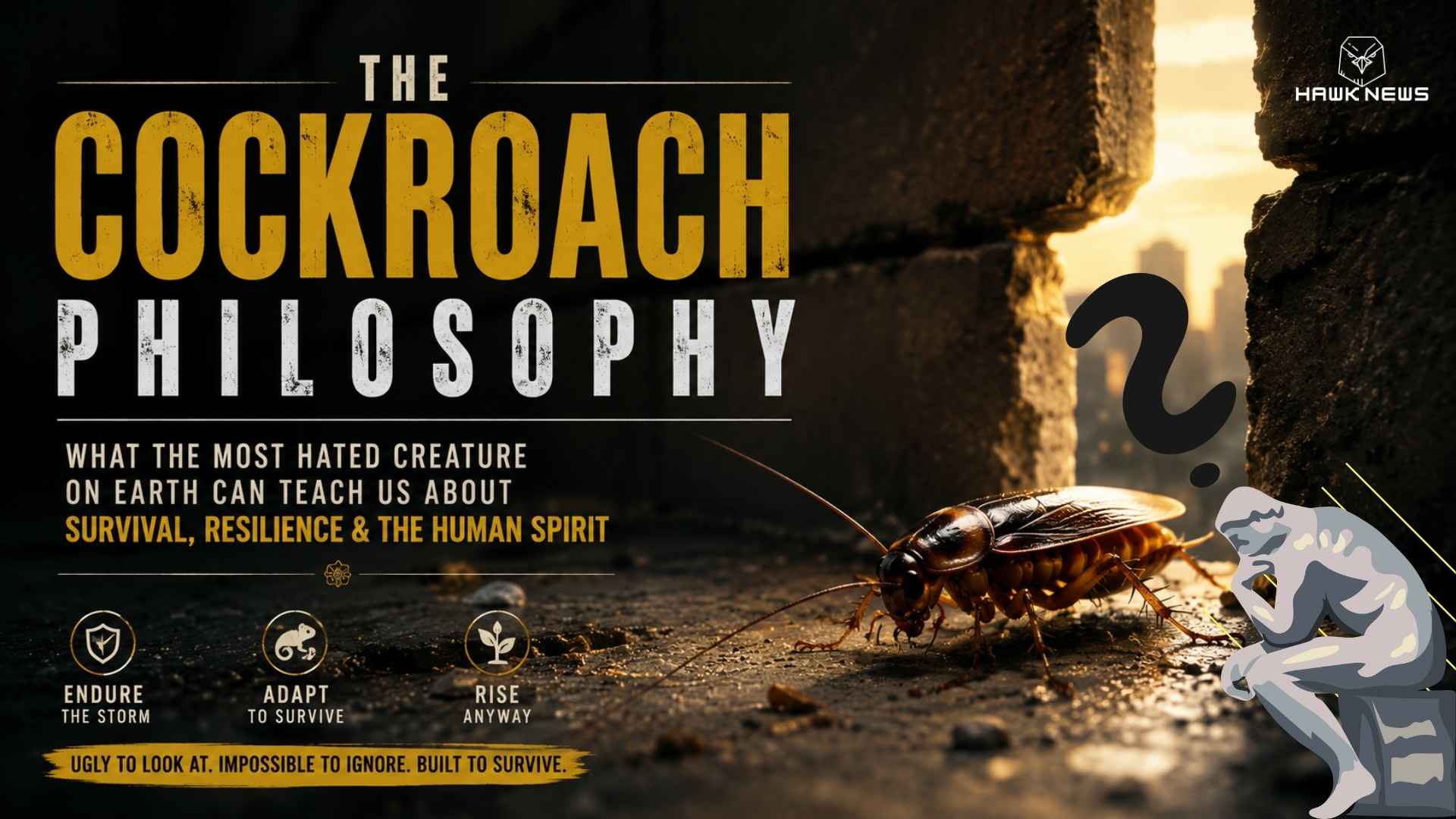
There are creatures we admire.
The eagle soaring through storms.
The lion roaring across the savannah.
The horse charges into battle.
And then there is the cockroach.
No poems are written about it. No child dreams of becoming one. It is crushed, chased, poisoned, cursed, and feared. Yet despite humanity’s relentless war against it, the cockroach remains.
Perhaps that is precisely why it deserves our attention.
Because survival is not always graceful.
Sometimes survival is ugly, stubborn, silent, and deeply misunderstood.
The Creature That Refused to Disappear
Cockroaches have existed for nearly 300 million years.
Empires collapsed. Continents shifted. Dinosaurs vanished. Ice ages came and went. Civilizations rose from dust and returned to dust again.
Yet the cockroach endured.
Not because it was the strongest creature alive.
Not because it was the smartest.
Not because nature favored it with beauty.
It survived because it adapted.
And perhaps that is the first lesson life quietly whispers to us:
Resilience is rarely about power. It is about adjustment.
Many people believe resilience means never breaking, never crying, never feeling exhausted. But true resilience is often the opposite. It is bending without snapping. It is shrinking yourself into impossible spaces until the storm passes. It is learning how to survive seasons that were never meant to be comfortable.
The cockroach understands this better than we do.
It Survives What Was Meant to Destroy It
Scientists often speak about the extraordinary durability of cockroaches. They survive poison, starvation, pressure, and environments that would destroy many other organisms.
Human beings face different kinds of poisons.
Not chemical ones. Emotional ones.
Rejection.
Failure.
Loneliness.
Humiliation.
Betrayal.
Grief.
Some words can wound more deeply than weapons. Some disappointments quietly eat away at the soul. Some seasons leave a person emotionally unrecognizable.
Yet some people still wake up every morning and continue.
Not because they are unhurt.
But because they refuse to disappear.
That is resilience.
Not smiling through pain for appearances.
Not pretending everything is fine.
But carrying broken pieces forward anyway.
The World Celebrates Butterflies, But Survival Often Looks Like a Cockroach
Social media has conditioned us to admire polished transformation stories.
The butterfly.
The glow-up.
The comeback montage.
But real survival is often far less cinematic.
Sometimes resilience looks like:
- paying bills while mentally exhausted
- grieving quietly while still showing up to work
- failing repeatedly but trying again
- surviving anxiety nobody notices
- rebuilding life after public embarrassment
- carrying responsibilities while your heart feels heavy
The cockroach does not survive elegantly.
It survives desperately.
And there is dignity in that, too!
Adaptability Is a Superpower
Cockroaches adapt faster than many creatures on Earth. They evolve resistance. They find shelter. They learn patterns. They endure hostile conditions.
Human beings struggle because we often resist adaptation.
We want life to remain predictable.
We want people to remain the same.
We want comfort to stay permanent.
But life changes without asking permission.
Friendships shift.
Dreams collapse.
Careers fail.
People leave.
Health changes.
A single phone call can alter an entire future.
The people who survive are not always the most talented.
Often, they are simply the ones willing to adapt.
The ones who say:
“This is not the life I planned… but I will still learn how to live it.”
That sentence alone has saved countless lives.
Resilience Is Quiet
Cockroaches move mostly in darkness.
Interestingly, many resilient people do too.
The strongest battles are often invisible.
A person may laugh publicly while privately fighting despair. A mother may carry an entire household while emotionally collapsing inside. A young man may smile with friends while battling thoughts he never speaks aloud.
Human resilience rarely announces itself dramatically.
Sometimes it is simply:
- getting out of bed
- answering one more email
- surviving one more day
- choosing not to give up tonight
Small acts become survival rituals.
And survival rituals eventually become strength.
Every Scar Is Proof You Stayed Alive
Cockroaches are not delicate creatures. Their bodies carry evidence of harsh environments.
Human beings carry invisible scars, too.
Every heartbreak changes something.
Every betrayal leaves fingerprints.
Every hardship reshapes identity.
But scars are not only reminders of pain.
They are evidence.
Evidence that something tried to destroy you and failed.
The world often glorifies perfection, but endurance may be far more admirable.
A cracked person who still chooses kindness is more extraordinary than someone who never suffered at all.
The Deepest Lesson of All
Cockroaches are hated because they remind us of survival stripped of beauty.
Yet life itself is often exactly that.
Not every season will feel meaningful.
Not every chapter will feel inspiring.
Some years are simply about enduring long enough to see light again.
And there is no shame in survival.
No shame in resting.
No shame in healing slowly.
No shame in rebuilding yourself piece by piece.
The cockroach survives because it refuses to go extinct.
Human beings must sometimes do the same.
So when life corners you into dark spaces, when failure embarrasses you, when hardship makes you feel small, remember this strange truth:
The creatures that survive the longest are not always the prettiest.
They are the ones who keep going.