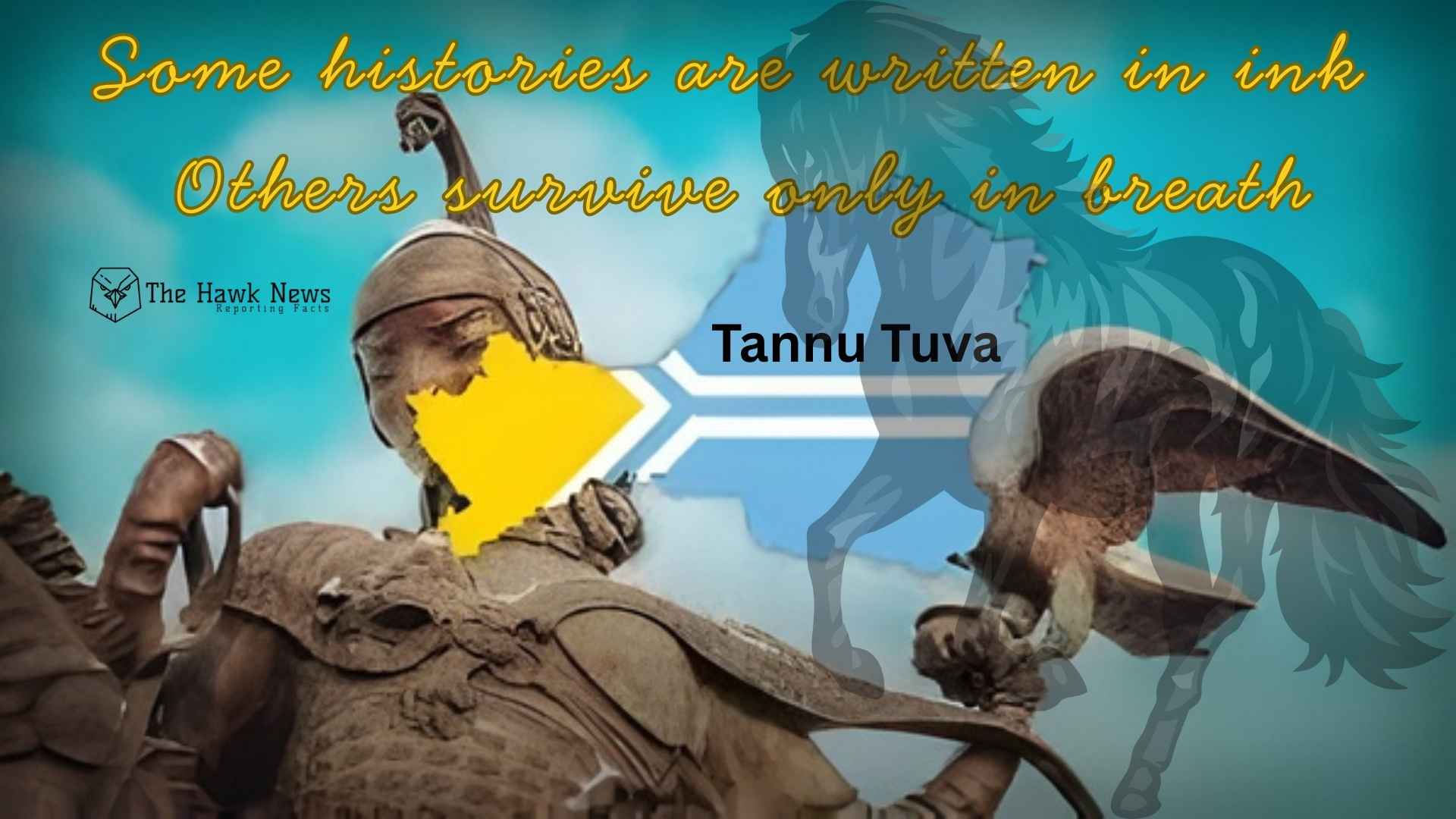
Some histories are written in ink.
Others survive only in breath.
In the high steppes of southern Siberia, between Mongolia and what is now the Russian Federation, there once existed a country so small and remote that much of the world never learned its name. Tannu Tuva—also known as Tannu-Tuva or simply Tuva—lived briefly on the map of nations and far longer in the memories of its people.
Its most enduring record is not a treaty, a flag, or a monument.
It is a song.
A song that repeats a single urgent line:
“Go on, go on, go on, Ezir-Kara.”
A Country That Barely Existed—Yet Endured
From 1921 to 1944, Tuva existed as the Tuvan People’s Republic, a sovereign state recognized internationally by only two governments: the Soviet Union and Mongolia.
Before that, it had passed between Qing Chinese influence and Russian imperial interest. After 1944, it was formally annexed into the Soviet Union, becoming first an autonomous oblast and later an autonomous republic within Russia.
But Tuva was never merely a political entity.
It was a culture shaped by motion.
Tuva’s identity was rooted in:
- Nomadic pastoral life
- Deep horse culture
- Shamanism intertwined with Tibetan Buddhism
- Oral storytelling and music, especially throat singing (khöömei)
In a land without cities or borders as the modern world understands them, movement was meaning. To ride was to live. To race was to be remembered.
This is the cultural soil from which Ezir-Kara emerges.
Who Was Ezir-Kara?
The honest answer is also the most uncomfortable one:
Ezir-Kara exists more clearly in song than in archives.
There are no Soviet files that document him as a political figure, no pre-revolutionary census that lists him as a notable citizen, no court records or biographies preserved by the state. Yet his name survives—repeated, sung, remembered.
What we can say with reasonable confidence is this:
- Ezir-Kara was likely a real person
- He was remembered as an exceptional horse racer or horseman
- His story was preserved through oral tradition, not bureaucracy
- His name appears in traditional Tuvan folk songs still performed today
Modern ensembles such as Huun-Huur-Tu have carried the song beyond Tuva, introducing it to global audiences who sense its urgency even without understanding the language.
The refrain—“Go on, go on, go on”—is not casual encouragement. It is rhythmic, insistent, almost ritualistic.
In nomadic cultures, repetition in song is rarely decorative. It is functional. It sustains motion. It resists stopping.
Why Horses Matter in Tuva
To understand why a horse racer could become immortalized in song, one must understand the role of horses in Tuvan life.
In Tuva:
- Horses were transportation, livelihood, and survival
- They represented wealth, status, and independence
- Racing was not entertainment alone—it was social memory
A great horseman was more than an athlete. He was:
- A symbol of freedom across open land
- A carrier of ancestral routes
- A living expression of harmony between human, animal, and landscape
When a community remembered a rider, it remembered itself.
So the song of Ezir-Kara is not simply about speed. It is about a way of life that depended on motion—across grasslands, seasons, and generations.
The Soviet Moment: Where History Grows Quiet
In 1944, Tuva’s annexation into the Soviet Union marked the end of its political independence. What followed was not a single dramatic event but a gradual, systematic transformation.
The Soviet system brought:
- Forced settlement of nomadic peoples
- Collectivization of herds
- Suppression of shamanic practices
- Reclassification of traditional roles as “unproductive”
Horsemen, shamans, and clan leaders—figures central to nomadic identity—often found themselves marginalized, silenced, or erased.
There is no verified archival evidence that Ezir-Kara was personally executed or targeted by Soviet authorities. Claims that he was “killed during annexation” cannot be proven in the conventional historical sense.
But oral tradition does not operate on the same rules as archives.
When Tuvans say Ezir-Kara did not survive the Soviet era, they may not be referring to a documented death. They may be speaking of something more profound:
The death of the world that made him possible.
The Tombstone That Isn’t a Grave
Interpretations of the song often reference a tombstone at the end—a symbolic marker of loss. This imagery is almost certainly metaphorical.
In Tuvan artistic tradition, death in song is rarely literal. It signifies:
- Cultural rupture
- Spiritual loss
- The burial of an old order
Ezir-Kara’s “grave” is not only his own. It belongs to:
- Nomadic freedom
- Independent Tuva
- A rhythm of life interrupted by modernity
His story ends not with a recorded execution, but with silence—broken only by song.
Why the Song Still Matters
Today, when Ezir-Kara is sung, it is not nostalgia for a single man. It is an act of cultural preservation.
Each repetition of “Go on, go on, go on” becomes:
- A refusal to forget
- A declaration of continuity
- A reminder that motion itself is memory
In a world where histories are often validated only by documentation, the song asserts another truth: some lives are too embedded in culture to be archived.
Man or Myth? The Question Misses the Point
Was Ezir-Kara real?
Almost certainly.
Can we reconstruct his life?
Probably not.
But in oral societies, truth is not measured by paperwork. It is measured by endurance. If a name survives across generations, sung by people who never met the man himself, that name has crossed from biography into meaning.
Ezir-Kara’s legacy is not factual in the narrow sense.
It is cultural.
And culture, unlike states, does not vanish when borders change.
A Thought for This Generation
Ezir-Kara represents something painfully familiar today:
A gifted individual whose world disappeared before his story could be properly recorded.
In an age where cultures, languages, and ways of life are vanishing faster than they can be documented, his song carries a warning—and a promise.
If history does not write you down,
art will remember you.
And as long as the song is sung,
the rider is still moving.
Go on. Go on. Go on.