A complaint was filed. The complaint was examined. Documents were produced. The complainant reportedly withdrew the complaint.
For most citizens, that should have been the end of the matter.
But according to allegations now emerging from Chennai, the real trouble appears to have started only after the complaint was withdrawn.
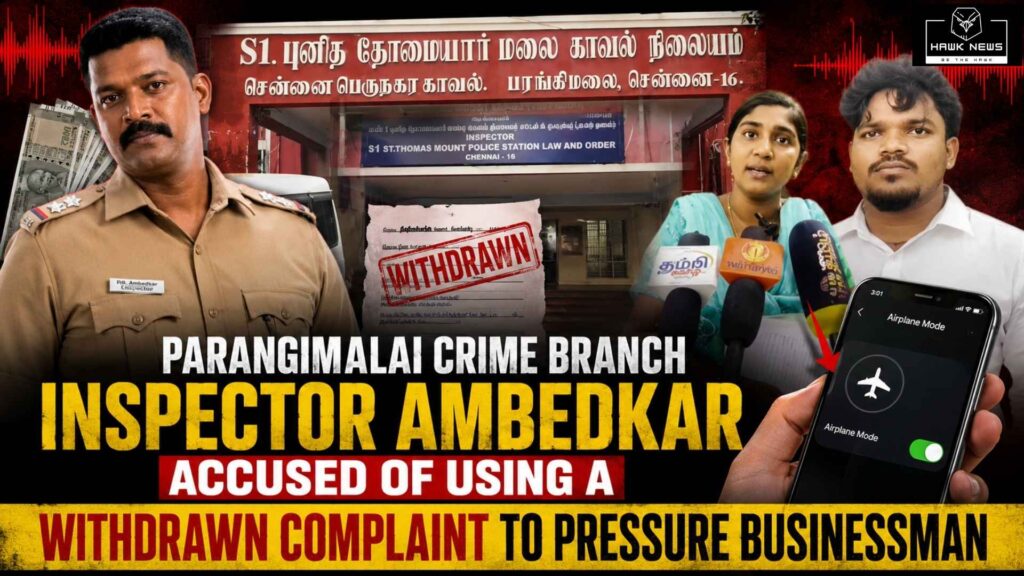
Audio recordings, claims of unofficial pressure, instructions to switch phones to Airplane Mode, and a controversial house search have now raised serious questions about the conduct of Parangimalai Crime Branch Inspector Ambedkar.
A Business Rivalry Turns Into a Police Matter
The dispute reportedly began between two overseas medical education consultancies.
Prabhat Ravindran and his wife Regina had earlier worked for Aira Overseas, a company that assists students seeking medical education opportunities abroad. After leaving the company, they started a competing business.
According to reports, competition between the two businesses eventually led to friction.
A complaint was then filed alleging that Ravindran had misappropriated around ₹2 lakh while working at the company.
However, Ravindran reportedly produced documents and records showing that the money had been used with proper authorization. Following this, the complainant is said to have withdrawn the complaint.
At this point, the matter appeared to be closed.
If The Complaint Was Withdrawn, Why Did The Pressure Continue?
This is where the controversy begins.
According to the allegations, Inspector Ambedkar later contacted Ravindran and informed him that another complaint had surfaced in his name.
The inspector allegedly assured him that he would "take care of the issue" and that there was nothing to worry about.
But if there was indeed a genuine complaint, why was the communication happening in this manner?
More importantly, why was Ravindran allegedly instructed to keep his phone in Airplane Mode and avoid discussing the matter with others?
These questions now sit at the centre of the controversy.
The Airplane Mode Audio
The most damaging part of the allegations comes from audio recordings that have surfaced.
In the recordings, the inspector can allegedly be heard repeatedly instructing Ravindran to switch his phone numbers to Airplane Mode and not discuss the issue with anyone else.
For many observers, this is the most troubling aspect of the case.
Police investigations are expected to follow legal procedures, official notices, and documented processes.
Instructions to isolate communication and avoid discussions naturally raise questions about the purpose behind such advice.
Whether these instructions had a legitimate investigative basis or not is now a matter that requires official scrutiny.
The House Search Raises More Questions
The controversy did not stop with the phone calls.
According to Ravindran's family, Inspector Ambedkar later arrived at their residence with police personnel and conducted what was described as a search operation.
Ravindran's wife Regina has alleged that she repeatedly asked for the reason behind the search and whether any warrant existed.
She claims no clear explanation was provided.
She further alleges that officers searched documents and belongings throughout the house without adequately explaining the legal basis for the operation.
If these allegations are accurate, authorities will need to explain what complaint or investigation justified such action.
Audio Evidence Leads To Formal Complaint
After learning about the developments, Ravindran reportedly gathered the audio recordings of his conversations with the inspector and submitted them as part of a formal complaint.
The recordings have now become a key piece of evidence behind the allegations.
At present, the claims remain allegations and any final conclusion can only emerge through an independent inquiry.
Inspector Ambedkar's version of events and any official response from the police department will be crucial in determining the facts.
Questions That Demand Answers
This case is no longer just about a business dispute.
It is now about public confidence in law enforcement.
If a complaint was withdrawn, what justified continued intervention?
Why was a citizen allegedly asked to switch his phones to Airplane Mode?
What was the basis for the house search?
Were proper procedures followed at every stage?
And most importantly, if there was no active case, why did the pressure allegedly continue?
These are questions that cannot be answered through speculation.
They require a transparent and impartial investigation.
Until then, the allegations surrounding Parangimalai Crime Branch Inspector Ambedkar will continue to raise uncomfortable questions about accountability, procedure, and the limits of police authority.