For years, experience was the advantage.
You stayed longer. You learned more. You built something that could be listed, line by line, across pages.
It meant stability. It meant value.
It meant you had earned your place.
Now, in certain rooms, it means something else.
The Quiet Trimming
There’s a small shift happening not loud enough to trend, not sharp enough to be called a crisis.
Resumes are getting shorter.
Not because people have done less.
But because they are choosing to show less.
Older roles disappear.
Early years get compressed into a single line.
A decade becomes “relevant experience.”
Nothing false. Nothing fabricated.
Just… reduced.
When More Starts to Look Like Too Much
There’s an unspoken hesitation in hiring.
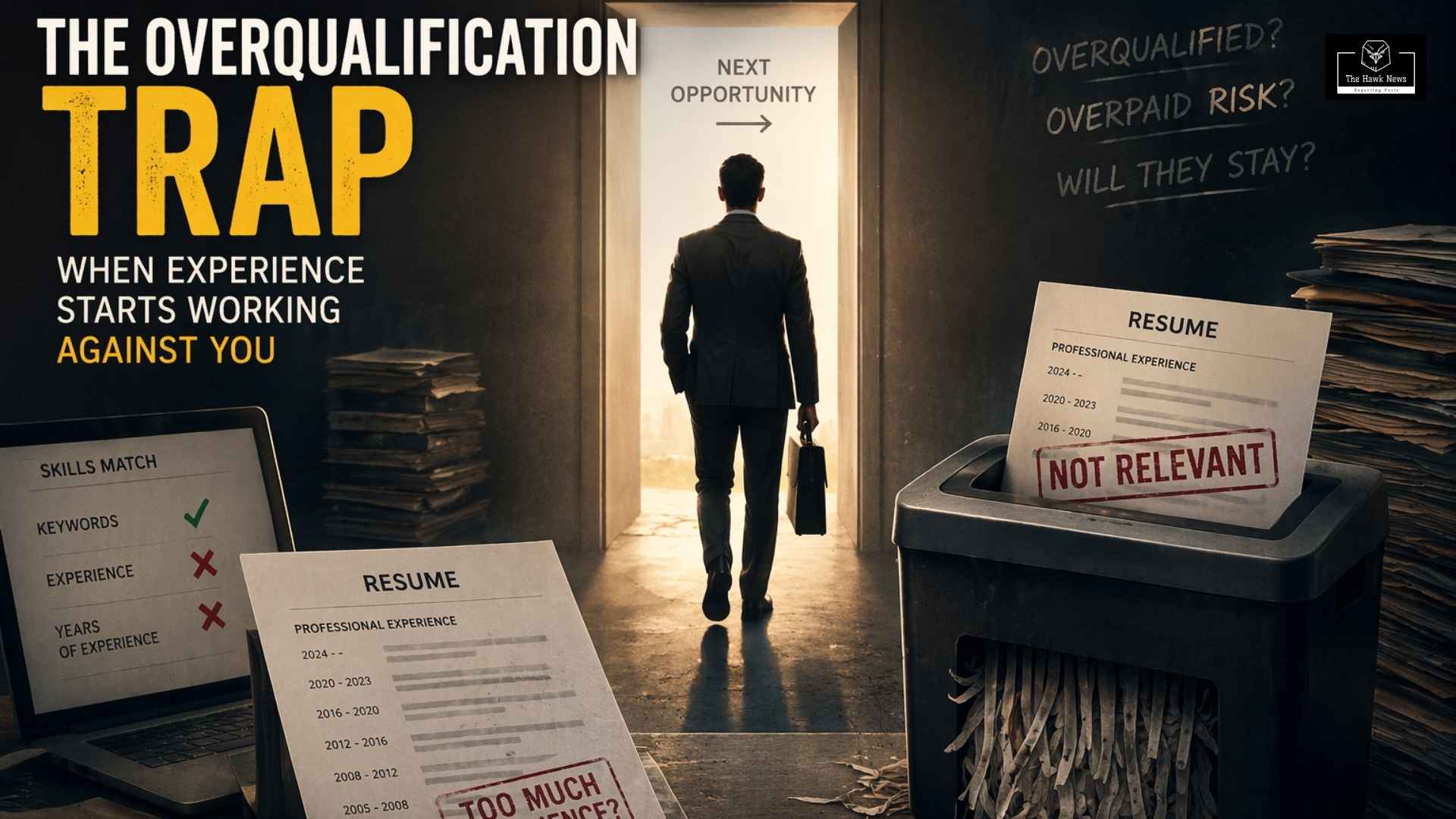
Too much experience raises questions:
- Will they ask for more money?
- Will they stay?
- Will they fit into a structure built for someone earlier in their career?
No one says it directly.
But it shows up in silence.
In rejections without reasons.
In interviews that end with “we’ll get back to you.”
Experience, once a signal of reliability, starts to look like risk.
The Machine That Reads Before Humans Do
Before a recruiter even sees a resume, something else reads it.
Algorithms.
Systems designed to scan, filter, and sort faster than any human could.
They don’t understand careers.
They don’t read context.
They don’t see growth.
They look for matches.
Keywords.
Roles.
Relevance tied to a job description written by someone else.
A ten-year journey doesn’t matter if it doesn’t match the right words.
So people adjust.
Not their skills.
Not their capabilities.
Just how those things are written.
Rewriting Without Lying
This isn’t deception.
It’s adaptation.
A role from eight years ago gets removed not because it didn’t matter, but because it no longer “fits.”
An achievement is reworded to match language that systems recognize.
A career becomes… curated.
Tighter. Cleaner. More aligned.
But also, slightly unfamiliar.
Because somewhere in the process of making it readable, parts of it stop feeling like yours.
The Uneasy Question
What happens when experience needs to be hidden to be accepted?
Not erased but softened.
Not denied but rearranged.
There’s something uncomfortable about it.
The idea that growth, instead of opening doors, sometimes needs to be trimmed to fit through them.
No Clear Villain
It’s easy to blame the system.
Or companies.
Or automation.
But the reality is less dramatic.
Hiring has changed because work has changed.
Speed matters more. Precision matters more.
Roles are narrower. Expectations sharper.
And in that shift, experience hasn’t disappeared.
It has… lost its shape.
What Remains
People still work. Still learn. Still build years that matter.
But those years no longer sit on a resume the way they used to.
They are filtered. Adjusted. Made to fit.
Not because they are less valuable.
But because value is now measured differently.
No Resolution, Just Adjustment
There’s no clear fix for this.
No moment where experience returns to being a simple advantage.
Only a slow understanding
That careers are no longer just lived.
They are edited.
And sometimes, what gets removed isn’t the least important part.
Just the part that no longer fits the system reading it.