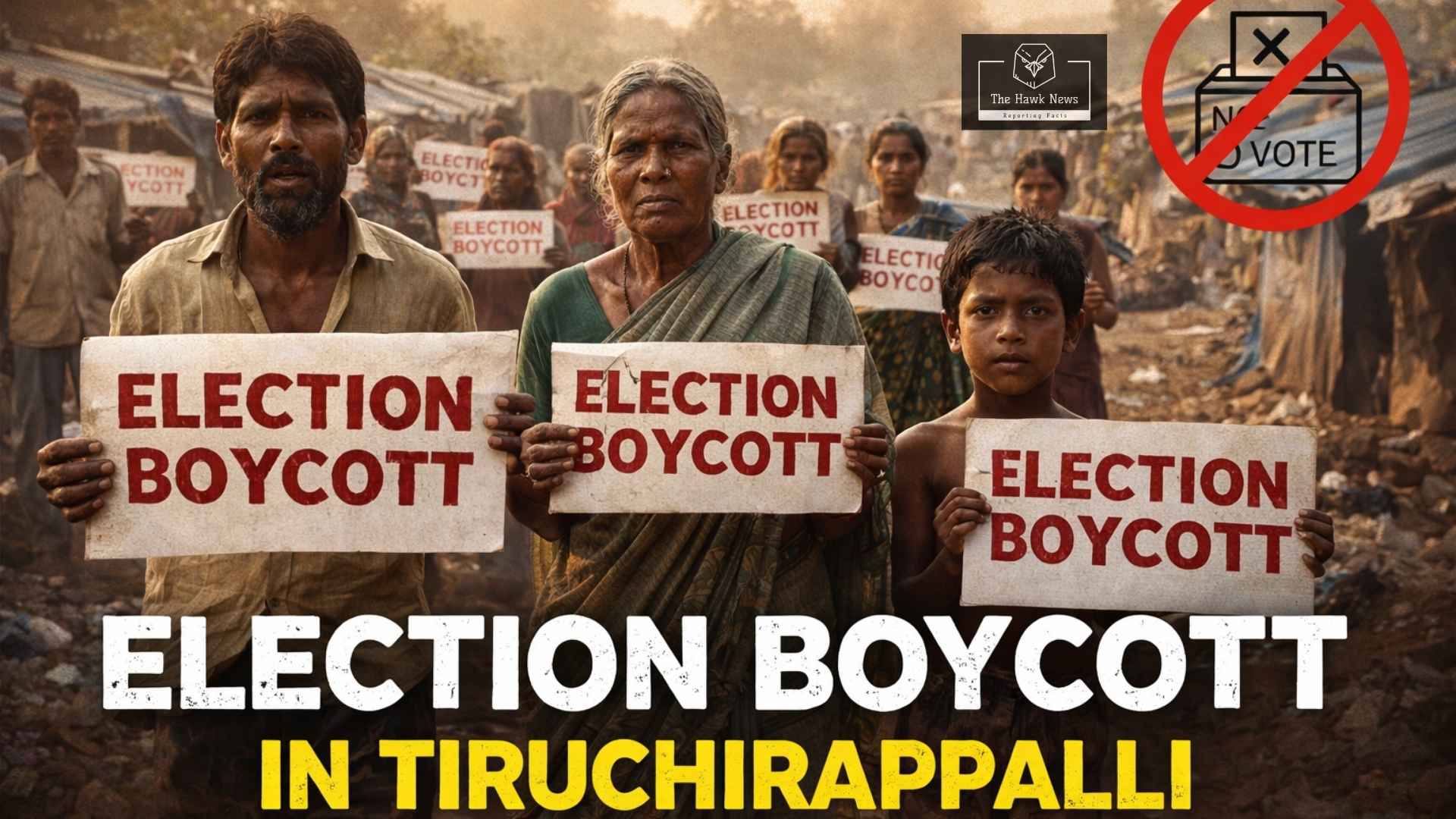
In a state gearing up for elections, a small settlement in Tiruchirappalli is asking a larger question—what is the value of a vote when basic rights remain unmet?
A Boycott Born Out of Silence
As Tamil Nadu moves closer to a high-stakes election, around 50 families in Tiruchirappalli district have taken a striking stand—they may not vote.
Their reason is not political allegiance or protest ideology.
It is something far more fundamental.
For 16 years, they say, they have lived without:
- Electricity
- Drinking water
- Toilets
“We were relocated here with promises. But after that, nobody came back,” said one resident, reflecting a sentiment echoed across the settlement.
Relocated, Then Forgotten
The families were reportedly shifted from their original homes to make way for a highway expansion project. What was presented as development has, according to residents, turned into long-term neglect.
The settlement today stands as a stark contrast to the idea of progress:
- Temporary structures have become permanent homes
- Basic infrastructure remains absent
- Daily life revolves around scarcity
Residents claim that repeated appeals to local authorities have yielded little to no change.
“We are not refusing to vote for politics. We are refusing because we don’t have the basics to live,” another resident said.
Daily Struggles, Not Seasonal Complaints
The hardships are not recent—they are structural.
- Water must be sourced from distant locations
- Sanitation is either shared or non-existent
- Electricity remains unavailable, affecting everything from safety to children’s education
For women, children, and the elderly, these conditions create daily vulnerabilities that go beyond inconvenience.
Election Season, Unanswered Questions
With elections approaching, political activity has intensified across the state—campaigns, rallies, and alliance negotiations dominate headlines.
But in this settlement, the question is different:
What does democracy mean without dignity?
The boycott threat has drawn attention because it exposes a gap between electoral politics and lived reality.
Political Heat Reaches the Ground
The issue has also placed the local MLA under scrutiny, especially in light of earlier controversies that had already brought attention to the constituency.
Opposition voices have begun raising the issue, framing it as:
- A failure of governance
- A sign of administrative neglect
- A reminder of unmet development promises
However, as of now, there has been no comprehensive public response addressing all the concerns raised by residents.
A Larger Pattern?
While this is a localized issue, it reflects a broader concern seen in parts of India—displacement without adequate rehabilitation.
Development projects often promise:
- Better housing
- Improved infrastructure
- Enhanced quality of life
But when execution falls short, communities are left in prolonged uncertainty.
Democracy at a Crossroads
Election boycotts are not new, but they are significant. They signal a breakdown—not just in service delivery, but in trust.
For these 50 families, the act of voting is no longer symbolic.
It is conditional.
“Give us basic facilities first. Then we will think about voting,” a resident said.
Beyond Votes and Promises
As Tamil Nadu prepares for the polls, this small settlement in Tiruchirappalli serves as a reminder:
Elections are not just about numbers, alliances, or victories.
They are also about whether governance reaches the last mile.
And in this case, the last mile appears to have been waiting—for 16 years.