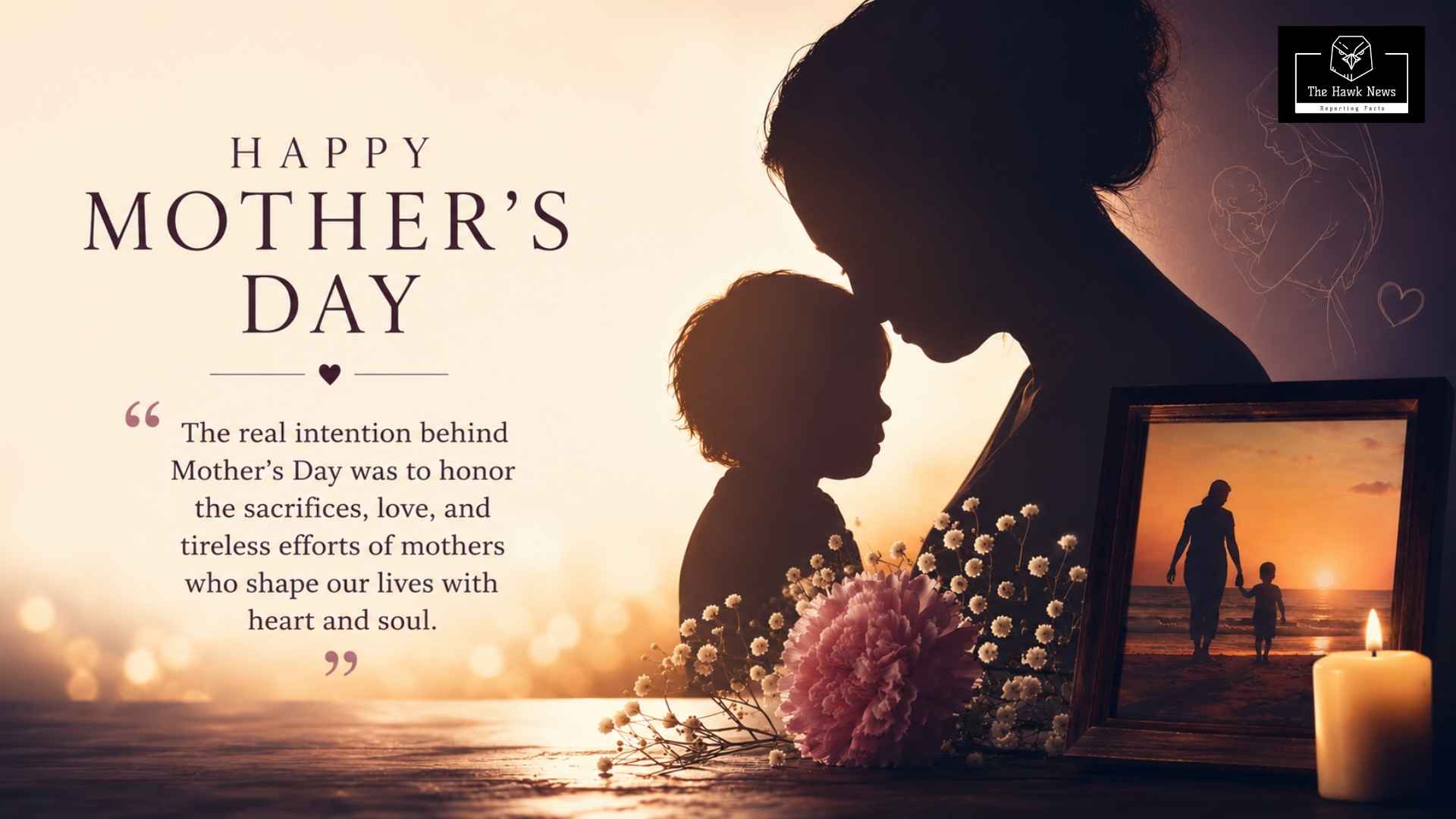
Every year, the world pauses for Mother's Day.
Restaurants fill up.
Flower shops overflow.
Social media timelines become oceans of smiling photographs, handwritten notes, childhood memories, and declarations of love.
To some, it is one of the warmest days of the year.
To others, it is one of the hardest.
Because behind the greeting cards and bouquets lies something far more complicated:
Mother’s Day is not merely a celebration.
It is an emotional mirror.
It reflects love, grief, gratitude, longing, guilt, memory, absence, sacrifice, and the universal human need to belong.
And perhaps that is why the day affects people so deeply.
Where Mother’s Day Began
The modern version of Mother’s Day traces back largely to Anna Jarvis, an American woman who simply wanted to honor her late mother.
Her mother, Ann Reeves Jarvis, had spent much of her life caring for families and wounded soldiers during and after the American Civil War. After she died in 1905, Anna began campaigning for a special day dedicated to mothers and their sacrifices.
In 1908, the first official memorial gathering was held.
By 1914, Woodrow Wilson declared Mother’s Day a national observance in the United States.
But there is an irony that many people do not know.
Anna Jarvis later grew deeply unhappy with what the holiday became. She criticized the commercialization of Mother’s Day, the flower industry, advertisements, expensive gifts, and public performances of affection.
To her, the day was meant to be intimate.
Personal.
Sincere.
Not profitable.
Even today, that tension remains.
The Original Intention Behind the Day
At its purest, Mother’s Day was created for one reason:
acknowledgment.
To recognize the unseen labor of mothers.
The sleepless nights.
The quiet sacrifices.
The emotional weight they carry without applause.
Motherhood often happens in ordinary silence.
Meals prepared without thanks.
Worries hidden behind smiles.
Dreams postponed for children.
The day attempted to give visibility to love that society frequently takes for granted.
But motherhood itself is not simple.
And neither is the day dedicated to it.
The Day Feels Different for the Grieving
For people who have lost their mothers, Mother’s Day can feel less like a celebration and more like an echo.
A voice they cannot hear anymore.
A number they can no longer call.
A good memory cannot be recreated.
Grief becomes strangely louder on days centered around family.
Even something as ordinary as a television advertisement can suddenly reopen wounds people thought had healed.
Some avoid social media entirely during Mother’s Day weekend because every smiling photograph reminds them of their absence.
Others choose to remember quietly.
They cook recipes their mothers once made.
Read old letters.
Visit graves.
Light candles.
Repeat familiar sayings just to hear them alive again for a moment.
As author Mitch Albom once expressed through his writings, death may end a life, but it does not end love.
And so Mother’s Day becomes both beautiful and painful at once.
For Women Who Cannot Have Children
There is another group of people the world often forgets during Mother’s Day:
women carrying the silent ache of infertility.
For many, the day can feel emotionally brutal.
Society has long treated motherhood as the ultimate symbol of womanhood. In many cultures, women are asked about children almost immediately after marriage, as though their identity depends upon it.
But behind many polite smiles are private battles.
Women who endured miscarriages.
Women who prayed for years.
Women who prepared rooms that stayed empty.
Women who imagined names they never got to speak aloud.
Mother’s Day can unintentionally magnify those wounds.
And because infertility is still spoken about in whispers, many women grieve alone.
Yet human worth has never been limited to childbirth.
Some women mother through teaching.
Others, through caregiving, mentoring, protecting, healing, or nurturing wounded people back into hope.
Love is larger than biology.
Nurture cannot always be measured by bloodlines.
The Quiet Pain of Waiting
There are also women caught in between
hoping to become mothers someday.
Waiting.
Trying.
Praying.
Uncertain.
For them, Mother’s Day can feel like standing outside a celebration they desperately want to enter.
Neither fully included nor fully absent.
Hope mixed with longing is one of the heaviest emotional burdens a human being can carry.
Not Every Mother-Child Relationship Is Warm
Modern conversations around Mother’s Day are becoming more honest because society is finally beginning to acknowledge another uncomfortable truth:
Not every mother was loving.
Some relationships between mothers and children carry deep wounds.
Abandonment.
Criticism.
Control.
Abuse.
Emotional distance.
For some people, Mother’s Day does not awaken comfort.
It awakens confusion.
The pressure to publicly celebrate motherhood can become emotionally exhausting for those whose experiences were painful rather than nurturing.
And those feelings are valid too.
Because motherhood, like humanity itself, is imperfect.
The Commercialization of Emotion
Today, Mother’s Day has become a massive global business.
Flowers.
Jewelry.
Luxury dining.
Social media campaigns.
Gift packages wrapped in emotional marketing.
Companies understand something powerful:
People will spend money where emotions are involved.
Ironically, this commercialization was exactly what Anna Jarvis feared.
She believed handwritten letters meant more than expensive gifts.
Presence mattered more than performance.
And perhaps she was right.
Because some of the most meaningful acts on Mother’s Day cost nothing at all:
a conversation,
a memory shared,
an apology,
a prayer,
a moment of gratitude,
or simply showing up.
The Deeper Meaning of the Day
Maybe Mother’s Day was never meant to be perfect.
Maybe its power lies in the fact that it exposes how deeply human beings long for unconditional love.
For some, the day becomes a celebration.
For others, remembrance.
For many, it becomes both at the same time.
And perhaps the healthiest way to understand Mother’s Day is this:
It is not a demand to perform happiness.
It is an invitation to honor and nurture wherever it truly exists.
Sometimes that nurture came from a mother.
Sometimes from a grandmother, aunt, foster parent, older sibling, teacher, or caregiver who stepped into a broken place and chose love.
The people who “mother” us are not always the people who gave birth to us.
In the End
Mother’s Day is far more than flowers and greeting cards.
It is a reminder of the invisible emotional threads that shape human lives.
Threads of sacrifice.
Memory.
Loss.
Protection.
Tenderness.
And longing.
For some, the day is joyful.
For others, heartbreaking.
But perhaps its deepest truth is this:
Every human being, in one way or another, spends life searching for the feeling a loving mother was meant to give
safety,
acceptance,
and the assurance that they are deeply, unconditionally loved.