
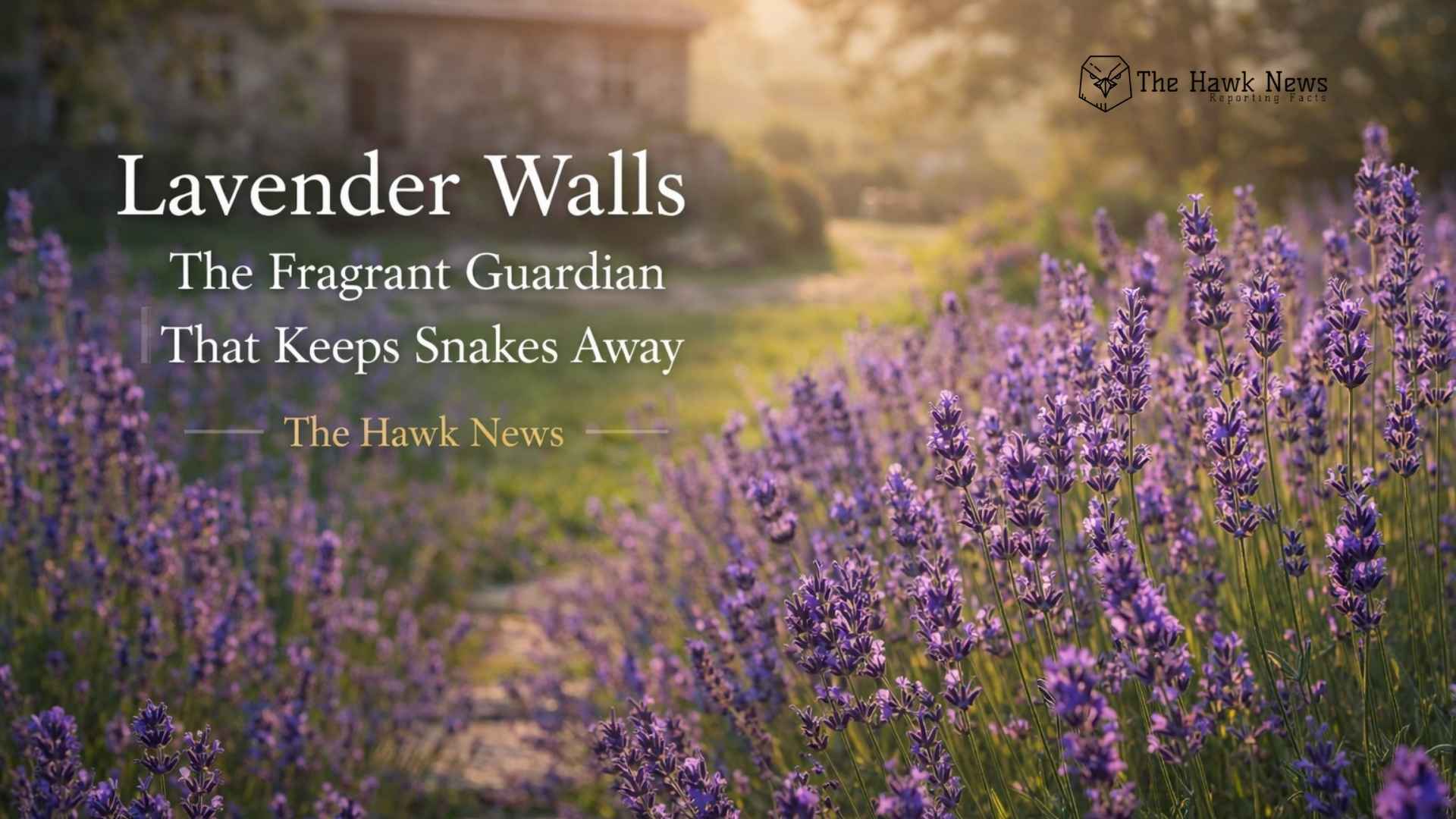

The Fragrance That Guards
Long admired for its serene scent and violet grace, lavender is more than just a decorative bloom — it’s a natural deterrent.
Gardeners across warm climates whisper about its unseen defense: that its fragrance keeps snakes at bay.
Now, even experts like Nicole Carpenter, pest control specialist and President of Black Pest Prevention, confirm this belief.
“Lavender has a pungent smell snakes don’t like and would rather avoid it than cross through it to enter your garden,” she notes.
“This makes them a good anti-snake fence.”
But what’s the science — or mystery — behind it?
The Science of Repulsion
Snakes don’t “smell” the way we do.
They use their forked tongues to collect scent particles from the air and transfer them to a special organ called the Jacobson’s Organ (or vomeronasal organ) — their tool for navigation, hunting, and detecting prey.
When lavender’s intense essential oils fill the air, they overwhelm this sensory system.
To a snake, it’s like a loud, blinding signal — disorienting and unpleasant.
- The camphor and linalool compounds in lavender oil create a chemical intensity snakes find intolerable.
- Unlike humans, who associate lavender with peace, snakes perceive it as a wall of confusion.
Hence, they instinctively avoid areas thick with lavender’s fragrance.
“What soothes the soul of man repels the crawl of serpents.”
How to Plant Lavender as a Natural Barrier
Creating a lavender border isn’t just functional — it’s breathtaking.
Here’s how to let beauty and protection coexist:
1. Choose the Right Variety
Opt for hardy types suited to your climate:
- English Lavender (Lavandula angustifolia) – ideal for cooler regions.
- French Lavender (Lavandula dentata) – thrives in warm, dry areas.
- Lavandin (Lavandula × intermedia) – great for large hedges and heavy scent.
2. Sun and Soil
- Lavender demands full sunlight (6–8 hours daily).
- Soil must be well-drained, sandy or loamy — snakes dislike dry, open areas, another natural deterrent.
3. Water Wisely
- Water young plants twice a week until established.
- Once matured, water sparingly — lavender loves neglect.
- Avoid soggy soil; it weakens the plant and invites pests.
4. Prune and Protect
- Trim after flowering to encourage bushy growth and maintain hedge form.
- Replace older plants every 5–7 years for consistent fragrance and strength.
5. Design for Defense
- Line lavender along garden borders, entryways, or fences — the places snakes might slither through.
- Combine with other deterrents like lemongrass and marigold for layered protection.
Why It Works — And Why It’s Beautiful
Lavender creates a multi-sensory shield:
- Its smell disturbs reptiles.
- Its texture and root dryness deter them from nesting.
- Its color and calm invite pollinators — bees, butterflies — not predators.
The result:
A garden that smells heavenly, looks divine, and stays naturally safe.
“In God’s design, even fragrance has purpose — to heal, to calm, and sometimes, to protect.”
Caring Beyond Protection
While snakes avoid lavender, people are drawn to it for its many uses:
- Essential oil extraction for sleep and stress relief.
- Dried sachets to repel moths and freshen closets.
- Herbal teas that ease anxiety.
- Aesthetic value in gardens, balconies, and pathways.
So even if you never meet a serpent, your garden still gains a sentinel and a sanctuary.
A Word of Balance
While lavender is a helpful deterrent, no single plant can promise total protection.
Snakes may still appear if their food sources (like rodents) are abundant or if the garden’s terrain is dense and cool.
Thus:
- Keep grass trimmed short.
- Seal cracks and holes near foundations.
- Store pet food and birdseed securely.
- Consult local pest control or wildlife experts for persistent issues.
⚠️ Disclaimer: Natural repellents may vary in effectiveness by region and species. Always consult local wildlife authorities or pest management professionals for advice specific to your area.
The Garden of Peace
Planting lavender is not merely about repelling danger — it’s about restoring harmony.
Every bloom becomes a whisper of peace, a reminder that nature, when balanced, protects itself.
“Lavender teaches us that defense need not be harsh; it can be fragrant, graceful, and full of light.”
So plant it, tend it, breathe it — and let your garden become what creation intended:
a sanctuary where beauty and safety dwell together.