
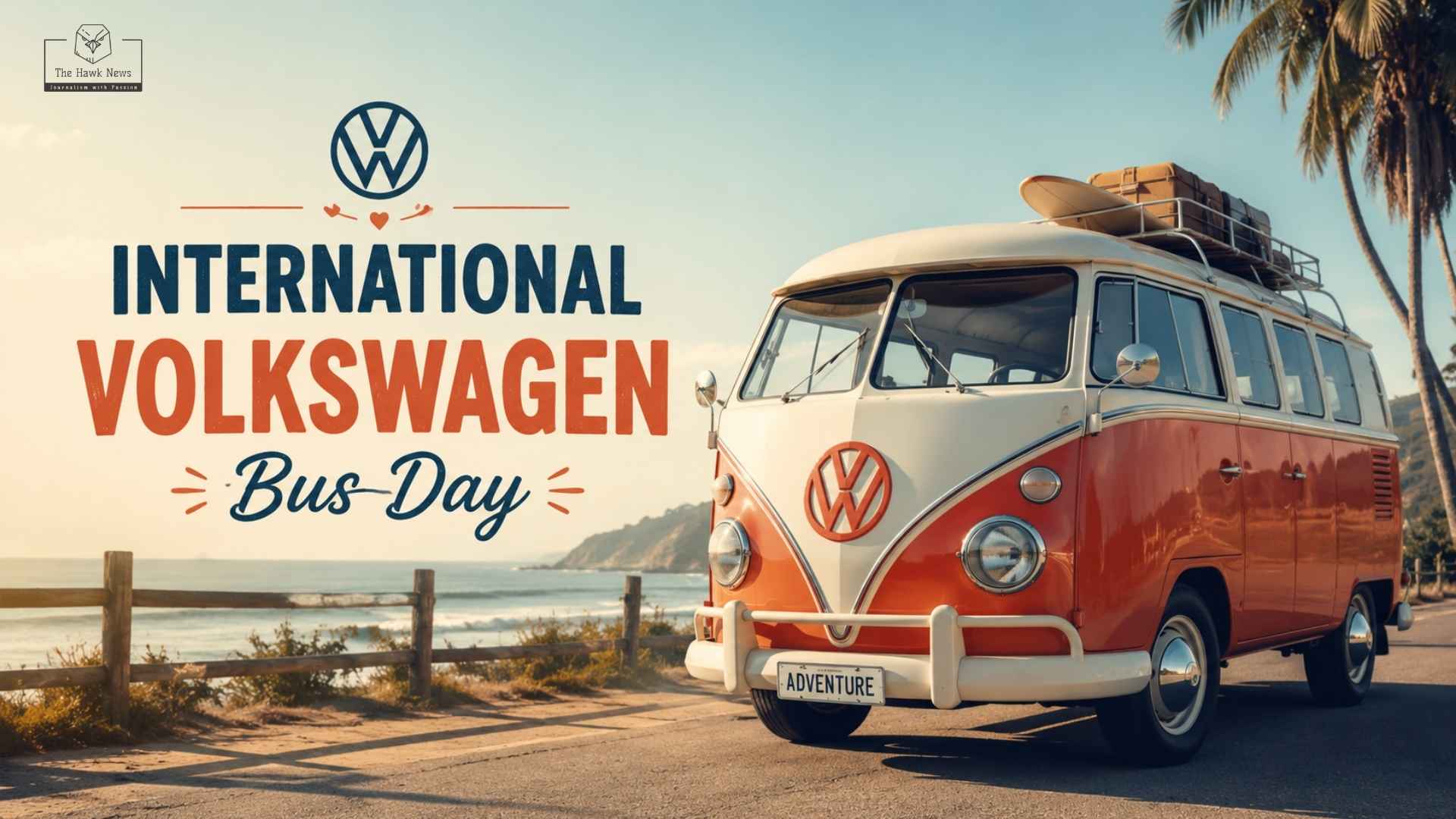
Certain inventions become bigger than their purpose.
A book can become a companion. A song can become a memory. A photograph can become a doorway to another time. In much the same way, the Volkswagen Bus became something far greater than a vehicle. It evolved into a symbol of freedom, adventure, community, and the simple joy of being on the road.
Every year on June 2, people around the world celebrate International Volkswagen Bus Day, honoring one of the most beloved vehicles ever created. Yet this observance is not merely about an automobile. It is about a cultural phenomenon that has carried generations of dreamers, families, artists, travelers, and free spirits across continents and through decades.
The Volkswagen Bus is proof that sometimes the most ordinary-looking creations leave the most extraordinary footprints.
"Not every legend arrives with a roar. Some arrive with a gentle hum and a promise of open roads."
The Sketch That Became a Global Icon
The story begins not with engineers or marketing executives, but with a simple sketch.
In 1947, Dutch businessman Ben Pon visited a Volkswagen factory in Germany. While observing workers moving parts around the plant, he imagined a practical vehicle capable of transporting both goods and people. On a piece of paper, he drew a rough design that would eventually evolve into the Volkswagen Type 2.
When production began in 1950, few could have predicted the influence this modest vehicle would have on the world. It was neither glamorous nor powerful. Its shape was unconventional, its mechanics uncomplicated, and its purpose straightforward.
Yet therein lay its magic.
The Volkswagen Bus was designed to serve people rather than impress them. It offered space, flexibility, and reliability. Families found room for children and luggage. Businesses found a dependable workhorse. Adventurers discovered a companion for journeys unknown.
The bus fit into people's lives so naturally that it soon became part of their stories.
A Vehicle That Refused to Stay Ordinary
Most vehicles remain confined to their practical roles. They transport passengers from one place to another and eventually fade into history.
The Volkswagen Bus chose a different path.
As the cultural tides of the 1960s swept across the world, the bus found itself at the heart of a generation seeking freedom and self-expression. Young travelers painted its sides with vibrant colors, peace symbols, flowers, and messages of hope. Musicians packed instruments into its spacious interior. Surfers loaded boards onto their roofs and chased distant coastlines.
The bus became a rolling canvas for individuality.
What made it remarkable was not its engineering alone but the way people adopted it as an extension of themselves. Every bus looked slightly different. Every owner added a personal touch. Every journey seemed to create another story worth telling.
In a sense, the Volkswagen Bus became a mirror reflecting the dreams of those who drove it.
"A road is just a road until someone follows it in search of wonder."
The Art of Traveling Together
Modern travel often emphasizes speed. We seek the quickest routes, the fastest vehicles, and the shortest travel times.
The Volkswagen Bus belonged to a different philosophy.
Its appeal was never about arriving first. It was about enjoying the journey itself.
Inside a Volkswagen Bus, conversations lingered longer. Songs lasted through winding roads. Shared snacks became treasured memories. Children watched landscapes unfold through large windows while adults rediscovered the beauty of unhurried travel.
The vehicle encouraged togetherness in a way few machines ever have.
Road trips became adventures rather than obligations. Campsites became temporary homes. Detours became opportunities rather than inconveniences.
Many who traveled in a Volkswagen Bus remember not where they were going but how they felt while getting there.
That distinction reveals the true spirit of the vehicle.
Carrying More Than Passengers
Every old Volkswagen Bus carries evidence of a life well lived.
Its faded paint may speak of countless summers beneath the sun. Its worn seats may recall generations of laughter and conversation. Its dents and scratches often tell stories that no service manual could ever record.
For some families, the bus became a trusted companion during annual vacations. For others, it served as a home on wheels during years of exploration. Artists transformed them into mobile studios. Entrepreneurs turned them into traveling businesses. Musicians crossed countries with instruments packed tightly inside.
The bus adapted to whatever life demanded.
Few vehicles have demonstrated such versatility while simultaneously inspiring such affection.
That combination explains why even decades later, owners continue to restore and cherish these vehicles with remarkable devotion.
Why International Volkswagen Bus Day Matters
International Volkswagen Bus Day recognizes not only the vehicle itself but the communities that have grown around it.
Across the globe, enthusiasts gather to display lovingly restored buses, exchange stories, and celebrate a shared appreciation for a machine that has touched countless lives. What unites these gatherings is not merely admiration for automotive history but a recognition of what the bus represents.
It represents curiosity.
It represents adventure.
It represents the belief that meaningful experiences often begin when we leave familiar roads behind.
In an age dominated by constant connectivity and relentless schedules, the Volkswagen Bus serves as a reminder that some of life's greatest treasures are found when we slow down enough to notice them.
A Legacy That Refuses to Fade
Many cultural icons eventually disappear, remembered only in photographs and museum exhibits. The Volkswagen Bus has proven remarkably resistant to such fading.
Its influence continues to inspire new generations who were born long after the original models first appeared on the road. Vintage buses remain prized possessions among collectors, while younger enthusiasts discover them through social media, road-trip culture, and a growing appreciation for simpler forms of travel.
The recent arrival of the electric Volkswagen ID. Buzz demonstrates that the spirit of the bus still resonates in the modern world. While technology evolves, the underlying idea remains unchanged: mobility should be about more than transportation.
It should create opportunities for connection.
It should encourage exploration.
It should inspire stories worth remembering.
More Than a Celebration of a Vehicle
At its heart, International Volkswagen Bus Day celebrates a way of seeing the world.
It reminds us that not every journey needs a strict itinerary. Not every road requires a destination. Sometimes the greatest adventures emerge from spontaneity, curiosity, and the willingness to embrace the unexpected.
The Volkswagen Bus became beloved because it embodied these values so naturally. It invited people to travel farther, stay longer, and experience life more fully.
Perhaps that is why its legacy endures.
Long after engines fall silent and roads change course, the spirit of the Volkswagen Bus continues to whisper the same invitation it has offered for generations:
Pack lightly.
Travel freely.
Make room for stories.
And never stop exploring.
"Some vehicles move people across distances. A rare few move people through life. The Volkswagen Bus has done both."