
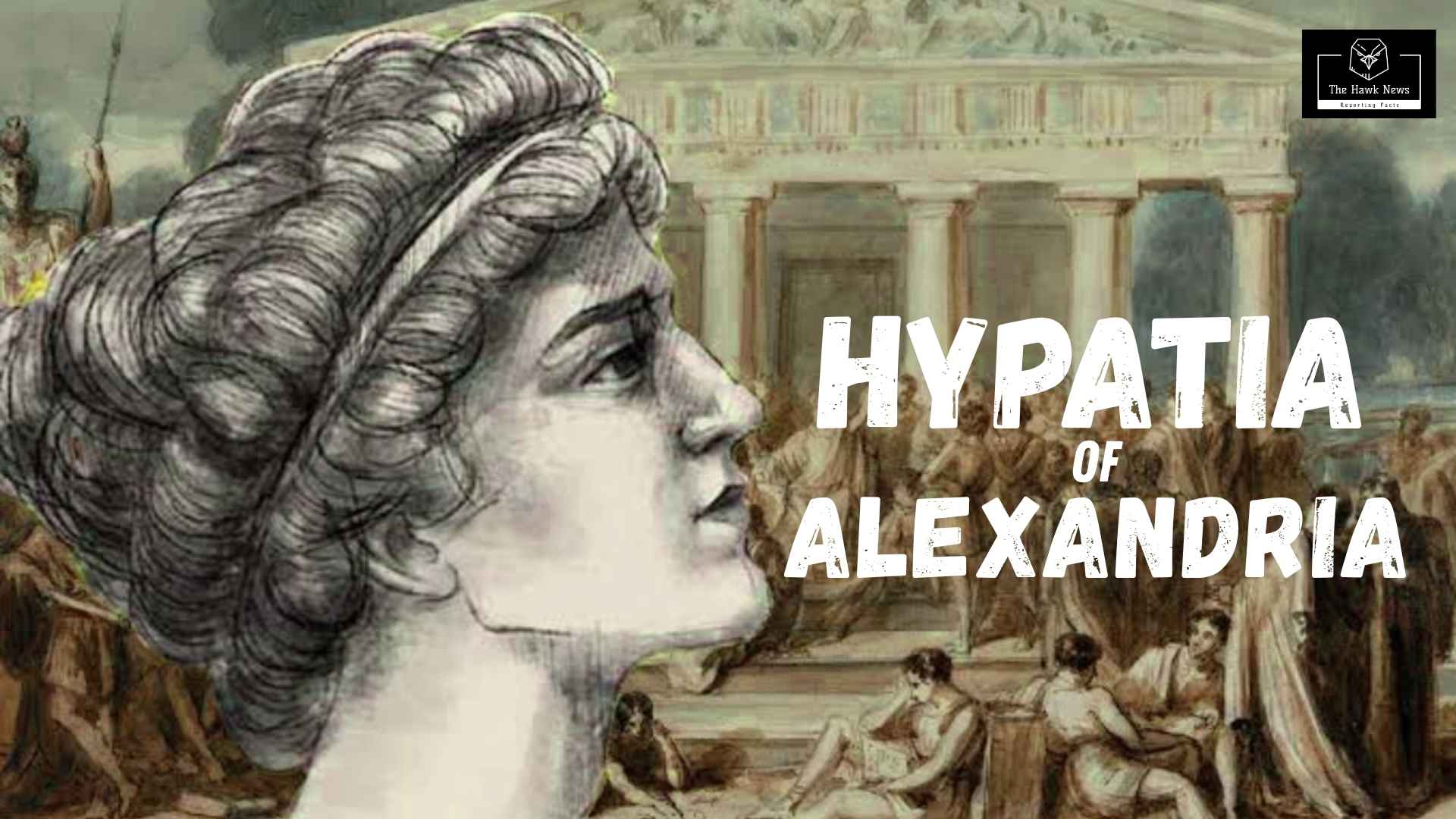
In the intellectual heart of Alexandria, where scrolls once defined civilizations and ideas shaped empires, a woman stood taller than her time.
Her name was Hypatia.
Born in the 4th century during the final years of the Roman Egypt, Hypatia was not just a mathematician. She was a symbol of reason in a world slowly surrendering to division, of inquiry in an age turning toward ideology.
A Mind Ahead of Its Time
Daughter of the mathematician Theon of Alexandria, Hypatia inherited more than knowledge. she inherited a mission. She taught mathematics, astronomy, and philosophy in a city that was once the epicentre of learning.
Her classrooms weren’t confined to walls. They were filled with thinkers, politicians, and students from different faiths pagans, Christians, and others drawn not by belief, but by brilliance.
She worked on refining mathematical texts like Euclid’s Elements and contributed to astronomical tools like the astrolabe not necessarily inventing it, but improving its application for navigation and celestial study.
But here’s where the story shifts.
When Knowledge Becomes Dangerous
As Alexandria changed, so did its power structures. Religious tensions between pagans and Christians were intensifying.
Politics became personal. Ideas became threats.
Hypatia, a woman of influence who refused to align with rising ideological factions, found herself at the center of a storm she didn’t create.
She advised Orestes, placing her in silent opposition to Cyril of Alexandria, a powerful religious figure of the time.
In the eyes of a growing mob, neutrality became betrayal.
A Brutal End That Echoes Through Time
In 415 AD, Hypatia was dragged from her chariot by a mob. What followed wasn’t just violence, it was symbolic.
A scholar silenced.
A woman punished for intellect.
A city turning its back on reason.
Her death wasn’t just murder; it was a message.
Why Hypatia Still Matters Today
From a journalist’s perspective, Hypatia’s story isn’t just history: it’s a mirror.
- When does knowledge become inconvenient?
- When does power fear intellect?
- And most importantly, how often does society silence those who refuse to conform?
Her life sits at the intersection of science, gender, politics, and power. A rare convergence that still resonates in modern discourse.
In an age where misinformation spreads faster than truth, Hypatia’s legacy becomes even more urgent.
The Larger Narrative - Beyond One Woman
Hypatia represents more than herself. She represents every voice that dared to question.
From ancient Alexandria to today’s digital world, the battle remains the same:
Truth vs Control, Curiosity vs Conformity.
CLOSING LINE
History didn’t just lose a mathematician that day; it lost a voice that believed knowledge should never bow to power.