History rarely announces itself with a drumroll. More often, it slips into the margins of calendars, tucked between holidays and year-end distractions.
The final days of December—December 26 through December 31—are especially deceptive. While much of the world is pausing, reflecting, or preparing to celebrate, history has repeatedly chosen this quiet stretch to pivot the future.
Across centuries, these dates have hosted disasters that reshaped global systems, political dissolutions that ended eras, technological breakthroughs that redefined human life, and cultural moments that altered how societies see themselves.
Together, they reveal a pattern worth examining: the end of the year is not merely a conclusion. It is a pressure point—where accumulated tensions, decisions, and discoveries finally surface.
Understanding why these moments cluster here, and what they teach us, offers more than historical trivia. It provides insight into preparedness, institutional resilience, and humanity’s ability to learn—sometimes painfully—at the edge of transition.
When Nature Forces a Reckoning
On December 26, 2004, a massive undersea earthquake off the coast of Sumatra triggered the Indian Ocean tsunami, killing more than 230,000 people across 14 countries. Entire coastlines were erased in minutes. Families were lost. Economies collapsed. The scale of the disaster stunned the world.
Yet its legacy is not only one of loss. The tsunami exposed the absence of a regional early-warning system in one of the world’s most densely populated coastal regions. In response, international collaboration led to the creation of the Indian Ocean Tsunami Warning and Mitigation System, significantly improving detection and evacuation capabilities.
The lesson from December 26 is stark but instructive: nature’s calendar does not align with human convenience. Preparedness cannot be seasonal, reactive, or optional.
Today’s improved early-warning networks, satellite monitoring, and disaster-response protocols are direct outcomes of lessons learned when the world was caught unprepared.
History here offers a solution-oriented takeaway—global risk requires shared responsibility. Disasters do not respect borders, and neither can resilience.
The Collapse—and Creation—of World Orders
December’s final days have also marked the rise and fall of political systems.
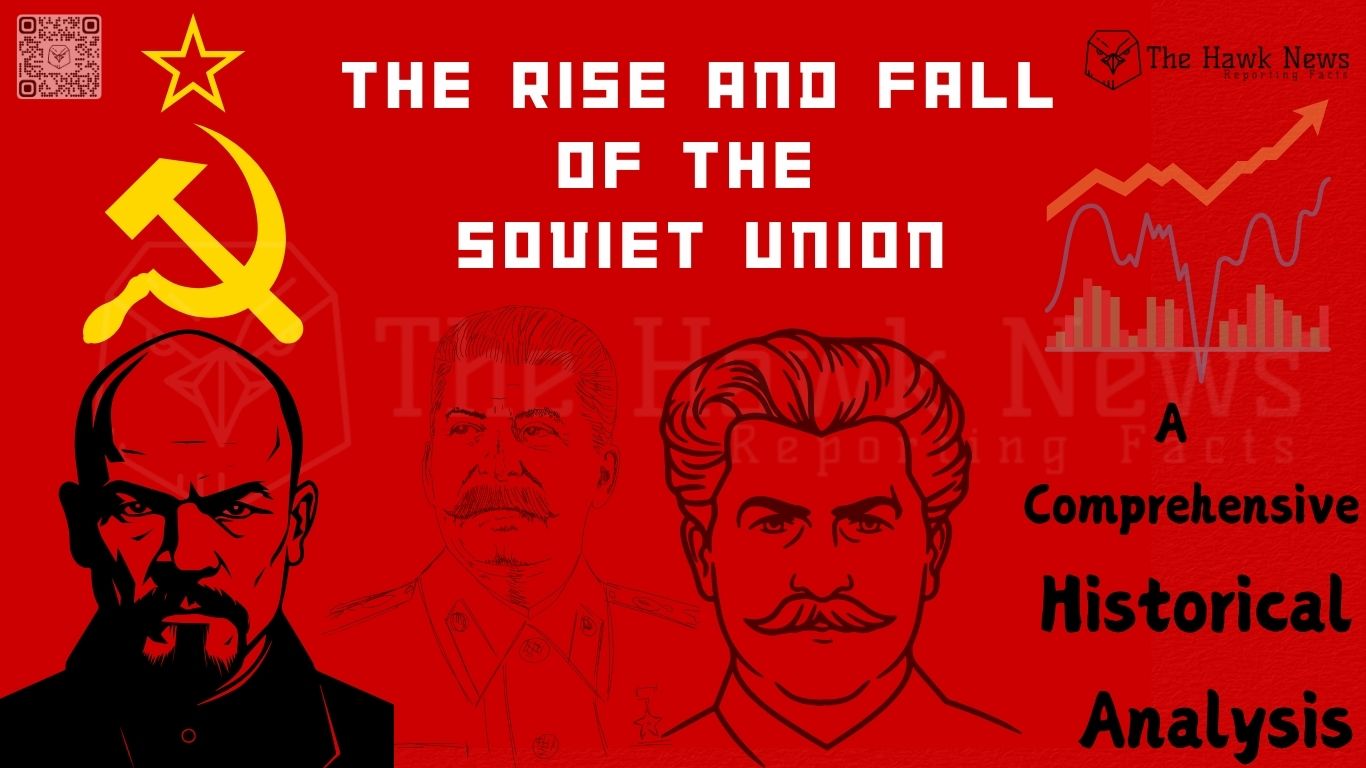
On December 30, 1922, the Union of Soviet Socialist Republics (USSR) was formally established. Nearly seven decades later, on December 26, 1991, the Soviet Union was officially dissolved. The Cold War—an era that shaped global politics, military doctrine, and economic alliances—ended not with a treaty signed at a summit, but with a quiet declaration at year’s end.
This symmetry is striking. It underscores how empires often conclude not in spectacle, but in administrative finality—after years of internal strain.
The Soviet collapse offers enduring insights. Centralized systems that suppress dissent, ignore economic realities, and resist reform may appear stable until they are not. Their unraveling, once begun, is rapid.
For modern institutions—governments, corporations, even global alliances—the lesson is clear: adaptability matters more than dominance.
Transparency, accountability, and responsiveness are not ideological luxuries; they are survival mechanisms.
Technology, Fear, and Human Preparedness
As December 31, 1999 approached, the world braced for catastrophe. The Y2K bug—a programming oversight that threatened to crash computer systems worldwide—sparked fears of power grid failures, financial collapses, and transportation chaos.
None of it happened.
Not because the threat was imaginary, but because it was taken seriously. Governments invested billions. Engineers worked around the clock. International coordination ensured systems were tested and updated.
Y2K stands as a rare example of a global crisis that did not materialize precisely because of proactive preparation.
In an era now defined by cyber threats, artificial intelligence, and climate risk, this moment matters. It proves that foresight works—but only when institutions are willing to invest before disaster strikes.
Preparedness is often invisible when successful. History remembers failures more than prevented catastrophes. Yet Y2K reminds us that collective action, grounded in evidence and urgency, can quietly save the world.
Science at the Edge of Time
December’s final days have also been moments of revelation rather than rupture.
In late December 1968, the crew of Apollo 8 became the first humans to orbit the Moon. From space, they transmitted an image that would redefine human consciousness: Earthrise. A small, fragile blue planet suspended in darkness.
The image did not advance military power or economic dominance. Its impact was philosophical. It fueled environmental movements, reframed humanity’s place in the cosmos, and reminded a divided world of its shared home.
Similarly, late December discoveries by scientists like Marie Curie—who announced the discovery of radium in this period—reshaped medicine and physics, though not without ethical consequences.
These moments underscore a quieter truth: progress requires humility. Scientific advancement must be paired with responsibility, regulation, and ethical reflection. Knowledge alone does not guarantee wisdom.
Culture, Memory, and Collective Identity
Year-end moments are also cultural mirrors.
Public rituals like New Year’s Eve celebrations, broadcast traditions, and global countdowns—many established or formalized in late December—serve a psychological function. They allow societies to pause, assess, and imagine renewal.
Even political uprisings and cultural shifts that intensified in late December, such as grassroots movements or artistic revolutions, often reflect accumulated frustration seeking expression before the calendar turns.
Culture absorbs pressure just as geology does. When change finally surfaces, it often does so symbolically, at moments charged with meaning.
Why the Final Days Matter
The clustering of pivotal events in late December is not mystical, but structural.
- Governments finalize budgets and decisions.
- Institutions close books and confront realities.
- Leaders resign, treaties expire, warnings surface.
- Nature, indifferent to human calendars, acts regardless.
The year’s end compresses unresolved issues. What has been postponed can no longer wait.
For modern societies, this pattern offers a strategic insight: transitions amplify truth. Systems reveal their strengths and weaknesses most clearly at moments of closure.
Preparing for the Next Rewrite
If history teaches anything through December’s final days, it is this: the future is not rewritten by chance alone. It is shaped by readiness, humility, cooperation, and the courage to act before crisis demands it.
Preparedness is not pessimism. It is optimism with discipline.
Whether facing climate volatility, technological disruption, geopolitical tension, or public health risk, the solutions remain consistent:
- Invest early.
- Share information.
- Listen to warnings.
- Adapt structures before they fracture.
The last week of December is not just a historical footnote. It is a reminder that endings are active spaces. They demand attention, accountability, and foresight.
As calendars turn and fireworks fade, history continues its quiet work—reshaping tomorrow in the shadow of yesterday.
The question is not whether the future will be rewritten again. It is whether we will recognize the signs before the ink dries.