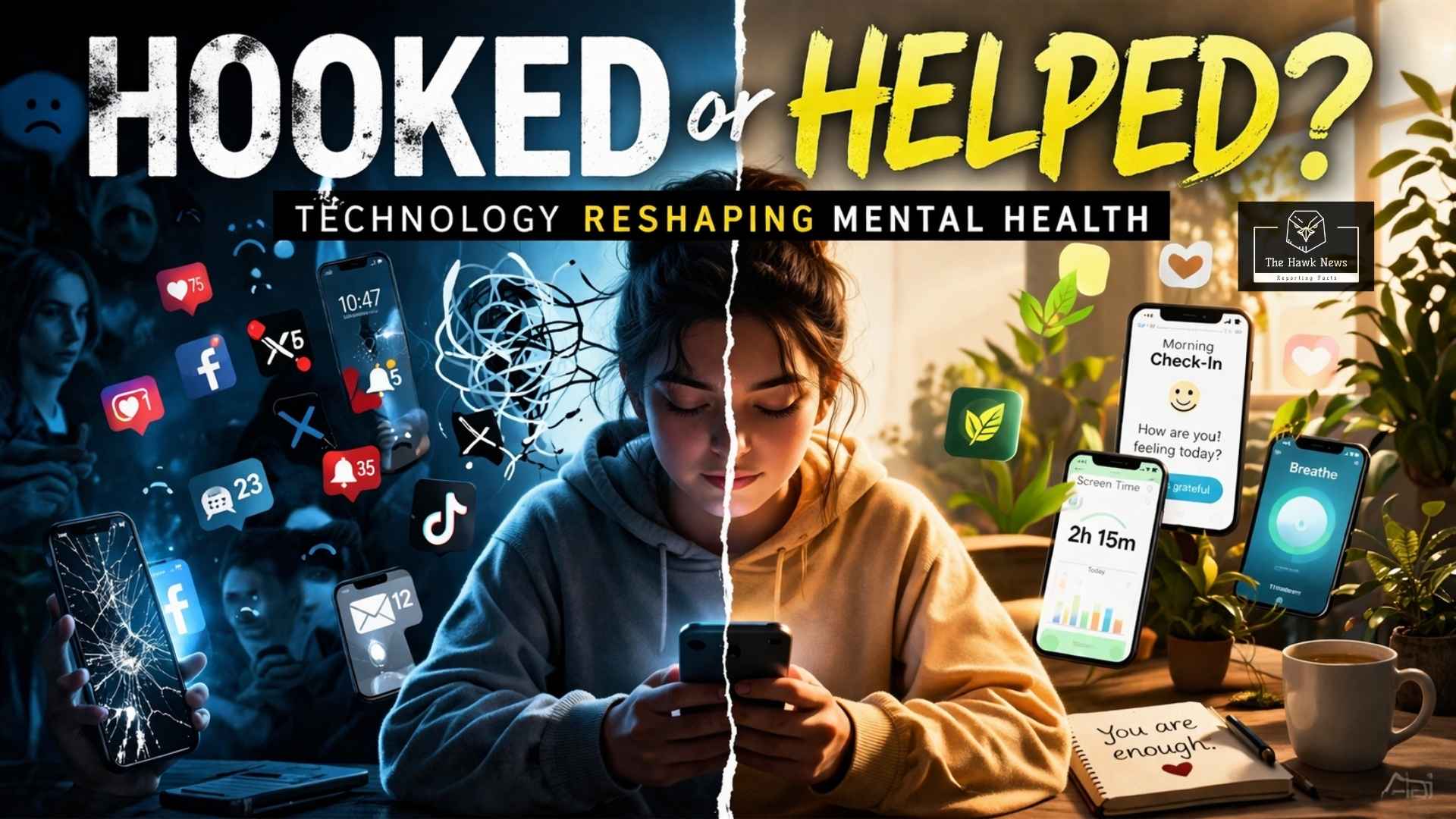
In a world where the first thing we touch in the morning isn’t the floor—but a screen—are we more connected than ever, or quietly falling apart?
Technology has become inseparable from daily life. From smartphones and social media feeds to productivity apps and AI companions, digital tools shape how we think, feel, and interact.
But as usage deepens, a critical question emerges: Is technology improving our mental well-being—or silently eroding it?
The Screen Time Paradox
Modern screen exposure is unprecedented. Studies show teenagers spend up to 8.5 hours daily on screens, excluding academic use . This surge has triggered widespread concern among researchers and policymakers.
Evidence suggests a connection between excessive screen time and mental health challenges. Higher screen usage has been linked to increased depressive symptoms, attention issues, and behavioral problems, particularly among adolescents .
A broader review of 50 studies also found that heavy screen exposure correlates with reduced well-being and higher risks of depression, especially in younger users .
Yet, the narrative isn’t that simple.
A long-term study tracking social media use over eight years found no direct causal link between time spent online and mental health decline .
This contradiction highlights a crucial shift in understanding:
It’s not just how long we use technology—it’s how we use it.
Social Media: Connection vs. Comparison
Social media platforms promise connection—but often deliver comparison.
Features like likes, shares, and comments create powerful psychological feedback loops. Research shows that positive online feedback can boost self-esteem and reduce loneliness, while a lack of engagement can trigger stress and negative emotions .
At the same time, algorithm-driven feeds are designed to maximize attention. Industry insiders have acknowledged that features like infinite scroll and autoplay can foster compulsive usage patterns.
A recent legal case even likened this design approach to a “tobacco moment” for tech accountability, pointing to addictive user experiences .
Public sentiment is shifting. Recent reports indicate declining trust in social media’s positive impact on mental health, with fewer users believing it benefits well-being .
The Hidden Variable: Quality Over Quantity
The emerging consensus among experts is clear:
Digital experience matters more than digital duration.
Not all screen time is equal. Passive scrolling through negative content can amplify anxiety, while active engagement—learning, creating, or connecting—can enhance well-being.
Research suggests that exposure to harmful content, online pressure, or toxic interactions plays a larger role in mental health outcomes than mere usage time .
This reframes the debate:
Technology itself isn’t inherently harmful—but poorly designed ecosystems and unregulated usage patterns can be.
App-Based Solutions: Fixing the Problem They Helped Create
Ironically, technology is now being used to solve its own side effects.
Mental health apps, screen-time trackers, and digital wellness tools are gaining traction. These platforms use real-time feedback, habit tracking, and behavioral nudges to encourage healthier usage patterns.
Some apps aim to reduce screen addiction, while others provide meditation, therapy access, or mood tracking. The rise in such tools reflects growing awareness—and demand—for digital balance.
However, even these solutions come with a caveat:
The same feedback systems that motivate users can also create dependency, anxiety, or performance pressure if not designed responsibly .
The Bigger Picture: A Behavioral Shift
Technology is no longer just a tool—it’s an environment.
From AI companions to algorithmic feeds, digital systems increasingly influence behavior, attention spans, and emotional responses.
In some cases, users are beginning to treat AI tools as conversational partners, blurring the line between utility and emotional reliance .
This signals a deeper transformation:
We are not just using technology—we are adapting to it.
Conclusion: Control or Be Controlled
The impact of technology on mental health is neither entirely harmful nor wholly beneficial—it is deeply conditional.
- Excessive, unregulated use can lead to stress, anxiety, and dependency
- Meaningful, mindful engagement can foster connection, learning, and support
The real challenge lies not in rejecting technology—but in reclaiming control over how we use it.
As the digital world expands, one truth becomes unavoidable:
The future of mental health will not be shaped by technology alone—but by the boundaries we set around it.