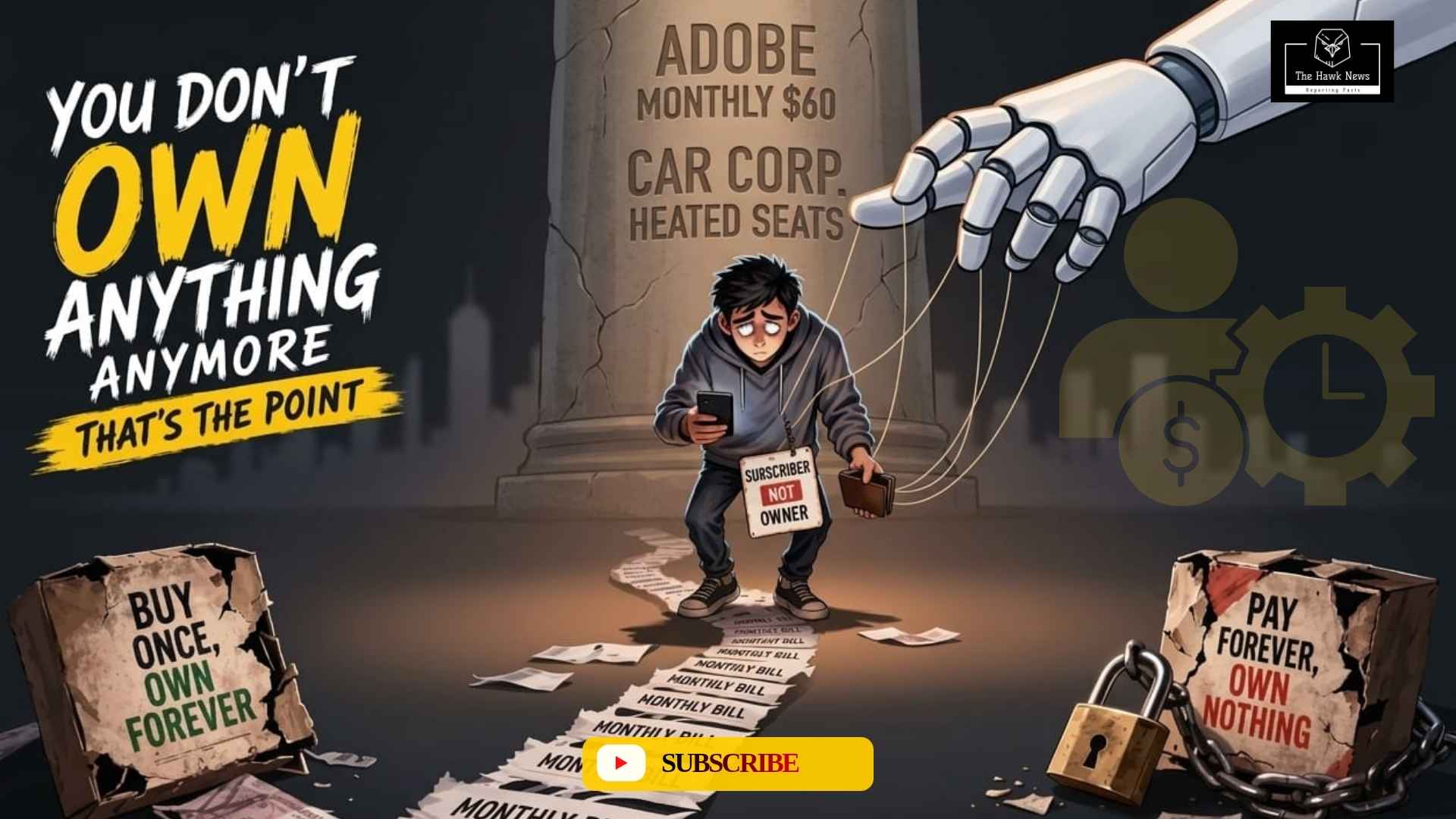
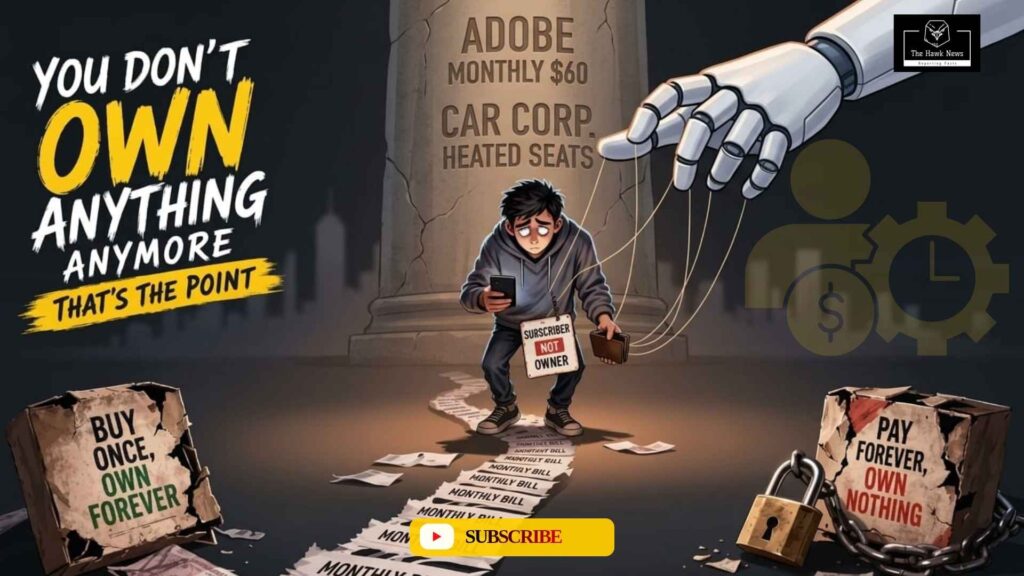
Once, ownership was simple. You paid once, and it was yours. Today, you keep paying and it still isn’t.
That shift didn’t happen overnight. It arrived quietly, wrapped in convenience. Software became “services.” Products became “platforms.” Ownership became “access.”
And somewhere along the way, we stopped noticing.
From Ownership to Access
There was a time when buying meant permanence.
You bought a music album - you owned it.
You purchased software - you installed it and used it for years.
You bought a car - every feature inside it belonged to you.
Today, that model is fading.
- Software now runs on subscriptions
- Entertainment exists on streaming platforms
- Even physical products are controlled by software locks
“We used to pay once and own forever. Now we pay forever and own nothing.”
This isn’t just a pricing change. It’s a structural shift in how value is delivered - and controlled.
The Rise of the Subscription Economy
The subscription model has become the backbone of modern business.
Instead of one-time transactions, companies now prioritize recurring revenue - predictable, continuous income streams that scale over time.
For users, the entry cost feels lower. A small monthly fee seems easier than a large upfront payment. But over time, the math tells a different story.
“What feels affordable in a month often becomes expensive over a decade.”
What was once a ₹10,000 purchase can now quietly become a ₹1,00,000 commitment over time.
And unlike traditional ownership, stopping payment doesn’t just pause usage - it erases access.
Control Hidden Behind Convenience
Convenience is the most powerful disguise.
Cloud storage means you can access files anywhere.
Streaming means instant entertainment.
Subscription tools mean always-updated software.
But convenience comes with a trade-off - control shifts from the user to the provider.
“When access replaces ownership, power follows access.”
If a service changes pricing, removes features, or shuts down entirely, the user has little recourse. The product was never truly theirs - it was leased, not owned.
When Even Products Aren’t Fully Yours
The shift is no longer limited to digital spaces.
Today, even physical products are becoming extensions of software ecosystems.
- Features in devices can be remotely enabled or disabled
- Updates can alter functionality after purchase
- Access can be tied to accounts, not ownership
This blurs a critical boundary:
What does it mean to “buy” something if its full use depends on ongoing permission?
“Ownership used to be a right. Now it’s becoming a license.”
The Psychology of Dependence
This system doesn’t just change how we pay - it changes how we behave.
Subscriptions are designed to:
- Be easy to start
- Hard to cancel
- Easy to forget
Small, recurring payments rarely trigger the same resistance as large, one-time costs. Over time, they blend into the background.
Meanwhile, digital systems learn from user behavior:
- When you cancel
- When you hesitate
- What keeps you returning
“They don’t just sell products anymore - they study patterns.”
The result is a loop:
Convenience → Habit → Dependence
The Cost You Don’t See
The financial cost is measurable.
The psychological cost is quieter.
When access depends on continuous payment:
- Ownership feels temporary
- Stability feels uncertain
- Control feels distant
“You don’t lose your possessions all at once - you lose them one missed payment at a time.”
This creates a subtle but powerful shift - from independence to reliance.
Is This the New Normal?
To be clear, the subscription model isn’t entirely negative.
It has:
- Lowered entry barriers
- Enabled constant updates and improvements
- Made services more accessible globally
But the question isn’t whether it’s useful.
The question is whether it’s balanced.
“Convenience should empower the user - not replace their control.”
A Quiet Transformation
What we are witnessing isn’t just a business trend.
It’s a transformation in the relationship between people and products.
Ownership is becoming less about possession - and more about permission.
And permission can be revoked.
Final Thought
We didn’t just upgrade our tools.
We changed the terms of engagement.
“In a world built on subscriptions, the real question isn’t what you can access;
it’s what you truly own.”
The answer, increasingly, is less than we think.