The Promise Economy
As Tamil Nadu’s election season gathers pace, a familiar pattern is re-emerging.
Political parties are once again competing — not just on ideology or governance — but on welfare promises.
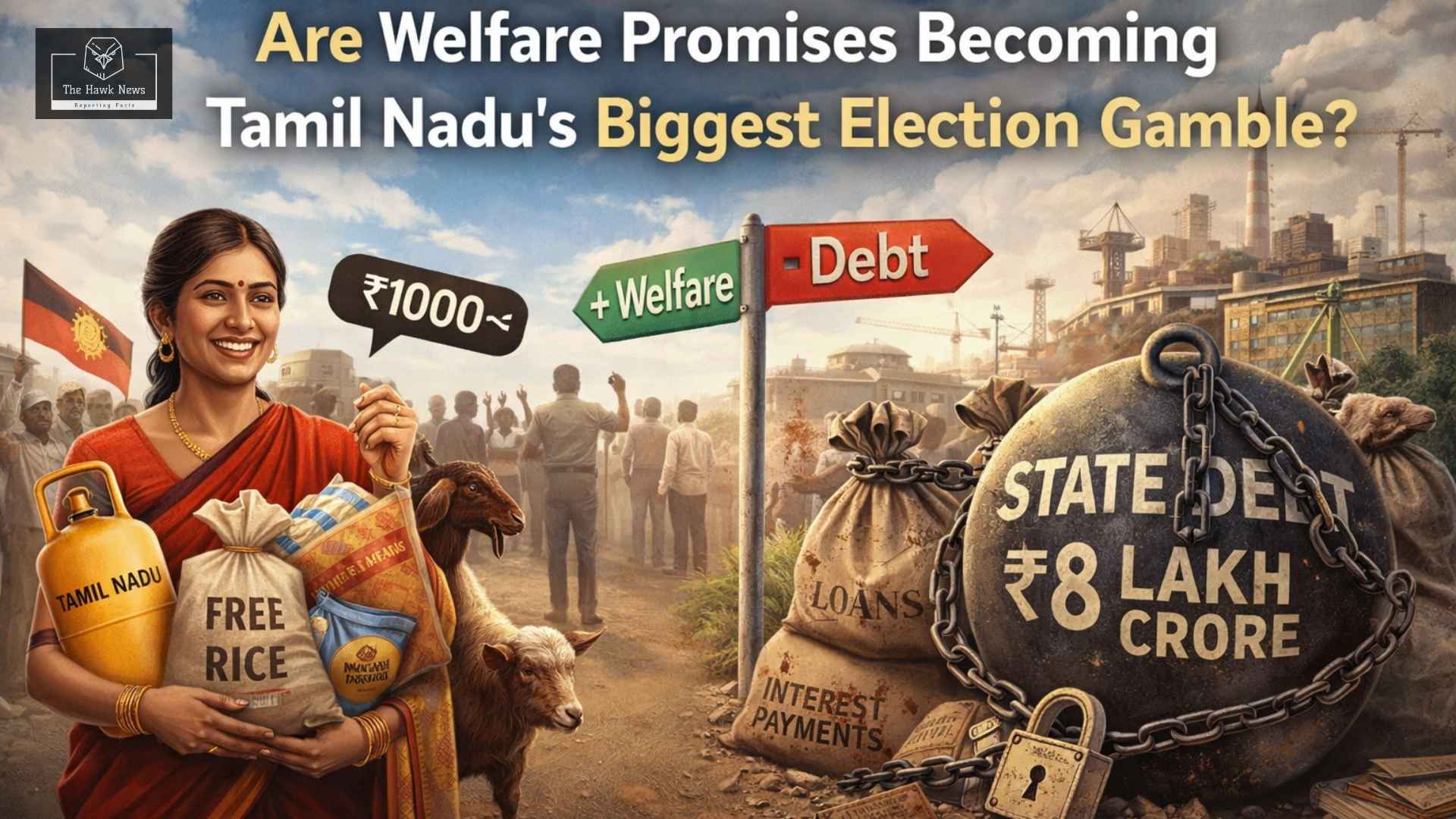
From cash assistance to subsidized goods and expanded social schemes, the electoral conversation is increasingly shaped by what can be offered immediately rather than what can be sustained long-term.
The question is no longer whether welfare will be promised.
It is:
How much is too much?
The Fiscal Backdrop
Tamil Nadu has long been recognized for its robust welfare architecture, often cited as a model for social development.
However, the numbers reveal a growing pressure:
- The state’s debt is estimated to be over ₹8 lakh crore, with a rising debt-to-GSDP ratio
- A significant portion of revenue expenditure goes toward subsidies, welfare schemes, and salaries
- Fiscal deficit levels continue to remain a key concern for policymakers and economists
This creates a structural challenge:
Balancing social welfare with fiscal sustainability
Welfare: Necessity, Not Just Politics
It is important to recognize that welfare schemes are not inherently negative.
✔ The Case For Welfare:
- Provides immediate relief to vulnerable populations
- Reduces inequality and improves basic living standards
- Strengthens access to education, healthcare, and nutrition
Tamil Nadu’s success in:
- Public health
- Midday meal schemes
- Social justice initiatives
…is deeply linked to state-led welfare interventions.
The Fiscal Risk
However, the concern arises when welfare turns into competitive populism.
✖ The Risks:
- Increasing debt burden
- Reduced fiscal space for infrastructure and capital investment
- Long-term dependency instead of economic empowerment
Economists often warn:
“Short-term political gains can create long-term fiscal stress.”
What Policy Experts Are Saying
Fiscal analysts and policy observers highlight a growing dilemma:
“The issue is not welfare — it is sustainability.”
Another economist notes:
“Every promise made today is a financial commitment tomorrow.”
A public finance expert frames it more directly:
“States don’t face immediate consequences — but they accumulate long-term constraints.”
The Political Compulsion
Why do welfare promises continue to escalate?
Because they work.
- They offer visible, immediate impact
- They are easy to communicate
- They resonate strongly with voters facing economic pressures
This creates a cycle where:
One promise leads to another — across parties
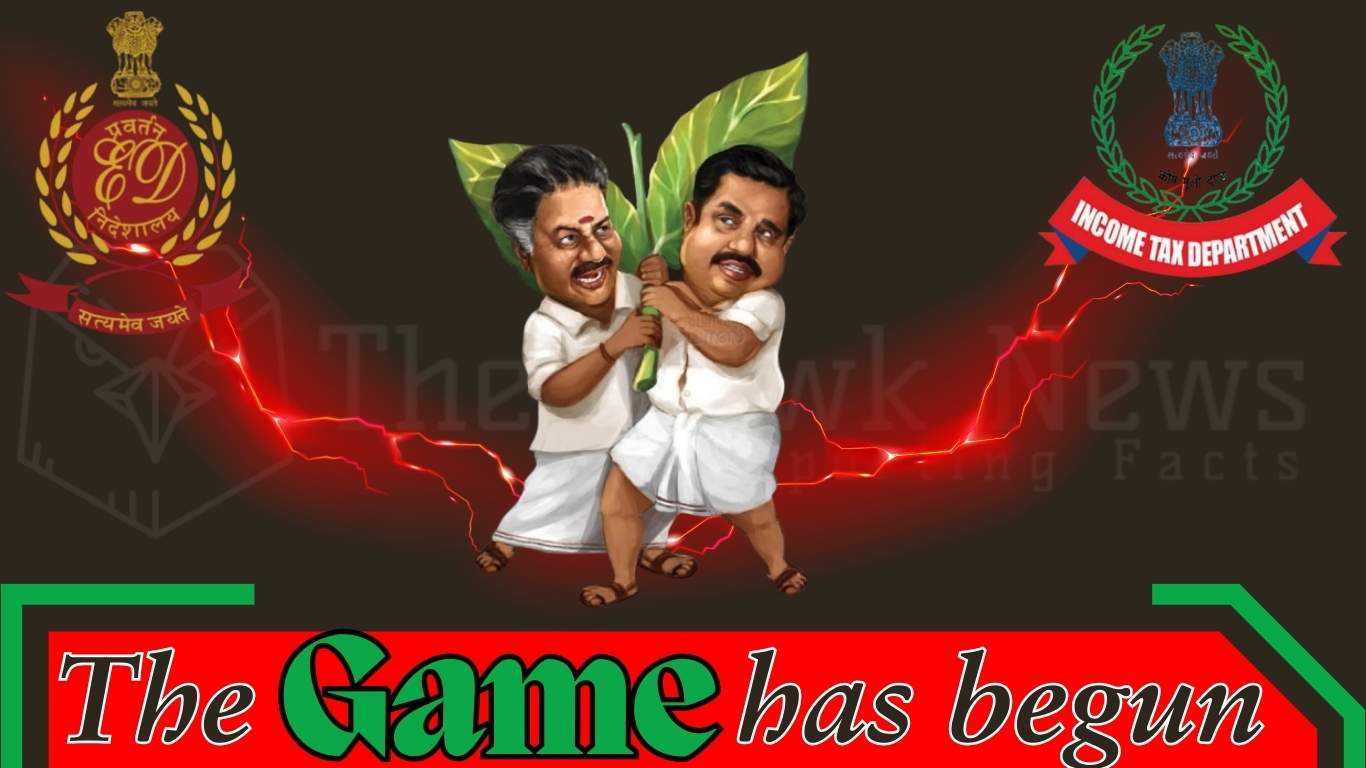
Including major players like DMK, AIADMK, and BJP, all of whom must respond to voter expectations shaped over decades.
The Hidden Trade-Off
Every rupee spent on welfare comes with an opportunity cost.
It could otherwise be used for:
- Infrastructure development
- Industrial expansion
- Job creation initiatives
This raises a critical question:
Are we prioritizing immediate comfort over long-term growth?
Ground Reality Check
For many voters, the debate is not theoretical.
Welfare schemes:
- Directly impact daily life
- Provide security in uncertain economic conditions
- Build trust in governance
This means any attempt to reduce or rationalize welfare:
- Carries political risk
- Requires careful communication and transition
The Bigger Economic Question
Tamil Nadu stands at a crossroads:
- A state known for strong welfare delivery
- Also a state competing for investment, growth, and industrial leadership
The challenge is not choosing one over the other —
but finding balance.
Thought Pointers for the Voter
- Are welfare schemes empowering — or creating dependency?
- Can the state sustain increasing promises without long-term strain?
- Should political competition focus more on jobs and growth than benefits?
- What is the cost of today’s promises on tomorrow’s taxpayers?
The Final Word
Welfare builds trust.
But sustainability builds the future.
Tamil Nadu’s election may not just be a contest of promises —
but a test of economic responsibility.
Because in the end:
Every free benefit has a hidden cost — and someone eventually pays for it.