On a June night in 2020, in Sathankulam, a small town in Tamil Nadu, India, a father and son were taken into police custody for allegedly violating COVID-19 lockdown rules.
They did not come back alive.
The deaths of P. Jeyaraj and J. Bennix quickly became more than a local tragedy.
They turned into a national reckoning; one that exposed the brutal underbelly of custodial violence and forced a country to confront an uncomfortable truth: justice, even when visible, is not always swift.
What Happened: The Facts That Shook a Nation
On June 19, 2020, Jeyaraj and Bennix were detained by police in Sathankulam for reportedly keeping their mobile shop open beyond permitted hours during lockdown restrictions.
What followed, according to witness testimonies, medical reports, and later investigations, was not routine detention.
It was Brutality.
Eyewitnesses, including family members, described severe physical assault inside the police station. Reports suggested that both men were subjected to prolonged torture.
Medical records and post-mortem findings indicated extensive injuries.
Within days of their release from custody:
- Bennix died on June 22
- Jeyaraj died on June 23
Their deaths sparked outrage - not just because of the violence, but because of the systemic silence that initially surrounded it.
Public Outrage & Institutional Response
The incident triggered widespread protests across India. Social media amplified the case, with many drawing parallels to global conversations around police brutality.
Under mounting pressure:
- The case was transferred to the CBI (Central Bureau of Investigation)
- Nine police personnel were arrested
- Charges included murder and destruction of evidence
Eventually, the courts moved forward. The system acknowledged wrongdoing. The accused were brought to trial.
And yet; this is where the deeper question begins.
“Justice Delayed Is Justice Denied” - But Why Does Delay Persist?
The phrase, often attributed to William E. Gladstone, has become almost routine in legal discourse. But in cases like this, it stops being a cliché and becomes a lived reality.
Yes, nine police officers were convicted.
Yes, the courts functioned.
Yes, the truth surfaced.
But justice is not merely about outcomes. It is about timelines.
Why did it take public outrage for action to begin?
Why are families forced to wait, often for years, for closure?
Why does accountability feel reactive rather than systemic?
These are not rhetorical questions. They are structural ones.
Custodial Violence: A Pattern, Not an Exception
The deaths of Bennix and Jeyaraj were not isolated.
According to data from India’s National Crime Records Bureau (NCRB), custodial deaths occur every year, often with minimal convictions. Many cases go unreported. Others dissolve into procedural delays.
The problem is not just individual misconduct. It is institutional.
- Lack of independent oversight
- Weak enforcement of custodial safeguards
- Cultural normalization of “third-degree” methods
- Delayed judicial processes
These factors create an environment where abuse can occur—and accountability can stall.
What the Case Revealed About Power
At its core, this case is about power.
Custody represents a moment where the state holds absolute authority over an individual. That power is meant to be exercised within the boundaries of law.
But when those boundaries blur, custody becomes vulnerability.
The deaths of Bennix and Jeyaraj revealed how fragile those boundaries can be.
They also revealed something else:
Public attention can force systems to respond; but it should not be the only trigger for justice.
Responsibility Beyond the Courtroom
The conviction of the accused officers is significant. It signals that the system can act.
But responsibility does not end with a verdict.
It extends to:
- Police reforms
- Mandatory body cameras and surveillance in stations
- Independent custodial audits
- Faster judicial timelines in human rights cases
- Protection for whistleblowers and witnesses
Accountability must be proactive, not reactive.
The Human Cost of Delay
Behind every legal timeline is a family waiting.
For the families of Bennix and Jeyaraj, justice was not an abstract concept. It was deeply personal. It was about dignity, memory, and acknowledgment.
Delay does not just postpone justice; it prolongs pain.
Every adjournment, every procedural pause, every bureaucratic hesitation carries a human cost that statistics cannot capture.
A Necessary Shift in Perspective
Cases like this demand more than outrage. They demand a shift in how justice is understood.
Justice should not be:
- Dependent on media attention
- Accelerated only by public pressure
- Slowed by institutional inertia
It should be:
- Timely
- Transparent
- Consistent
The real measure of a justice system is not how it performs under scrutiny; but how it functions without it.
A Question That Remains
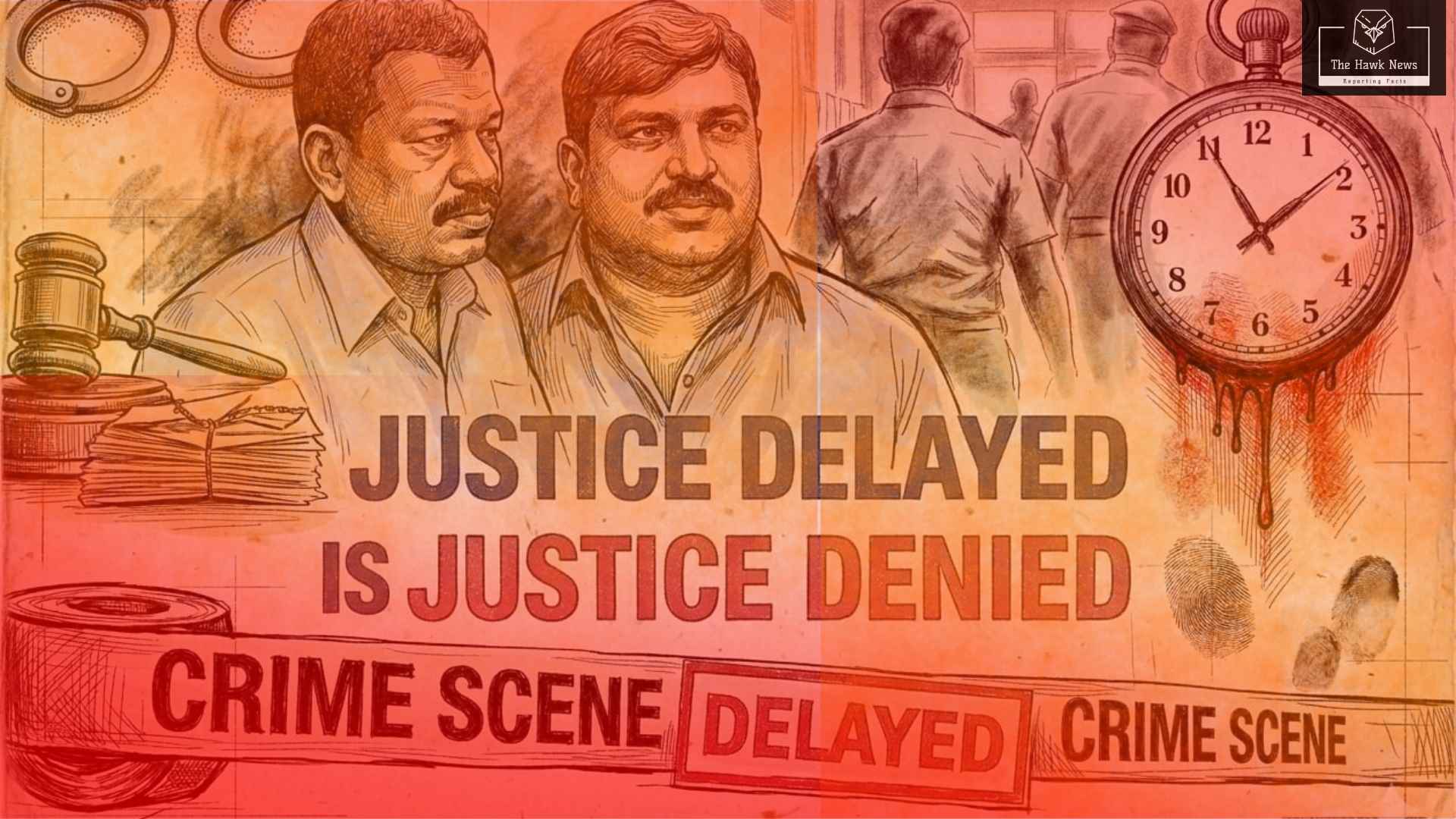
The image asks a simple question: Why?
Why did it happen?
Why did it take so long?
Why does it keep happening?
There are no easy answers. But there is a clear direction.
Justice must move faster than injustice.
Because when systems delay, they do more than fail victims—they erode trust.
Closing Reflection
The story of Bennix and Jeyaraj is not just about a crime. It is about a system tested & partially redeemed; but still incomplete.
The convictions matter.
The acknowledgment matters.
But the timeline matters just as much.
Because justice, when delayed, does not arrive whole.
And if this case is to mean anything beyond headlines, it must serve as a turning point—not just in law, but in urgency.
Not just in accountability, but in responsibility.
Not just in verdicts - but in time.