Few words in modern history carry as much weight, controversy, and misunderstanding as communism. For some, it evokes images of revolution and equality.
For others, it recalls authoritarian regimes, economic collapse, and human suffering. Yet beyond the polarized narratives lies a deeper, more complex story—one that continues to shape global conversations even today.
To understand communism is not merely to study a political ideology. It is to examine a centuries-long struggle over power, fairness, and the structure of society itself.
The Birth of an Idea
Communism, as a formal doctrine, took shape in the 19th century with thinkers like Karl Marx and Friedrich Engels.
In their seminal work, The Communist Manifesto (1848), they argued that history is fundamentally a story of class struggle—between those who own the means of production and those who labor under them.
Their vision was radical: a classless society where private ownership of major resources would be abolished, and wealth would be distributed based on need rather than profit.
At its core, communism was not born out of tyranny—but out of critique. It was a response to the harsh inequalities of early industrial capitalism, where workers toiled in brutal conditions while wealth concentrated in the hands of a few.
The revolutionary idea was simple yet powerful:
What if society were organized not around competition, but around collective well-being?
From Theory to Revolution
Ideas alone rarely change the world. It is when they are acted upon that history shifts.
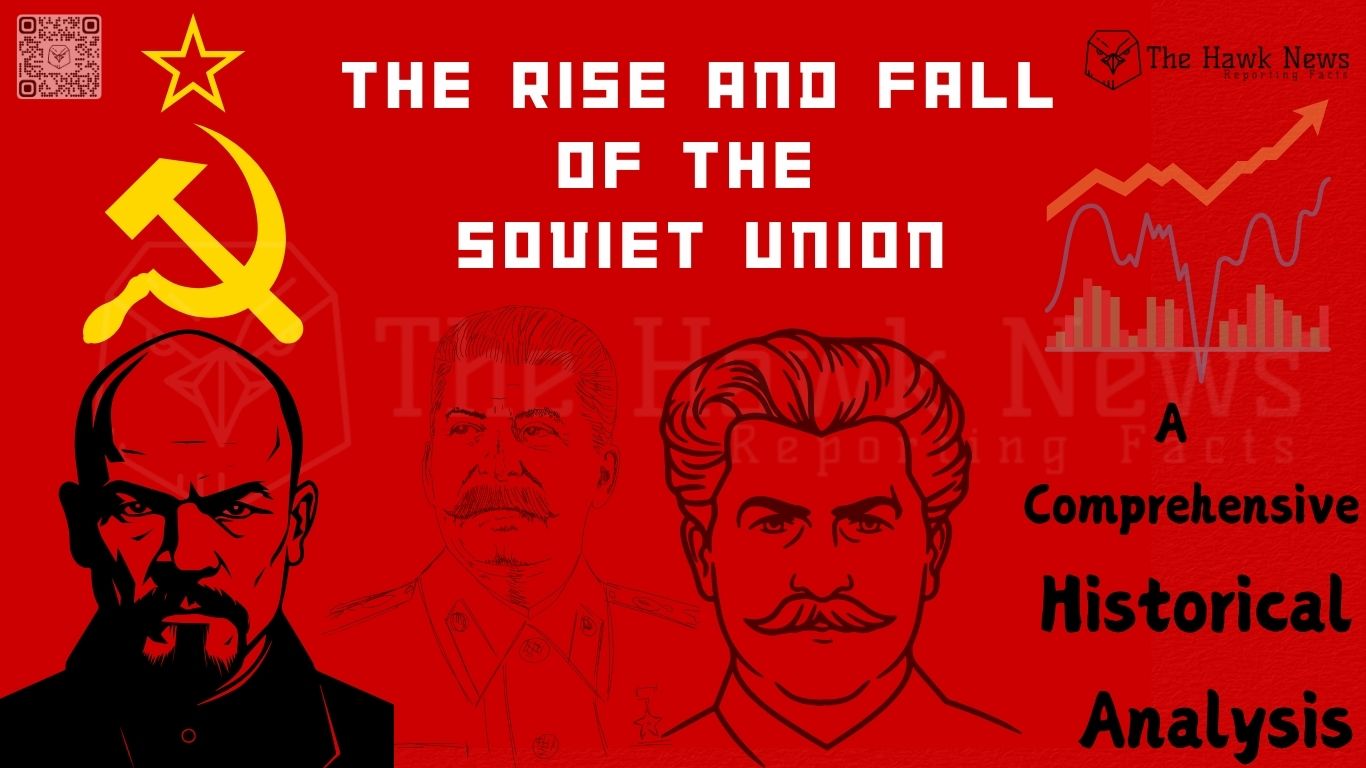
The first major attempt to implement communism came with the Russian Revolution of 1917, led by Vladimir Lenin.
The overthrow of the Tsarist regime and the establishment of a socialist state marked a turning point—not just for Russia, but for the world.
Communism had moved from theory to reality.
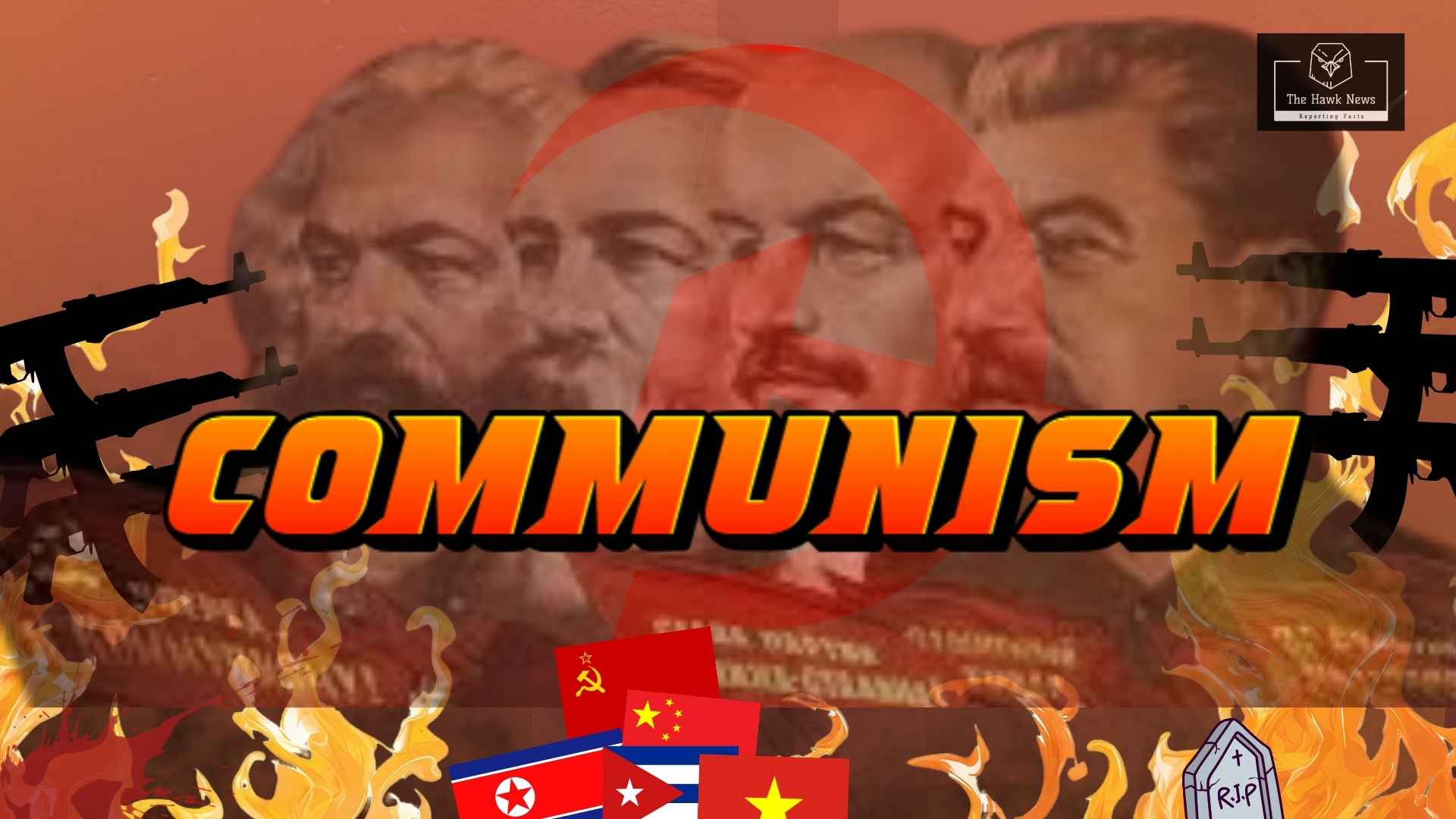
Under Lenin, and later Joseph Stalin, the Soviet Union sought to build a centralized, state-controlled economy. Similar movements followed in countries like China, Cuba, and North Korea.
But here lies one of history’s most important tensions:
the gap between ideology and implementation.
The Paradox of Power
Communism promised equality. Yet in many cases, it produced concentration of power.
Under Stalin, the Soviet Union saw rapid industrialization—but also purges, forced labor camps, and widespread repression.
In China, Mao Zedong’s policies led to massive social transformation, but also devastating famine during the Great Leap Forward.
These realities cannot be ignored.
However, reducing communism solely to its failures risks oversimplifying history. It is equally important to ask: Why did these systems evolve the way they did?
A key factor lies in the challenge of translating a decentralized ideal into a centralized state. In theory, communism dissolves hierarchy. In practice, it often required strong authority to enforce its vision—creating a contradiction at its core.
The lesson here is not just about communism, but about power itself:
Any system, regardless of ideology, can become oppressive if accountability is lost.
The Global Impact
Throughout the 20th century, communism reshaped geopolitics.
The Cold War between the United States and the Soviet Union was not merely a clash of nations—it was a battle of ideologies: capitalism versus communism.
This rivalry influenced conflicts across Asia, Africa, and Latin America, leaving a lasting imprint on global politics.
At the same time, communist movements inspired anti-colonial struggles. In countries seeking independence, communism offered a framework for resisting exploitation and building self-reliant economies.
It became both a symbol of resistance and a source of fear.
Beyond the Binary: Rethinking Communism Today
Today, communism is often treated as a relic of the past—something studied in textbooks rather than debated in policy rooms. But its core questions remain deeply relevant:
- Who controls wealth?
- How should resources be distributed?
- What is the role of the state in ensuring fairness?
Even in capitalist societies, ideas that echo communist principles—such as social welfare, public healthcare, and workers’ rights—have become widely accepted.
This raises an important point:
Communism, as a pure system, may have struggled. But its critique of inequality has endured.
A More Nuanced Understanding
The image of communism is often framed in extremes—either glorified as utopia or condemned as failure. But history rarely operates in absolutes.
Communism was:
- A response to injustice
- A catalyst for global change
- A system that revealed both human aspiration and human limitation
Understanding it requires moving beyond slogans and symbols, and engaging with its complexities.
What It Teaches Us
Perhaps the most valuable insight communism offers is not about adopting or rejecting it—but about questioning the systems we live in.
It reminds us that:
- Economic systems are not fixed—they are created and can be reimagined
- Inequality is not inevitable—it is structured
- Power must always be examined, regardless of ideology
Closing Reflection
Communism is not just a chapter in history—it is a mirror.
It reflects humanity’s enduring desire for fairness, our struggle with power, and our tendency to turn ideals into institutions that don’t always align with their original vision.
To study communism is not to take sides—it is to understand the stakes.
Because the questions it raised over a century ago are still unresolved today.
And perhaps that is why, despite its turbulent history, the idea refuses to disappear.