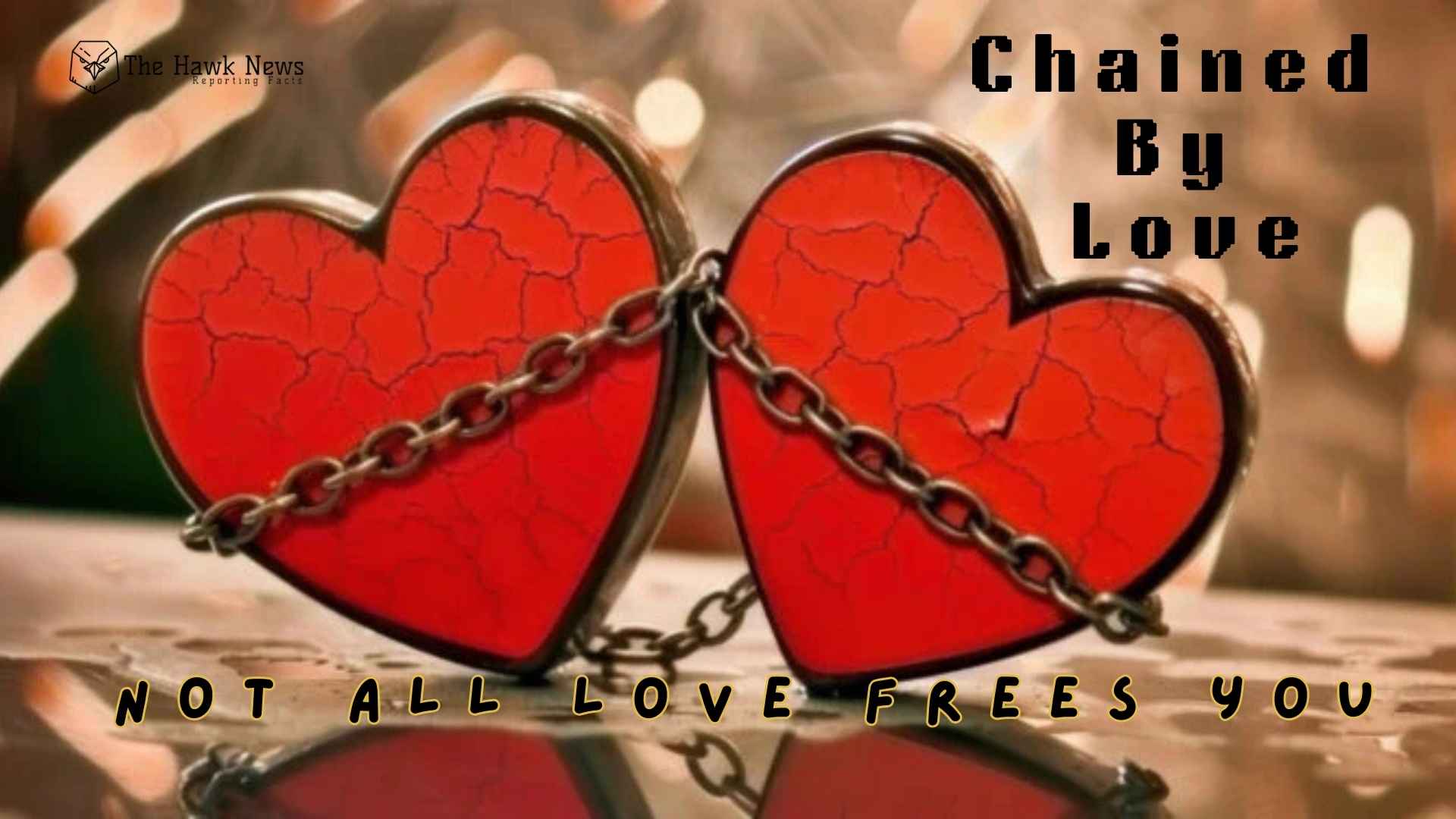
Two hearts sit side by side. They are close, unmistakably linked. But they are not free.
A chain binds them together. Cracks run through their surface. Whatever warmth once existed has hardened into something brittle, strained, and fragile.
At first glance, the image could be mistaken for romance. After all, closeness is what we are taught to desire. But look again. This is not intimacy.
This is an attachment under tension. This is love that hurts, not because it ended, but because it refuses to let go.
In a time when relationships are celebrated publicly and suffered privately, this image captures a truth many quietly live with: not all love liberates; some love confines.
The Rise of Emotional Entanglement
Modern relationships exist in a paradox. We are more connected than ever, yet emotionally lonelier. Dating apps promise abundance, but commitment feels scarce.
Social media floods us with curated intimacy, yet real connection feels increasingly fragile.
Within this environment, emotional entanglement thrives.
People do not stay because they are fulfilled, but because they are afraid. Afraid of silence. Afraid of starting over. Afraid of the version of themselves that exists without the other person.
This is how love quietly turns into dependence.
Psychologists often describe this pattern through attachment theory. Individuals with anxious attachment styles, for example, may crave closeness to the point where separation feels intolerable.
The relationship becomes a stabilizer, not of joy, but of identity.
When that happens, love stops being a choice and becomes a necessity.
When Intensity Is Mistaken for Intimacy
Popular culture has long romanticized emotional extremes. We are told that love should be overwhelming, consuming, and relentless. Songs glorify heartbreak. Films celebrate sacrifice at any cost. Obsession is framed as devotion.
But intensity is not intimacy.
True intimacy allows space. It does not punish independence or demand constant reassurance. When closeness feels compulsory rather than comforting, something has shifted.
The chained hearts in the image suggest mutual participation. This is important. In many emotionally dependent relationships, there is no villain. Both people are holding on, sometimes equally afraid, sometimes equally wounded.
The cracks show what prolonged emotional strain does. Over time, resentment replaces tenderness. Anxiety replaces excitement. Yet the chain remains, not out of love, but habit.
Why Letting Go Feels Like Losing Yourself
One of the most difficult aspects of unhealthy attachment is how deeply it intertwines with identity.
When a relationship becomes central to one’s sense of self, leaving does not feel like a breakup — it feels like erasure.
People often say, “I don’t know who I am without them.” This is not poetic exaggeration. It is a psychological reality. When boundaries dissolve, individuality fades. The relationship becomes the reference point for worth, routine, and emotional regulation.
Breaking away then triggers something closer to withdrawal than grief.
Neuroscience supports this experience. Romantic attachment activates dopamine pathways similar to those involved in addiction. The highs feel euphoric. The lows feel unbearable.
When the relationship destabilizes, the brain craves relief, often pushing people back into situations that hurt them simply because they are familiar.
The chain, in this sense, is not just emotional. It is neurological.
The Digital Age and the Fear of Being Alone
Today’s younger generations are redefining many relationship norms, yet they also face unprecedented emotional pressures.
Constant comparison online distorts expectations. We measure our private pain against others’ public happiness. We fear being the only one left behind, the only one without a partner, the only one “failing” at love.
As a result, many stay longer than they should.
Situationships linger. Red flags are rationalized. Emotional neglect is reframed as patience. What begins as hope slowly becomes endurance.
The chained hearts reflect this endurance: two people staying, not because it is good, but because leaving feels worse.
Love vs. Attachment: Knowing the Difference
One of the most important distinctions modern relationships demand is the difference between love and attachment.
Love:
- Encourages growth
- Allows autonomy
- Feels steady, not anxious
- Survives disagreement without fear
Attachment:
- Fears distance
- Requires constant reassurance
- Confuses control with care
- Thrives on emotional dependency
Healthy love does not require chains. It does not demand that two people break themselves to stay together.
The cracks in the hearts symbolize what happens when attachment masquerades as commitment. Over time, both people are damaged, not by malice but by imbalance.
Why People Return to What Hurts Them
A recurring question in relationship psychology is why people return to partners who consistently hurt them.
The answer is rarely weakness. More often, it is familiarity.
The brain is wired to seek predictability. Even painful patterns can feel safer than uncertainty. This is why people return to relationships they know are harmful-the pain is known, the alternative is not.
In such cases, the chain offers a strange comfort. It limits movement, but it also removes choice. And choice, especially when one is emotionally exhausted, can feel overwhelming.
Redefining Love for a Healthier Future
The image of chained hearts is unsettling because it forces a question many avoid: Is what I’m holding onto actually holding me back?
For a generation increasingly aware of mental health, this question matters.
Redefining love means shifting from endurance to enrichment. From possession to partnership. From fear-driven attachment to conscious connection.
Healthy love:
- Adds to your life, it does not replace it
- Supports individuality
- Survives space
- Does not require suffering to feel real
Letting go is not a failure. Sometimes, it is the most honest form of self-respect.
The First Step Toward Unchaining the Heart
Freedom does not begin with leaving another person. It begins with reclaiming oneself.
This might mean:
- Rebuilding identity outside relationships
- Learning to tolerate solitude without panic
- Seeking therapy or emotional literacy
- Setting boundaries-even when they feel uncomfortable
Healing is not instant. The chain does not vanish overnight. But awareness weakens its grip.
The cracks in the hearts remind us of something important: damage does not mean destruction. A heart can be wounded and still learn to love differently.
A Quiet Conclusion
Love should not feel like captivity. It should not require self-erasure. It should not demand endurance at the expense of peace.
The strongest relationships are not the ones that bind the tightest, but the ones that allow breathing room-where two people choose each other freely, not because they are afraid to let go.
If love feels like a chain, it may be time to ask: What am I really holding onto-and at what cost?
Sometimes, the bravest act of love is not staying.
It is setting both hearts free.