On a cold morning in Chicago, December 5th, 1901, a baby cried his first cry in a simple Midwestern home. No fireworks. No camera flashes.
No hint that the world had quietly received a man who would go on to shape childhoods for over a century. Just a moment in time — small, ordinary, and easy to overlook.
But that’s how revolutions often begin.
Quietly.
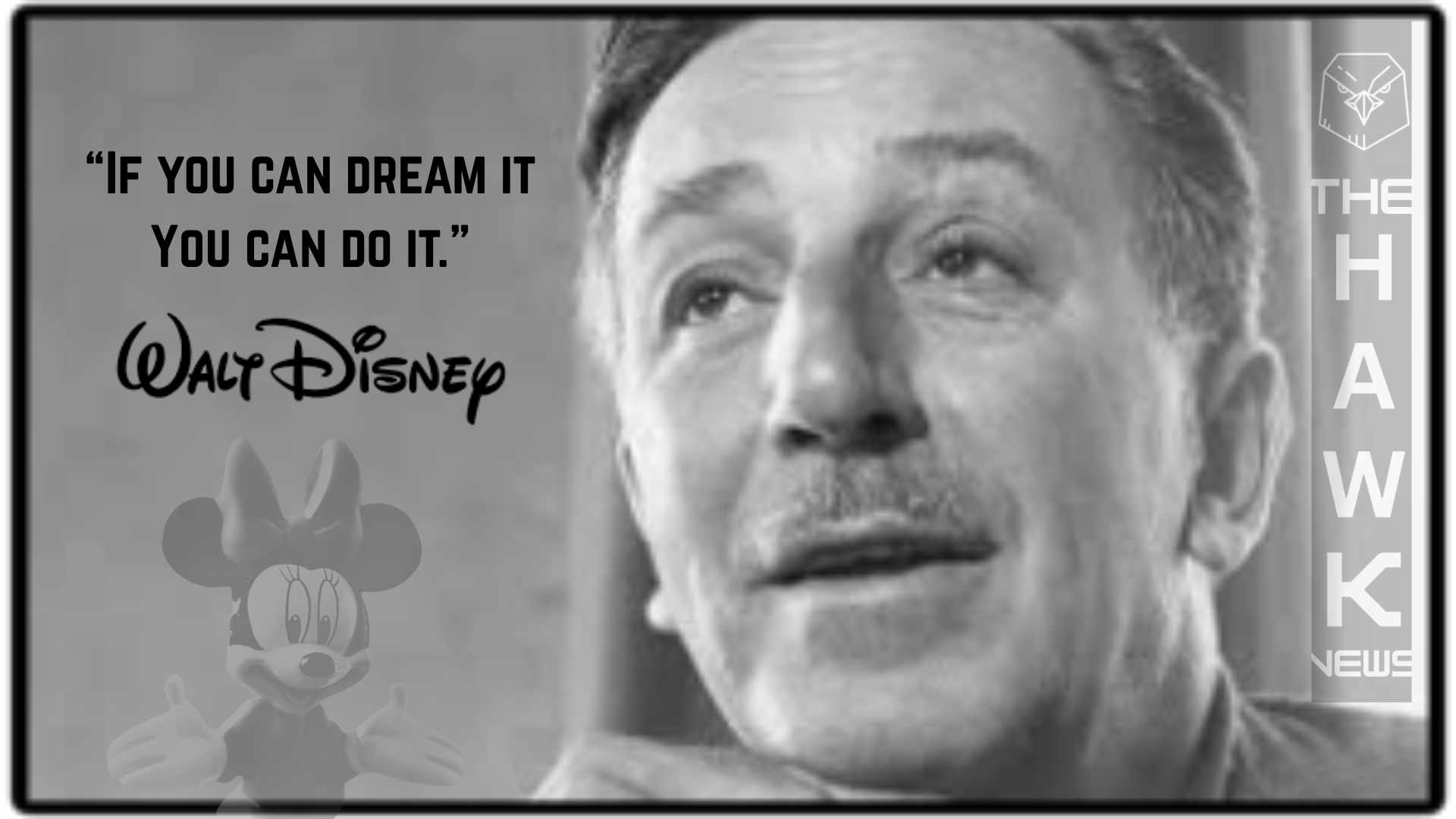
This is the story of Walt Disney, the man who didn’t just create characters — he created a culture of imagination that still pulses through the 21st century.
The Beginning: A Simple Birth, A Complex Destiny
Walt Disney was born into a life that didn’t look magical at all. His family was hardworking, financially stretched, and deeply grounded in Midwestern discipline.
Yet even as a child, Walt was drawn not to numbers or farming or the predictable rhythm of rural life — but to lines, shapes, and stories.
He sketched animals on scraps of paper. He doodled on newspapers. He studied people’s faces. While other kids chased chores, Walt chased ideas.
Nothing about his surroundings said “future global icon,” yet something inside him was already reaching beyond the ordinary.
In that sense, he was a lot like the dreamers of today — kids who doodle in the margins of their notebooks, who get lost in worlds no one else can see, who don’t fit the mold but somehow know they’re meant for more.
Marceline: The Spark That Would Light a Global Empire
When Walt was four, the Disney family moved to Marceline, Missouri — a small town that would later inspire the entire aesthetic of Disneyland’s Main Street, U.S.A.
Marceline gave Walt something he never forgot:
nostalgia, wonder, and the belief that life could be beautiful.
He watched trains roll into town, sketched farm animals, and soaked in the simplicity and innocence of rural life.
Many decades later, standing inside Disneyland, visitors would unknowingly walk the “streets” of Walt’s childhood memory.
That’s the thing about dreamers — even their simplest memories become building blocks for future worlds.
The Struggle: A Young Artist Trying to Survive
By his late teens, Walt had decided he wanted to be an artist — a career as unstable then as it is now.
In Kansas City, he launched his first animation company, Laugh-O-Gram Studios. It had energy, heart, creativity… but no money.
He couldn’t pay rent.
He struggled to buy food.
And eventually, the studio collapsed.
But this is where Walt did something many people don’t:
He treated failure as a stepping stone instead of a full stop.
For a generation often weighed down by “perfect timelines,” job pressure, and the fear of not having it all figured out, Walt’s story is a reminder:
Your first attempt doesn’t need to succeed.
It just needs to start.
Mickey Mouse: Born on a Train After a Major Loss
After Laugh-O-Gram’s failure, Walt moved to Hollywood and created Oswald the Lucky Rabbit.
Oswald became successful — but Walt didn’t own the rights. A bad business deal cost him everything.
Most people would have quit.
Walt didn’t.
On a train ride back to California — broke, betrayed, and humiliated — he began sketching a little mouse.
A small character with big eyes and even bigger personality.
That mouse would become Mickey.
In November 1928, Steamboat Willie premiered — the first synchronized-sound cartoon. Audiences were stunned. Disney wasn’t just making cartoons anymore; he was reinventing how stories could move.
Once again, loss had become the birthplace of magic.
Snow White: The Gamble That Should Have Ruined Him
As Disney’s studio grew, so did his dreams. Walt announced something no one believed in: the world’s first full-length animated feature film.
Hollywood laughed.
Critics mocked the idea.
Financiers warned him it would bankrupt the studio.
The project became known as “Disney’s Folly.”
Walt bet everything on it anyway.
He mortgaged his house.
He exhausted his team.
He poured every drop of imagination he had into the film.
And in 1937, Snow White and the Seven Dwarfs premiered.
People cried.
People clapped.
People stood for ovations.
It became one of the highest-grossing films of all time.
And suddenly, animation was no longer just cartoons — it was cinema.
Walt Disney had turned a risky dream into a new storytelling industry.
Disneyland: A Place Where Adults Could Be Children Again
With movies conquered, Walt moved to a new frontier: real-life magic.
He imagined a place where families could make memories, where fantasy was physical, where dreams had gates and streets and rides.
Most investors rejected the idea.
The cost was enormous.
No one had done something like this before.
But Walt wasn’t trying to be safe.
He was trying to build joy.
In 1955, Disneyland opened its doors. The world had never seen anything like it — a place built entirely on imagination, kindness, childlike wonder, and storytelling.
Today, theme parks influenced by Disney span multiple continents. Millions walk through spaces designed by a man from 1901 who simply refused to let reality limit him.
The Man: Imperfect, Intense, and Unapologetically Driven
Modern audiences often see the polished Disney brand, but the real Walt was more complex.
He was intense.
He demanded excellence.
He got angry.
He pushed people hard.
But he also dreamed fiercely, encouraged innovation, and believed that doing the impossible was simply a matter of trying long enough.
He once said:
“It’s kind of fun to do the impossible.”
And he lived like he meant it.
The Legacy: A 1901 Baby Who Rewrote Pop Culture
Walt Disney died in 1966, but his legacy never stopped growing.
Today, the Disney empire includes:
- Pixar
- Marvel
- Star Wars
- 20th Century Studios
- Global theme parks
- Streaming platforms
- Generations of stories
Every child who sings “Let It Go,” every adult who queues up for a Marvel movie, every person who dreams bigger because of a cartoon they watched as a kid — they’re all part of Walt’s living legacy.
A legacy that began with a baby born on December 5, 1901.
Final Reflection: What Walt Disney’s Birth Teaches This Generation
Walt Disney’s life speaks loudly to our world — a world full of pressure, comparison, imposter syndrome, and the fear of failing publicly.
Here’s what his story whispers to us:
- Start small. Legends always do.
- Fail forward. Mistakes are raw materials for greatness.
- Protect your imagination. The world needs it.
- Dreams are not childish — they are fuel.
- You don’t need the perfect background to shape the future.
On December 5, 1901, the world didn’t notice Walt Disney’s birth.
But decades later, the world can’t imagine life without him.
That’s the power of a dreamer — then and now.