The Politics That Didn’t Begin at the Polling Booth
Long before Tamil Nadu became one of India’s most politically aware states, its transformation began in places that rarely make headlines today.
Not in legislative halls.
Not on campaign stages.
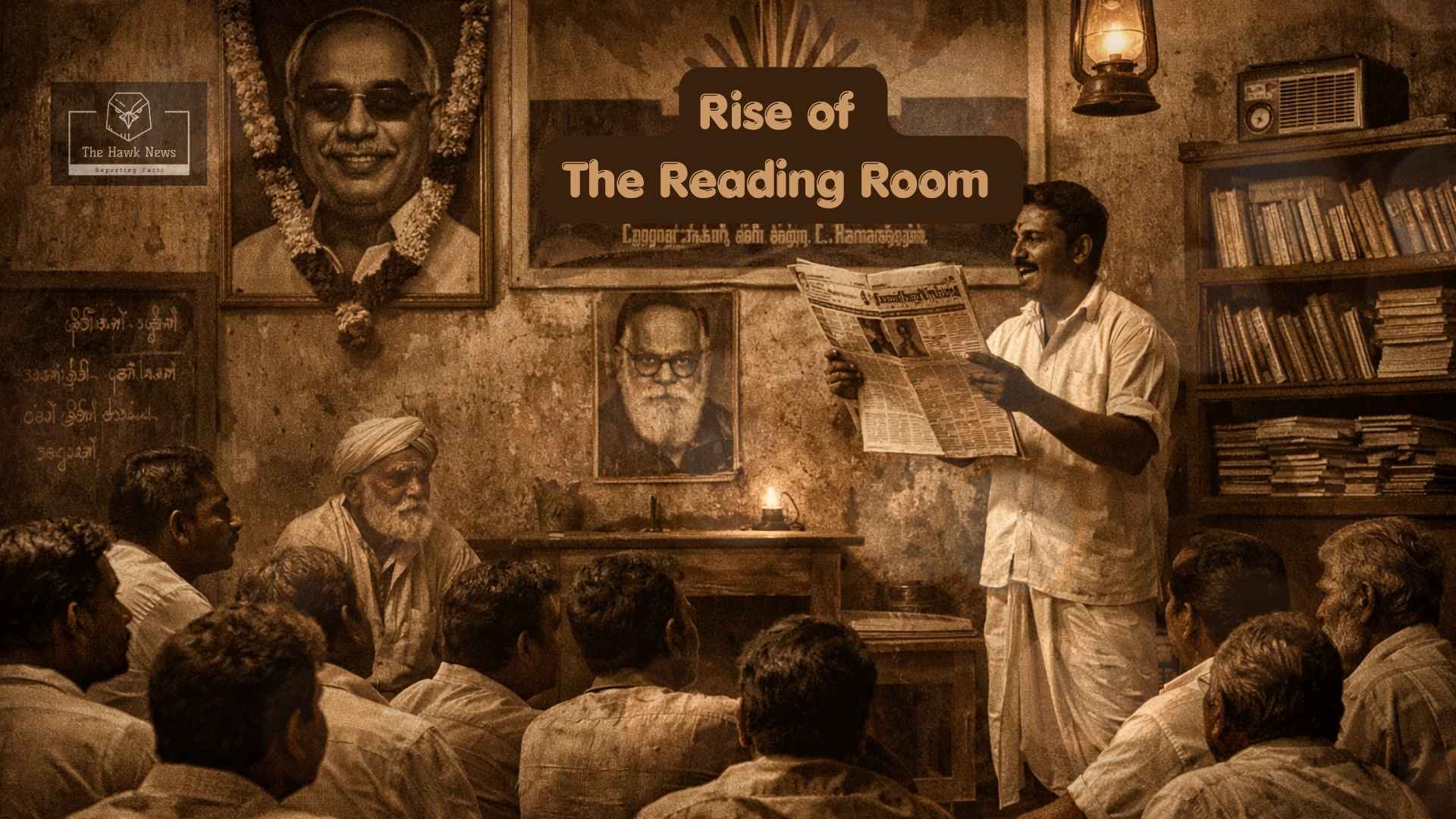
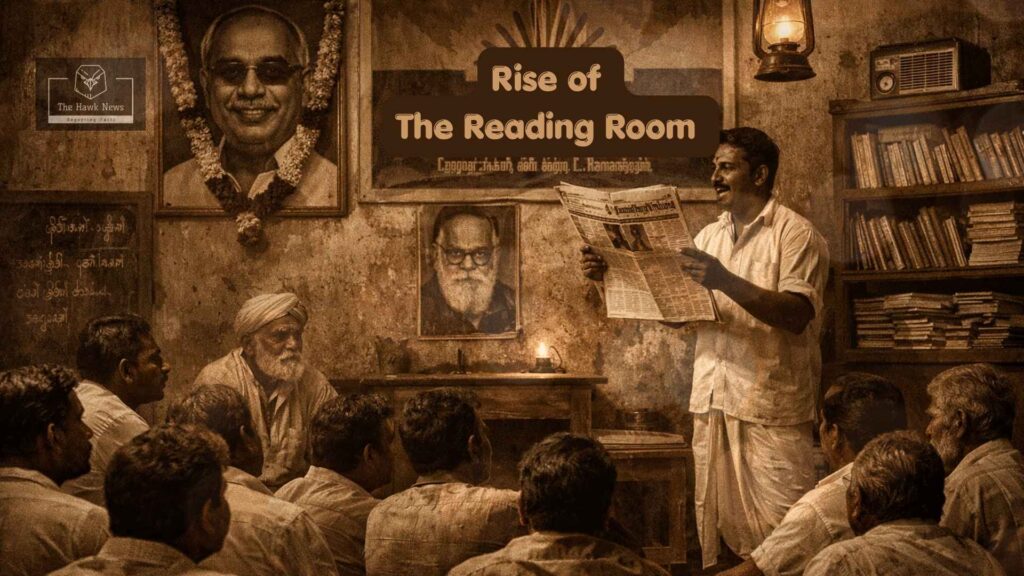
But in small, dimly lit reading rooms — tucked inside villages, towns, and working-class neighborhoods.
These were not just spaces with newspapers.
They were where politics was learned, debated, and internalized.
And from these modest rooms emerged one of the most influential political forces in India — the Dravidian movement, led politically by parties like the DMK.
When Ideas Became Infrastructure
In the 1950s and 60s, Tamil Nadu (then Madras State) faced a fundamental challenge:
- Low literacy levels
- Deep social hierarchies
- Limited political awareness in rural regions
For C. N. Annadurai, this wasn’t just a barrier.
It was a starting point.
He understood something few political leaders did at the time:
If people cannot come to politics, politics must go to the people.
The Rise of the Reading Room Network
With limited financial resources but a growing base of young supporters, Annadurai and his colleagues began building a decentralized system of engagement:
- Reading rooms that doubled as political discussion spaces
- Party offices that welcomed anyone — not just members
- Community hubs that functioned beyond politics
These spaces were often:
- Built by party workers themselves
- Housed in modest structures
- Open to all, regardless of background
Over time, this network expanded dramatically:
- 19,000+ reading rooms across the state
- Hundreds of publications in Tamil
- Daily interactions between cadres and the public
When One Voice Read — Many Minds Awoke
In a time when literacy was limited, information still found a way.
Every evening, in these reading rooms:
- One person would read aloud newspapers or pamphlets
- Dozens would gather to listen, question, and debate
This simple act achieved something profound:
It turned passive listeners into active participants in democracy.
Politics was no longer distant.
It became:
- Conversational
- Understandable
- Personal
Building a Political Vocabulary
The Dravidian movement did more than spread ideas.
It gave people the language to express their realities.
Instead of elite, inaccessible discourse, it encouraged:
- Local dialects
- Everyday expressions
- Personal narratives
A farmer, a worker, a student — all could now:
Articulate their problems in their own words
This was not just communication.
It was empowerment.
When the Margins Challenged Power
The impact of this grassroots awakening became visible in the 1967 elections.
In one of the most symbolic moments:
- A common cart-puller defeated the Raja of Ramnad in his own constituency
It marked more than a political shift.
It was:
The collapse of inherited power — and the rise of informed citizenship
The Indian National Congress, which had dominated the state, was decisively defeated.
A Movement Powered by Youth
At the time of its rise, the movement was not led by entrenched elites.
It was powered by:
- Tens of thousands of young cadres
- Many in their 30s or younger
- Individuals shaped not by privilege — but by participation
Even early leadership reflected this shift, with a relatively young cabinet taking charge.
This was a generational transformation.
Knowledge Without Barriers
Perhaps the most remarkable outcome of this ecosystem was the democratization of knowledge.
In these reading rooms:
- Global literature was translated into Tamil
- Political and philosophical ideas became accessible
- Discussions extended beyond local issues
It was not unusual for a villager to:
- Read Crime and Punishment in Tamil
- Engage in conversations about global history and politics
This was a quiet revolution:
Education was no longer confined to institutions — it became a shared social experience
Organizing Minds, Not Just Movements
The rise of the Dravidian movement also highlights a broader insight into political organization.
While some movements relied on:
- Discipline
- Physical mobilization
- Structured drills
This one focused on:
- Reading
- Debate
- Intellectual engagement
Both built networks.
But they built different kinds of citizens.
Language as Identity and Assertion
At the heart of this transformation was language.
Tamil was not just a medium of communication.
It became:
- A symbol of identity
- A tool of resistance
- A vehicle for political assertion
In an era marked by debates around linguistic identity, this emphasis gave the movement:
Emotional depth and cultural resonance
The Legacy That Still Lives
Decades later, many of these reading rooms continue to exist.
Some remain:
- Modest
- Unchanged
- Quietly functional
But their impact is anything but small.
They laid the foundation for:
- Tamil Nadu’s high political awareness
- Strong voter participation
- A deeply engaged electorate
The Final Word
Before it won elections, the movement won understanding.
The story of Tamil Nadu’s political transformation is not just about leaders or policies.
It is about:
- Spaces that encouraged thought
- Conversations that built confidence
- A system that turned people into participants
In the end, the most powerful political tool was not power itself.
It was awareness.
And that awareness was built —
one reading room at a time.