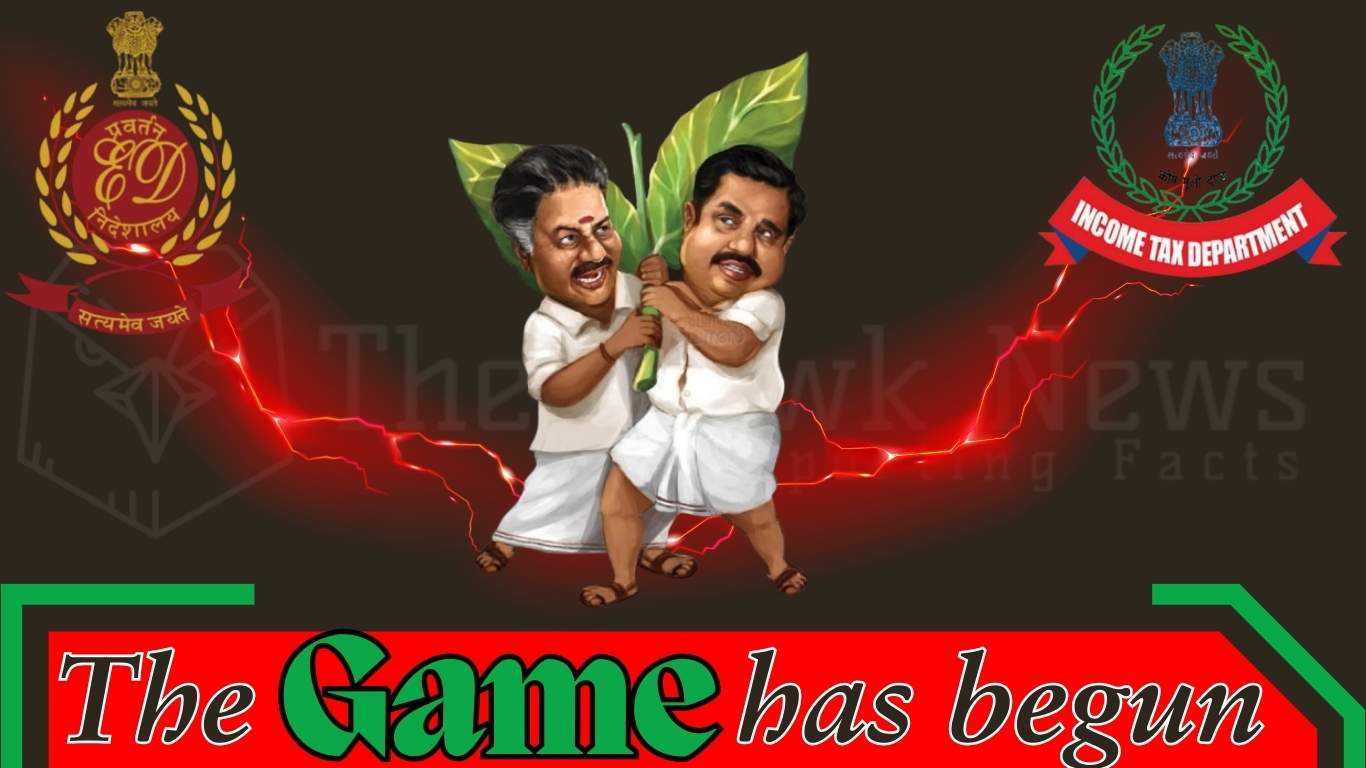
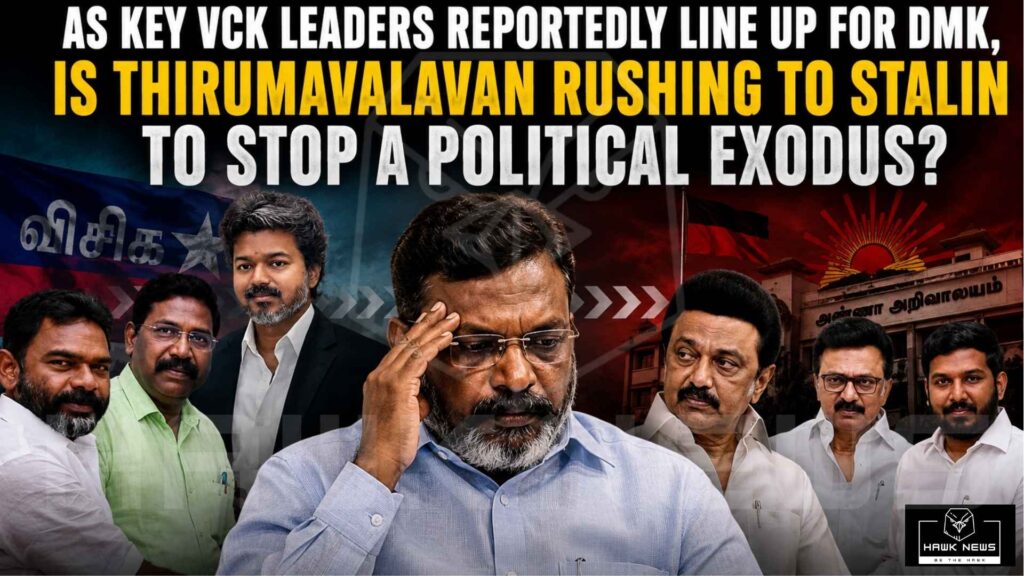
The political relationship between the Viduthalai Chiruthaigal Katchi (VCK), the DMK, and the newly empowered Tamilaga Vettri Kazhagam (TVK) appears to be entering a complicated phase. Reports emerging from political circles suggest that VCK chief Thol. Thirumavalavan is attempting to open channels of communication with the DMK leadership amid concerns that several influential figures within his party could be preparing to move towards the DMK.
While none of these developments have been officially confirmed by either party, the growing speculation has raised fresh questions about the stability of VCK's internal structure and its evolving position in Tamil Nadu's changing political landscape.
From Alliance Partner to Power Participant
VCK's political balancing act became significantly more difficult after the party extended support to the TVK-led government. For years, VCK had been one of the DMK alliance's most dependable partners, often aligning with the party on major political and ideological issues.
However, VCK's decision to support the TVK government and later participate in the administration altered the equation. The move was viewed by many as an attempt by Thirumavalavan to secure a greater share of political influence and administrative participation.
Supporters of the decision argued that VCK was finally translating electoral support into governance. Critics, however, questioned whether the party was risking its long-standing relationship with the DMK in pursuit of a new political arrangement.
Signs of Internal Unrest
The first visible indication of turbulence emerged when senior VCK functionary Panaiyur Babu publicly severed ties with the party while making strong remarks against the leadership's current political direction.
Although political parties routinely witness internal disagreements, the departure attracted attention because it came at a time when VCK was navigating a sensitive transition between alliance politics and governmental participation.
Since then, political observers have speculated that other dissatisfied leaders within the party may also be exploring alternative political options. Reports from various quarters suggest that some of these figures have been in discussions with the DMK, though no official confirmation has emerged regarding such developments.
The possibility of losing multiple second-line leaders is believed to be a major concern for the VCK leadership.
Is DMK Opening Its Doors?
One of the most discussed claims currently circulating in political circles is that the DMK is willing to welcome influential VCK figures who may choose to leave their parent party.
For the DMK, such a move could serve multiple purposes.
It could strengthen the party's organisational network, weaken a potential rival power centre, and send a message to alliance partners that political choices come with consequences.
Whether such a coordinated effort actually exists remains unclear. However, the mere perception that VCK leaders could find a political future inside the DMK has become a source of growing anxiety within sections of the VCK.
Why Thirumavalavan May Be Concerned
The challenge facing Thirumavalavan extends beyond a few individual defections.
VCK's strength has always been built around a committed cadre structure and a leadership model that combines ideological politics with alliance-based electoral strategy. Losing prominent district-level and state-level leaders could weaken the party's organisational cohesion at a time when Tamil Nadu's political landscape is undergoing major realignments.
Political observers note that VCK now finds itself attempting to maintain relationships with two different power centres simultaneously.
On one side stands the DMK, a long-time ally with whom VCK shares years of political cooperation.
On the other stands TVK, the new ruling force with whom VCK is now sharing administrative space.
Maintaining both relationships without alienating either side may prove to be an increasingly difficult task.
Reports of Backchannel Communication
Amid growing speculation about possible defections, reports suggest that Thirumavalavan has initiated efforts to communicate with individuals considered close to the DMK leadership.
According to these accounts, the VCK chief is said to be seeking a conversation with DMK president M.K. Stalin in an attempt to ease tensions and prevent further erosion of his party's ranks.
The reported objective is straightforward.
If VCK leaders are indeed considering a move to the DMK, Thirumavalavan would naturally want to stop the process before it gathers momentum. A direct conversation between the two leaders could potentially clarify political misunderstandings and reduce friction between the parties.
However, neither side has publicly confirmed the details of any such discussions.
The Bigger Political Question
Beyond individual leaders and party calculations lies a larger political question.
Can VCK remain politically close to the DMK while simultaneously sharing power with the TVK government?
The answer may determine not only the future of VCK's current strategy but also the shape of opposition and alliance politics in Tamil Nadu over the coming years.
If the reports of defections prove exaggerated, Thirumavalavan may succeed in preserving both his party's unity and its political flexibility.
But if influential leaders continue to drift away and the DMK relationship deteriorates further, VCK could find itself facing one of the most challenging periods in its recent history.
A Party at a Crossroads
For now, much of the discussion remains rooted in political speculation, insider claims, and behind-the-scenes conversations. Yet the fact that such reports are gaining traction reflects a broader reality.
VCK is standing at a political crossroads.
Its leadership must now balance governance, alliance management, organisational stability, and long-term electoral strategy all at the same time.
Whether Thirumavalavan's reported outreach to the DMK leadership succeeds or not, the coming weeks may reveal whether VCK can hold its ranks together or whether a new phase of political migration is about to reshape the party's future.