
When you sit inside a spacecraft, strapped into a seat that rests on decades of human ambition, you don’t just feel the machine - you feel history pressing forward.
That’s what Artemis II represents.
It isn’t just another mission.
It’s the moment humanity stops looking at the Moon as a memory; and starts seeing it as a destination again.
A Return, But Not a Repeat
We’ve been there before. The Apollo program proved that.
But Artemis II is different.
Back then, the goal was to reach the Moon.
Now, the goal is to stay, build, and move beyond.
“Apollo showed we could go. Artemis asks; what comes next?”
The Mission From Inside the Capsule
Imagine this:
You’re seated inside the Orion spacecraft, mounted atop the most powerful rocket ever built; the Space Launch System.
The countdown isn’t just numbers. It’s a transfer of responsibility; from Earth to you.
As the engines ignite, the vibration isn’t just physical. It’s existential. You’re leaving the only world you’ve ever known.
Within minutes:
- Earth becomes smaller
- Silence becomes deeper
- And space becomes real
What Artemis II Will Do
Unlike its predecessor, Artemis II is a crewed mission.
Its objective:
- Carry astronauts around the Moon
- Test life-support and navigation systems
- Validate human readiness for deep-space travel
No landing. Not yet.
This is a dress rehearsal for the future; for missions that will return humans to the lunar surface under Artemis program.
The View That Changes Everything
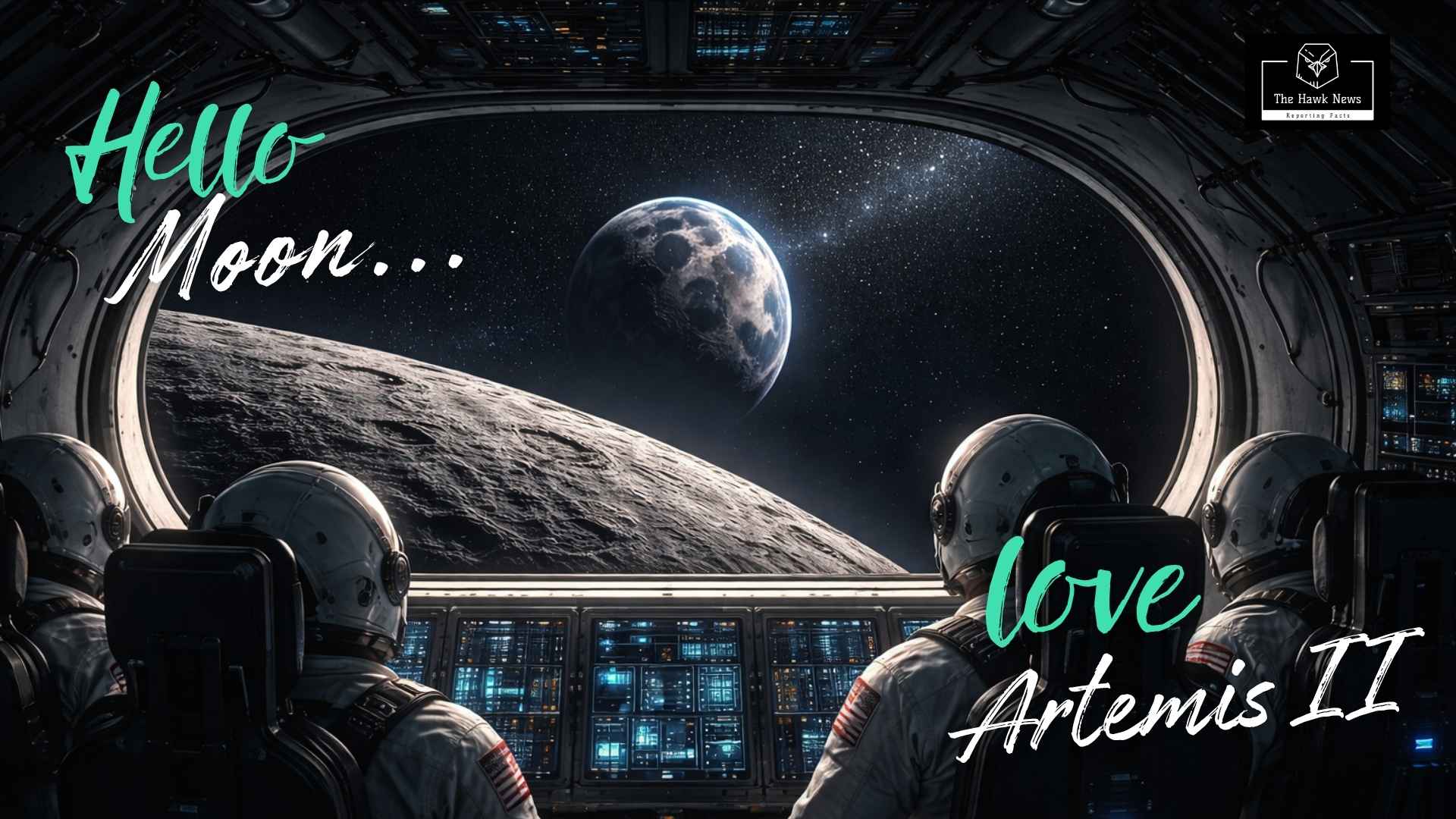
At some point during the mission, you look out.
The Moon is no longer a distant object; it fills your window.
Earth, meanwhile, becomes a fragile blue sphere in the darkness.
“From space, borders disappear. What remains is perspective.”
This is the quiet truth astronauts carry back:
We are not separate nations looking at space.
We are one planet, briefly united by distance.
Why This Mission Matters
Artemis II is not about prestige. It’s about preparation.
It lays the groundwork for:
- Sustainable lunar missions
- Building infrastructure beyond Earth
- Eventually sending humans to Mars
But more than that, it redefines ambition.
“Exploration is no longer about planting flags; it’s about extending presence.”
The Human Element
Technology will take us there.
But it’s human curiosity that drives the mission.
Inside that capsule are not just astronauts; but representatives of a species that refuses to stand still.
Every system tested, every orbit completed, every kilometer traveled is a step toward something larger:
A future where space is not unreachable; but inhabited.
Final Reflection
From an astronaut’s vantage point, Artemis II is not just a mission.
It is a question.
“If we can return to the Moon; what’s stopping us from going further?”
The answer isn’t in the stars.
It’s in our willingness to keep moving toward them.