A Generation That Never Stops Scrolling
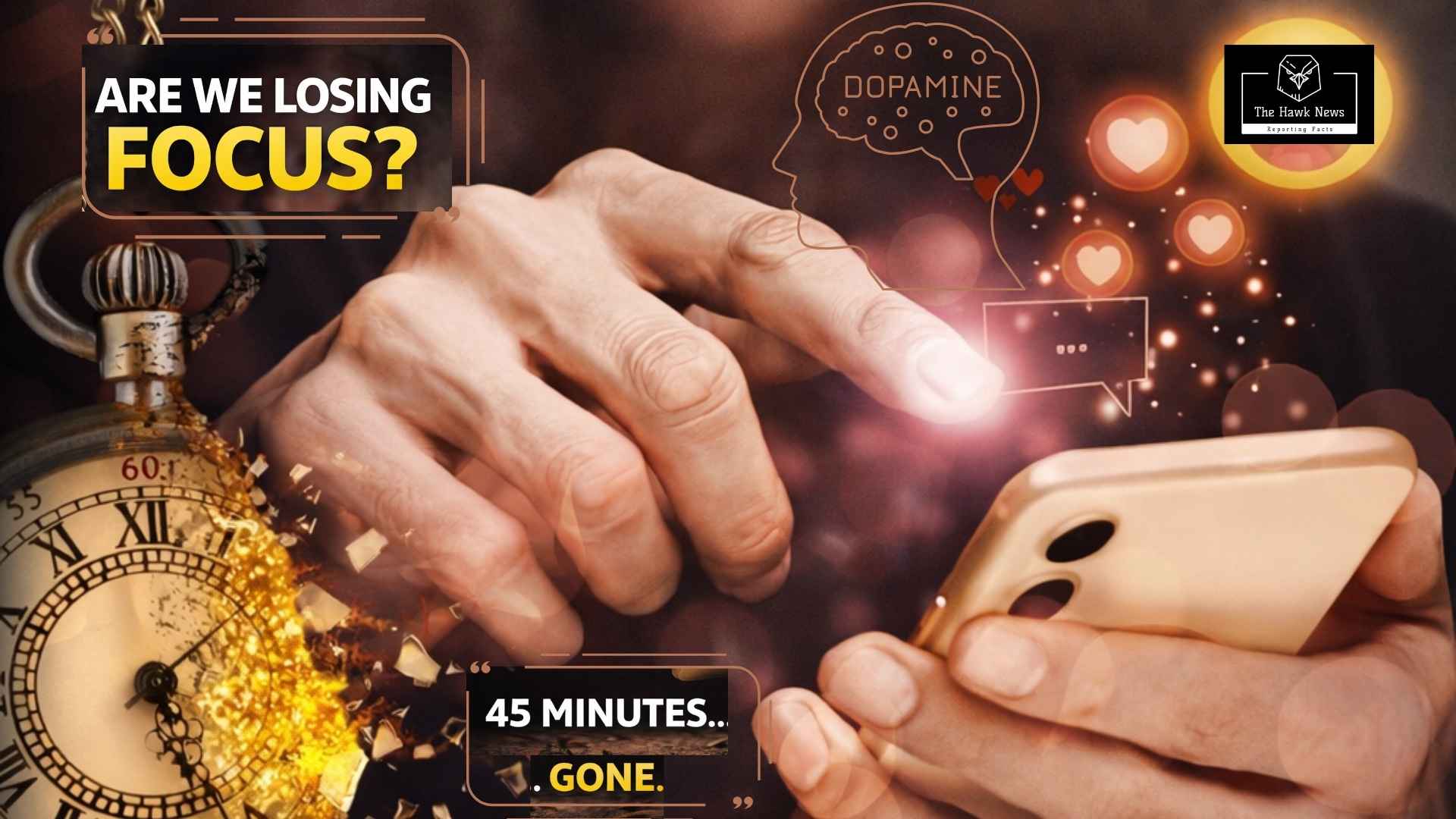
A few minutes on the phone often turns into an hour.
A quick check becomes a habit.
A habit becomes a routine.
And before we realize it, attention is no longer something we control
it is something that is constantly being pulled.
In an age dominated by platforms like Instagram, YouTube Shorts, and TikTok, endless scrolling has become a defining behavior of modern digital life.
But what is it doing to our ability to focus?
What Experts Are Observing
Mental health professionals and cognitive researchers are increasingly examining how constant digital stimulation is affecting attention spans.
According to clinicians working in behavioral therapy, frequent switching between short-form content can:
- Reduce sustained attention capacity
- Increase mental fatigue
- Create dependency on constant stimulation
Some therapists describe this pattern as a form of “attention fragmentation” where the brain becomes accustomed to rapid shifts rather than deep engagement.
“The brain begins to prefer quick rewards over sustained effort,” notes a Chennai-based behavioral therapist, pointing to the dopamine-driven feedback loop created by scrolling.
The Science Behind the Habit
Short-form content is designed for:
- Instant engagement
- Continuous novelty
- Minimal cognitive effort
Each swipe offers something new triggering small bursts of dopamine, the brain’s reward chemical.
Over time, this can condition users to:
- Seek constant stimulation
- Avoid slower, effort-driven tasks
- Struggle with prolonged focus
This doesn’t mean attention spans are “shrinking” universally but rather that:
The way attention is being used is changing
Why Endless Scrolling Works So Well
The success of scrolling platforms is not accidental.
They are built on:
- Algorithm-driven personalization
- Infinite content loops
- Behavioral design patterns
These systems ensure that users rarely reach a stopping point.
From a product perspective, this increases:
- Engagement time
- Platform retention
- Content consumption
But from a user perspective, it can blur the boundary between:
- Intentional use
- Habitual consumption
The Pros: What Digital Consumption Enables
It is important to recognize that digital platforms are not inherently negative.
They offer:
- Access to information and global perspectives
- Micro-learning opportunities
- Creative expression and content creation
- Economic opportunities (influencers, creators, businesses)
- Social connectivity
For many, these platforms are:
Tools for growth, visibility, and learning
The Cons: Where Concerns Begin
However, concerns arise when usage becomes excessive or unstructured.
Experts highlight risks such as:
- Reduced attention span for deep work
- Sleep disruption due to late-night usage
- Increased anxiety and comparison-driven stress
- Lower productivity
- Habit-forming dependency
Some psychologists also note that excessive scrolling can lead to:
A constant state of partial attention where the mind is never fully present
The Blurred Line Between Use and Overuse
One of the biggest challenges is that digital addiction does not always look extreme.
It often appears normal.
- Checking the phone every few minutes
- Feeling restless without constant input
- Struggling to focus on reading or long tasks
These behaviors are increasingly common and socially accepted.
Which makes them harder to recognize as potential concerns.
What Doctors and Therapists Suggest
Mental health professionals are not advocating complete disconnection.
Instead, they emphasize controlled engagement:
- Setting time limits for app usage
- Practicing “no-screen” periods (especially before sleep)
- Engaging in activities that require sustained focus (reading, writing)
- Being mindful of emotional triggers while scrolling
“It’s not about eliminating technology it’s about reclaiming control over how we use it,” says a cognitive therapist.
The Larger Question
Endless scrolling is not just a tech habit.
It reflects a broader shift in how we:
- Consume information
- Process content
- Engage with the world
The concern is not that people are consuming more.
It is whether they are:
Engaging deeply or just moving quickly
The Final Word
Attention is one of the most valuable resources in the digital age.
And like any resource, it can be:
- Invested wisely
- Or spent unconsciously
Endless scrolling offers convenience, entertainment, and access.
But it also demands something in return.
Time.
Focus.
Presence.
The question is not whether we should scroll.
It is whether we are still in control or simply following the next swipe.